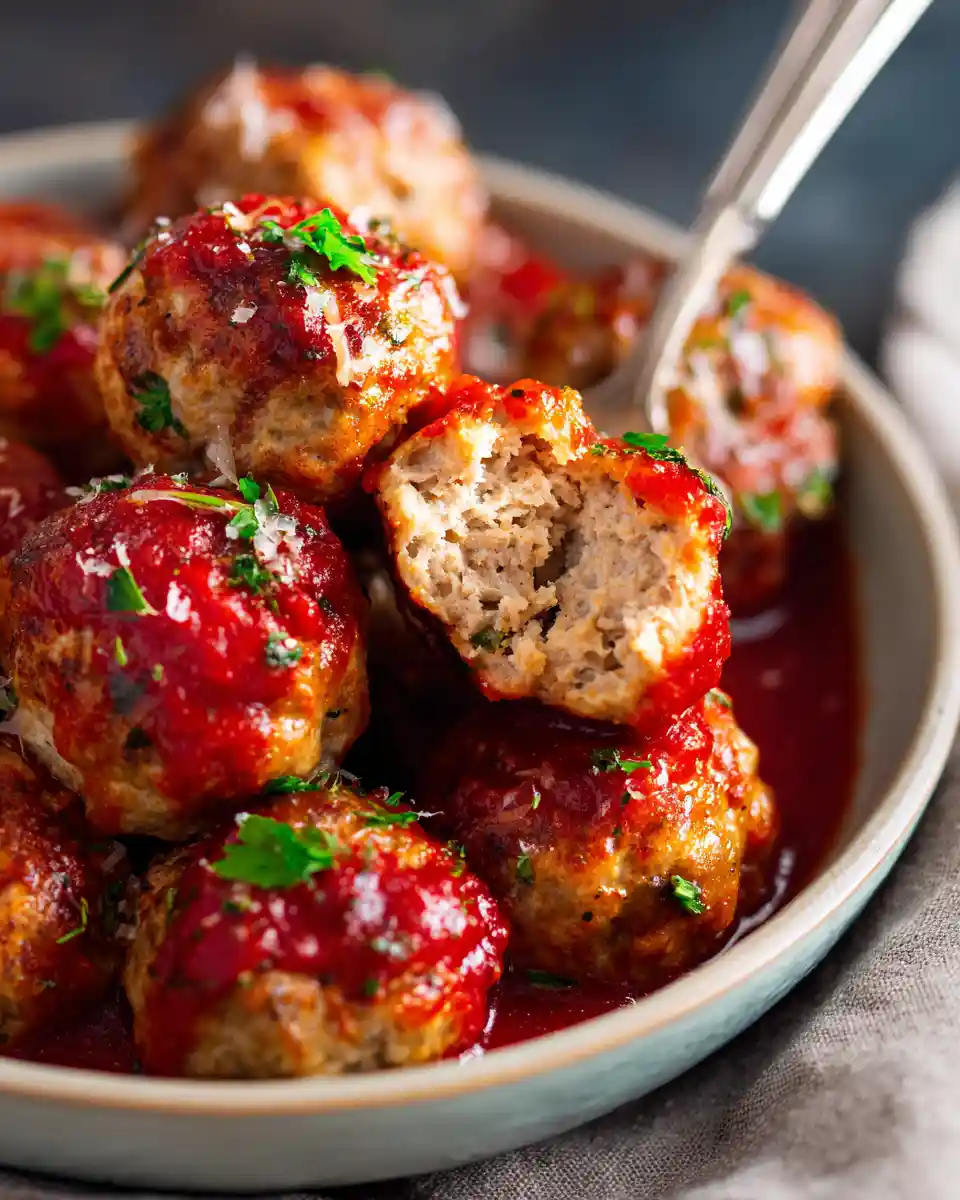
If you want a healthier meatball recipe that still tastes satisfying, these baked turkey meatballs solve the biggest problem right away: they stay juicy instead of turning dry and rubbery. They are easy to prep, packed with protein, and baked in the oven for a lighter dinner that still feels comforting.
This is the kind of recipe that works on busy nights because it gives you a clear method, not just a list of ingredients. Once you understand how moisture, mixing, and bake time affect lean ground turkey, you can make tender meatballs consistently.
Why Turkey Meatballs Often Go Wrong
Turkey meatballs sound simple, but lean ground turkey behaves differently from beef. It has less fat, which means there is less room for error. A few extra minutes in the oven, too much breadcrumb, or overmixing can push the texture from juicy to dry fast.
The most common mistakes are:
- using very lean turkey without adding moisture
- packing the mixture too tightly
- skipping a binder balance
- baking too long
- underseasoning because turkey has a milder flavor
That last point matters more than people think. Turkey is not bland by nature, but it needs more support from onion, garlic, herbs, cheese, and proper salt levels. When those are in place, the flavor feels full and savory instead of flat.
These meatballs fix that by combining moisture, structure, and seasoning in the right ratio. The result is a tender baked meatball with a lightly golden outside and a soft, juicy center.
The Ingredient Choices That Keep Them Juicy
This recipe is built around one important truth: lean protein needs protection.
Ground turkey can make excellent meatballs, but it benefits from ingredients that hold moisture inside. In this recipe, there are four key helpers:
1. Grated onion
Onion adds both flavor and moisture. Finely grated onion almost melts into the meatball mixture, which helps keep the interior soft.
2. Breadcrumbs
Breadcrumbs are not just filler. They absorb moisture and release it during baking, helping create a more tender bite. Without enough binder, the meatballs can feel tight and uneven.
3. Egg
Egg helps the mixture hold together so the meatballs keep their shape without needing to be packed firmly.
4. Parmesan cheese
Parmesan adds savory depth and a little saltiness. It also improves texture by giving the mixture a more cohesive, tender structure.
This is where a lot of healthy recipes go wrong. They remove too many supportive ingredients in the name of being “light,” then the final result feels dry and disappointing. A better strategy is to keep the meatballs balanced, satisfying, and portion-friendly.
If you enjoy meal-prep-friendly high-protein recipes, you may also like this High-Protein Turkey Quinoa Power Bowl or these Healthy Air Fryer Turkey Meatballs for Easy Weeknights.
Ingredients for Easy Baked Turkey Meatballs
Here is everything you need for about 20 medium meatballs, depending on size.
Main Ingredients
- 1 1/2 pounds ground turkey
- 1 large egg
- 1 cup plain breadcrumbs
- 1/3 cup grated Parmesan cheese
- 1/2 small onion, finely grated
- 3 garlic cloves, minced
- 2 tablespoons chopped fresh parsley, or 1 tablespoon dried parsley
- 1 teaspoon Italian seasoning
- 1 teaspoon kosher salt
- 1/2 teaspoon black pepper
- 2 tablespoons milk
- 1 tablespoon olive oil
Optional for Serving
- warmed marinara sauce
- cooked pasta
- zucchini noodles
- rice or quinoa
- extra Parmesan
- chopped parsley
Ingredient Notes
Ground turkey:
A mix that is not ultra-lean usually gives the best texture. Very lean turkey works too, but then the moisture ingredients become even more important.
Breadcrumbs:
Plain breadcrumbs are easiest because you control the salt and seasoning. Panko works, but the texture is slightly lighter and less compact.
Parmesan:
Use finely grated cheese so it distributes evenly. Larger shreds can create uneven pockets in the mixture.
Milk:
Just a small amount helps soften the breadcrumbs and protects the texture.
Step-by-Step: How to Make Turkey Meatballs in the Oven
1. Preheat the oven
Preheat your oven to 400°F. Line a baking sheet with parchment paper or lightly grease it.
This temperature is hot enough to cook the meatballs efficiently and give the outside a little color without drying them out too slowly.
2. Build the mixture gently
In a large bowl, add:
- ground turkey
- egg
- breadcrumbs
- Parmesan
- grated onion
- garlic
- parsley
- Italian seasoning
- salt
- black pepper
- milk
- olive oil
Use your hands or a fork to combine everything just until mixed.
This step is one of the biggest control points in the recipe. Stop mixing as soon as the ingredients look evenly distributed. If you keep working the mixture, the meatballs become dense and firm after baking.
3. Shape the meatballs
Scoop the mixture into evenly sized portions, about 1 1/2 tablespoons each. Roll gently into balls and place them on the prepared baking sheet with a little space between each one.
Do not compress them too hard. A softly formed meatball bakes up more tender than one packed like a golf ball.
4. Bake
Bake for 15 to 18 minutes, depending on size, until the meatballs are cooked through and reach an internal temperature of 165°F.
The outside should look lightly golden in spots, and the centers should feel set but not stiff.
5. Rest briefly
Let the meatballs rest for about 3 minutes before serving.
That short rest helps the juices settle back into the meat instead of running out right away.
6. Serve
Serve as-is, or toss gently with warm marinara sauce. They are great over pasta, rice, or tucked into a toasted roll. For a lighter plate, pair them with vegetables or a simple salad.
For another cozy dinner idea with strong comfort-food appeal, this Creamy Ranch Chicken makes a nice internal link choice, especially for readers looking for easy family-friendly meals.
The Control Guide: Tender Meatballs vs Dry Meatballs
This is the most important section if you want reliable results.
If your turkey meatballs turn out dry, here is why:
Too much mixing
Cause: overworked protein tightens up during baking
Effect: firm, rubbery texture
Too much breadcrumb
Cause: mixture becomes overly absorbent
Effect: mealy or dry interior
Too little seasoning
Cause: mild turkey has nothing to build on
Effect: bland meatballs even when texture is fine
Overbaking
Cause: lean meat loses moisture quickly
Effect: chalky center and tough edges
No moisture support
Cause: mixture lacks onion, milk, oil, or cheese balance
Effect: dry bite, especially after reheating
Good result vs bad result
Good turkey meatball:
- lightly springy, not hard
- juicy when cut open
- savory throughout
- holds together without feeling packed
Bad turkey meatball:
- dry and crumbly or dense and tight
- pale flavor
- needs a lot of sauce to feel edible
- tough after reheating
Decision fork: What texture do you want?
Want softer meatballs?
Use grated onion, do not overmix, and keep the bake time closer to 15 minutes for medium meatballs.
Want slightly firmer meatballs for meal prep?
Shape them a little more evenly and bake closer to 17 to 18 minutes, but do not go past doneness.
That small decision changes how they perform later. Softer meatballs are ideal for serving right away. Slightly firmer ones hold up a little better in lunch containers and sauce.
Easy Variations and Add-Ins
One of the strengths of this recipe is how easy it is to adapt without losing the healthy, high-protein angle.
Italian-Style Turkey Meatballs
Add a little extra Parmesan and serve with marinara over pasta or spaghetti squash.
Meal Prep Turkey Meatballs
Keep the seasoning classic, then portion with rice and roasted vegetables for balanced lunches. Readers who like prep-friendly recipes may also enjoy this One-Pot Lemon Turkey Orzo.
Mozzarella Turkey Meatballs
Tuck a tiny cube of mozzarella into the center of each meatball for a more indulgent version. Make sure the meat seals around it completely.
Herb-Lemon Turkey Meatballs
Add lemon zest and extra parsley for a brighter flavor profile. This works especially well with rice bowls or salads.
Spicier Version
Add red pepper flakes or a little smoked paprika for warmth and depth.
Just avoid loading the mixture with too many wet add-ins at once. That can make the meatballs harder to shape and more likely to spread.
What to Serve with Turkey Meatballs
These meatballs are versatile, which is one reason they work so well for busy households.
Best comfort-style pairings
- marinara and pasta
- garlic bread and salad
- mashed potatoes and green beans
Best lighter pairings
- roasted broccoli
- quinoa
- cauliflower rice
- chopped cucumber and tomato salad
- zucchini noodles
Best meal prep pairings
- brown rice and roasted peppers
- couscous and cucumber yogurt sauce
- sweet potato wedges and steamed green beans
If your readers are looking for more protein-forward meal inspiration, a natural next click could be Turkey Sausage Breakfast Burritos for another turkey-based option.
How to Store, Freeze, and Reheat
This recipe is great for make-ahead dinners because the meatballs store well when handled properly.
Refrigerator
Store cooked meatballs in an airtight container in the fridge for up to 4 days.
Freezer
Freeze cooked meatballs on a tray until firm, then transfer to a freezer-safe bag or container. They keep well for up to 3 months.
You can also freeze them with sauce, which helps protect moisture.
Reheating
For best results, reheat gently.
Microwave:
Cover loosely and heat in short intervals so they do not tighten up.
Stovetop:
Warm in sauce over low heat until heated through.
Oven:
Cover with foil and reheat at 325°F until warm.
The biggest reheating mistake is using too much heat. Lean turkey gets dry faster the second time around, so gentle warming matters.
Frequently Asked Questions
Can I use very lean ground turkey?
Yes, but the meatballs will be less forgiving. Be extra careful not to overmix or overbake, and do not skip the onion, milk, or Parmesan.
You can use a substitute like quick oats or crushed crackers, but breadcrumbs give the most classic meatball texture. If you swap them, the texture may be slightly different.
How do I know when turkey meatballs are done?
The safest and most reliable method is checking for an internal temperature of 165°F. Visually, they should look set and lightly golden, but not dry or cracked.
Can I cook them in sauce instead of baking?
Yes, but baking is easier for clean structure and consistent cooking. If simmering in sauce, brown them first or handle them gently so they hold their shape.
Are turkey meatballs good for meal prep?
Yes, they are one of the best high-protein meal prep options because they portion easily and pair with many sides.
Final Thoughts
These easy baked turkey meatballs work because they respect what lean turkey needs. Instead of treating it like beef and hoping for the best, this recipe builds in moisture, flavor, and control from the start.
That means you get meatballs that feel healthy without tasting like a compromise. They are tender, satisfying, and flexible enough for pasta night, lunch bowls, or a simple high-protein dinner with vegetables.
If your goal is a lighter dinner that still feels comforting, this is the kind of recipe worth repeating. Once you get the texture right once, it becomes one of those dependable back-pocket meals you can make without stress.