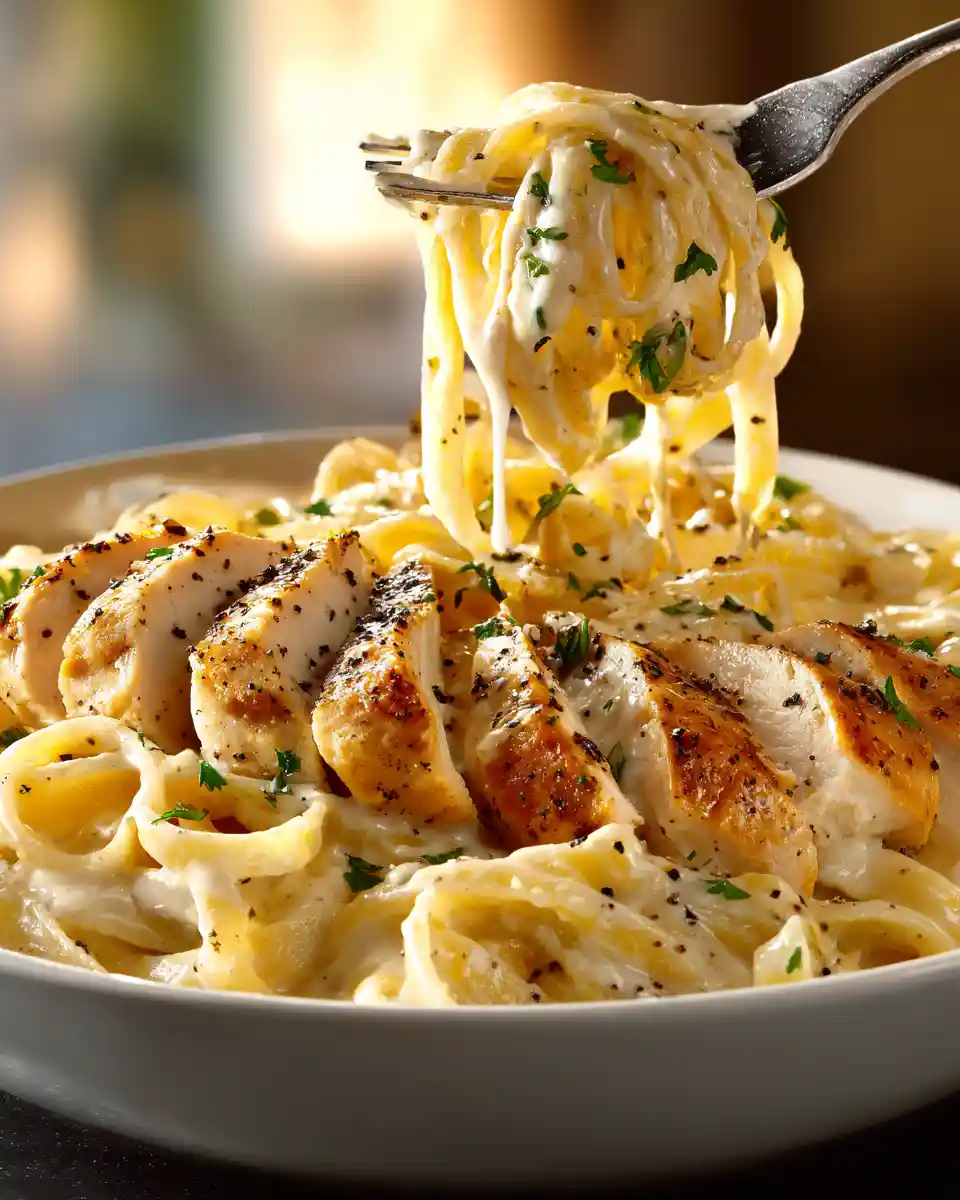
Craving a creamy pasta dinner that feels comforting but still fits a busy night? This Chicken Alfredo recipe is built for exactly that: juicy chicken, a silky Parmesan cream sauce, and pasta that stays glossy instead of clumping into a heavy mess.
The biggest problem with homemade Alfredo is not flavor, it is control. The sauce can turn grainy, the chicken can dry out, and the pasta can absorb too much liquid too fast. This version keeps every step practical so you get a rich, smooth result without restaurant-level effort.
Why This Chicken Alfredo Works on Busy Nights
Chicken Alfredo is one of those dinners people click on because it promises comfort, but they stay for the recipe when it actually solves the weeknight problem. You want something creamy and satisfying, but not something that leaves you standing at the stove wondering why the sauce split.
This recipe works because each part is handled with a clear purpose:
- The chicken is cooked first so it can rest and stay juicy.
- The sauce is built gently, not rushed over high heat.
- The pasta goes into the sauce with a little reserved pasta water, which helps the final dish turn silky instead of stiff.
That last point matters. Good Alfredo should coat the noodles. Bad Alfredo sits on top in a thick layer and turns gluey after two minutes.
If you enjoy creamy chicken dinners, you might also like Creamy Garlic Parmesan Chicken Pasta or Creamy Chicken Pesto Pasta in Under 30 Minutes.
What You Need for a Creamy Alfredo That Actually Tastes Rich
Here is everything you need for a classic, easy version.
Ingredients
- 12 ounces fettuccine
- 2 boneless, skinless chicken breasts, sliced or pounded to even thickness
- 1 teaspoon salt, divided
- 1 teaspoon black pepper, divided
- 1 teaspoon garlic powder
- 2 tablespoons olive oil
- 3 tablespoons unsalted butter
- 4 cloves garlic, minced
- 1 1/2 cups heavy cream
- 1 cup finely grated Parmesan cheese
- 1/4 teaspoon nutmeg, optional
- 1/4 to 1/2 cup reserved pasta water
- 2 tablespoons chopped parsley, optional for finish
Why these ingredients matter
Fettuccine is traditional because its broad surface holds sauce well. Heavy cream gives the sauce reliable body. Finely grated Parmesan melts more smoothly than coarse shreds, which can leave the sauce gritty. Fresh garlic keeps the flavor warm and savory instead of flat.
Ingredient Notes That Change the Final Texture
A few ingredient decisions make the difference between “pretty good” and “I would make this again next week.”
Parmesan: finely grated beats pre-shredded
Pre-shredded cheese often contains anti-caking agents. Those powders can keep the sauce from melting smoothly. Finely grate a block of Parmesan if you can. The sauce becomes silkier and the flavor tastes cleaner.
Heavy cream: do not swap casually
This is not the time for low-fat milk if you want classic Alfredo texture. Lower-fat dairy is much more likely to thin out or curdle under heat. If you want a lighter pasta night, a better choice is serving smaller portions with a side salad rather than forcing the sauce to be something it is not.
Chicken thickness matters
Thin, even chicken cooks faster and more evenly. A thick breast cooked in a hurry usually ends up dry on the outside before the center is done.
Pasta water is your control tool
Reserved pasta water is not filler. It helps emulsify the sauce and adjust consistency. Think of it as your texture insurance.
For another easy chicken comfort dinner with creamy energy, Creamy Ranch Chicken is another cozy option.
How to Cook the Chicken So It Stays Juicy
Season the chicken with half the salt, half the pepper, and the garlic powder.
Heat olive oil in a large skillet over medium to medium-high heat. Add the chicken and cook until golden and cooked through, usually about 4 to 5 minutes per side depending on thickness. Remove it to a plate and let it rest before slicing.
This resting step is not optional if you want juicy slices. Cutting right away lets the juices run out onto the board instead of staying in the meat.
Good result vs bad result
Good: lightly golden outside, juicy inside, sliced after resting.
Bad: dark exterior, dry center, sliced immediately, watery plate.
The goal is not aggressive browning. Alfredo is a creamy pasta, so the chicken should taste savory and tender, not charred and dominant.
How to Build a Smooth Alfredo Sauce Without Breaking It
Once the chicken is out, reduce the heat to medium-low. Add the butter to the same skillet. When melted, stir in the garlic and cook for about 30 seconds, just until fragrant.
Add the heavy cream and let it warm gently for 2 to 3 minutes. Do not boil it hard. Then stir in the Parmesan a little at a time.
This is the control point of the whole recipe. If the heat is too high, the sauce can separate or turn grainy. Gentle heat plus gradual cheese addition gives you a smooth, glossy finish.
A small pinch of nutmeg is optional, but it adds subtle warmth that rounds out the cream and cheese without making the sauce taste sweet.
Step-by-Step: Bringing the Pasta Together
1. Boil the pasta
Bring a large pot of salted water to a boil. Cook the fettuccine until just al dente according to package directions. Before draining, reserve at least 1/2 cup of pasta water.
Al dente pasta matters because it will finish softening in the sauce. If it is already fully soft in the pot, it can go limp once mixed.
2. Slice the chicken
After the chicken has rested for a few minutes, slice it into strips or bite-size pieces.
3. Start the sauce
With the skillet on medium-low heat, melt butter and cook the garlic briefly. Add the cream and warm gently.
4. Melt in the Parmesan
Add the Parmesan gradually, stirring until smooth. Add the remaining salt and pepper. Taste before adding more salt because Parmesan already brings a lot of savory intensity.
5. Loosen with pasta water
Add a splash of reserved pasta water if the sauce feels too thick. This should make it glossy, not watery.
6. Toss in the pasta
Add the cooked fettuccine to the skillet and toss until every strand is coated. Then return the sliced chicken to the pan.
7. Finish and serve
Top with parsley and extra Parmesan if you like. Serve immediately while the sauce is at its smoothest and the pasta is still loose and shiny.
Control Guide: How to Fix Thick, Thin, or Grainy Alfredo
This is where most Alfredo recipes stop too early. Here is how to adjust the sauce based on what you see in the pan.
If the sauce is too thick
Add pasta water 1 tablespoon at a time and toss. Thick Alfredo is usually not ruined, it just needs a little starchy liquid to relax.
If the sauce is too thin
Let it sit over low heat for a minute or two while stirring gently. Do not rush by blasting the heat. Fast boiling reduces unevenly and can cause separation.
If the sauce looks grainy
Take the pan off the heat immediately. Stir in a small splash of cream or pasta water and keep stirring gently. Graininess usually comes from cheese hitting sauce that is too hot.
If the pasta absorbs too much sauce before serving
This is normal with a creamy pasta. Add a spoonful of hot water or cream and toss again just before plating.
Easy Variations and Smart Add-Ins
Chicken Alfredo is flexible as long as you protect the sauce texture.
Add broccoli
Steamed or blanched broccoli works well because it brings color and freshness without fighting the sauce.
Add spinach
Stir in a handful at the end. The residual heat wilts it quickly.
Use a different pasta
Fettuccine is classic, but linguine or penne also work. Long noodles give a more traditional Alfredo feel, while short pasta makes serving easier for kids.
Boost the garlic
If your family loves a bolder flavor, add one extra clove, but do not brown it deeply or the sauce can taste bitter.
For readers who love creamy pasta dinners with slightly different flavor profiles, Philly Cheese Steak Pasta (Easy Family Favorite) is another comforting option.
What to Serve with Chicken Alfredo
Because Alfredo is rich, pair it with sides that bring contrast.
Good options include:
- a crisp green salad with lemony dressing
- roasted broccoli or green beans
- garlic bread for a more indulgent dinner
- sautéed mushrooms for earthy depth
The smartest pairing is something fresh or crisp. That keeps the meal balanced and prevents the plate from feeling too heavy.
Storage, Reheating, and Leftover Tips
Chicken Alfredo is best fresh, but leftovers can still work well if reheated correctly.
Store in an airtight container in the refrigerator for up to 3 days.
Best reheating method
Reheat in a skillet over low heat with a splash of milk or cream. Stir gently until loosened and warm.
Microwave method
Use short intervals and stir between each one. Add a spoonful of liquid first. Microwaving too long in one go is the fastest way to make the sauce oily or dry around the edges.
Leftover tip
If the pasta has soaked up most of the sauce, do not panic. Add a little cream, milk, or water and stir over low heat until it turns creamy again.
FAQ
Can I make Chicken Alfredo ahead of time?
You can cook the chicken ahead and grate the cheese ahead, but the finished pasta is best served fresh. Alfredo sauce thickens quickly as it sits.
What is the biggest mistake in homemade Alfredo?
Using heat that is too high. That can make the cheese clump and the sauce separate.
Can I use chicken thighs instead of breasts?
Yes. Boneless, skinless thighs work well and stay juicy. Just trim and cook them until done before slicing.
Do I need pasta water?
It is highly recommended. Pasta water helps create a smoother, more cohesive sauce.
Is this a good weeknight dinner?
Yes. It feels comforting and restaurant-style, but the ingredients and method are simple enough for a regular weeknight.
Final Thoughts
This Chicken Alfredo recipe works because it respects the small details that actually affect the result. Gentle heat, finely grated Parmesan, rested chicken, and reserved pasta water are what turn a heavy, disappointing pasta into a creamy dinner worth saving.
If what you want tonight is comfort without chaos, this is the kind of recipe that delivers. It is rich, practical, and easy to control, which is exactly why it belongs in a weeknight rotation.