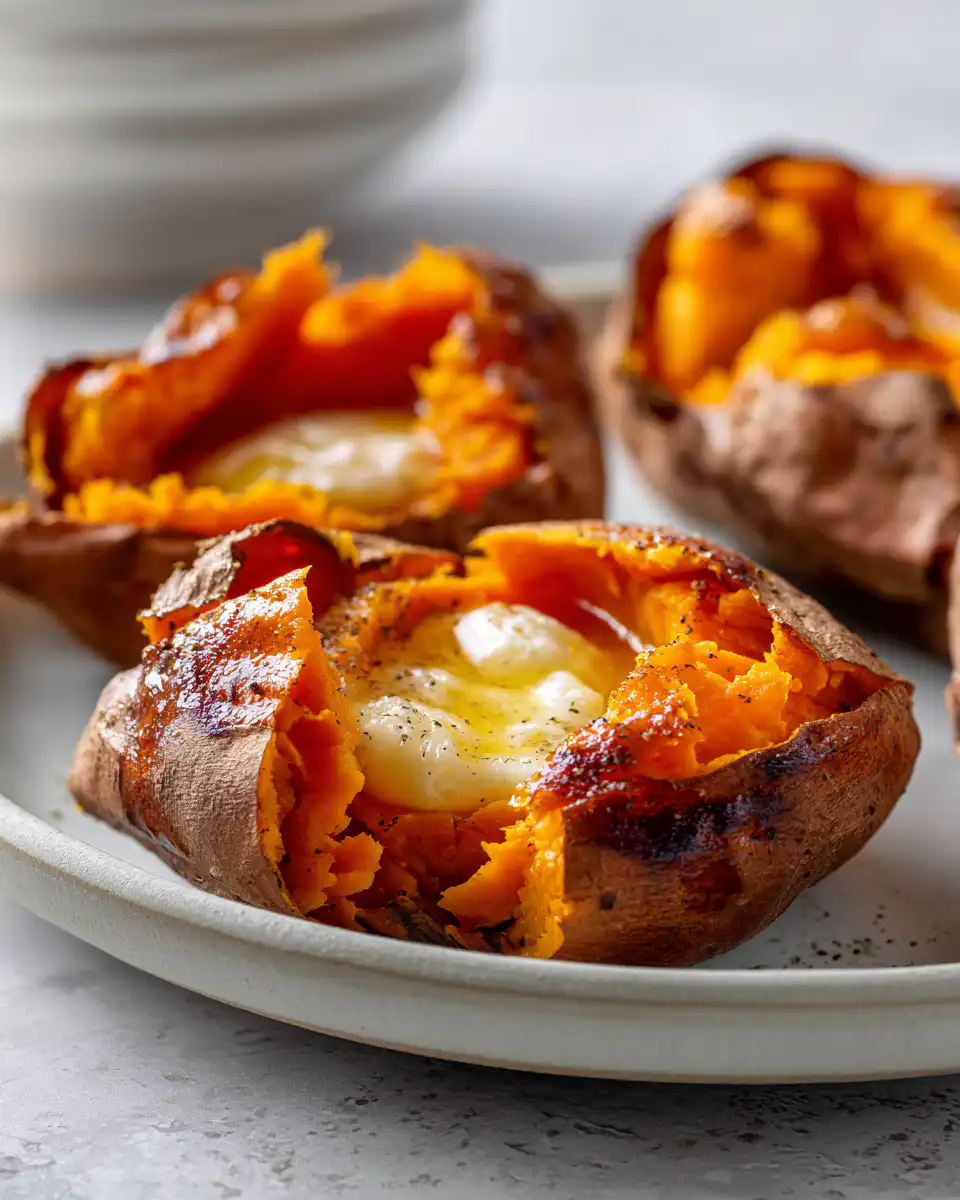
When you need a dinner side that feels wholesome, easy, and genuinely satisfying, baked sweet potatoes do a lot of work with very little effort. This method gives you tender centers, lightly caramelized skin, and that naturally sweet, cozy flavor that pairs with almost anything.
The biggest problem with baked sweet potatoes is not the ingredient, it is control. Too short, and they stay firm in the middle. Too hot, and the outside dries out before the inside turns silky. This recipe keeps it simple so you get soft, creamy sweet potatoes that are weeknight-friendly and still feel special on the plate.
Why Baked Sweet Potatoes Work So Well at Dinner
Sweet potatoes solve a very specific dinner problem. They are easy to prep, naturally flavorful, and filling without feeling heavy. That makes them one of the smartest side dishes for nights when you want something healthier but still comforting.
They also bring balance to the plate. If your main dish is savory, salty, smoky, or spicy, the sweet potato adds gentle sweetness and soft texture. That contrast matters. A good side dish should not just take up space. It should make the rest of dinner taste better.
Another reason this recipe works is that it asks almost nothing from you once the potatoes go into the oven. You do not need constant stirring, careful timing in a skillet, or a long list of ingredients. You just need a few good potatoes, the right oven temperature, and enough time for the inside to turn fluffy.
The Simple Ingredient List That Actually Matters
You only need a few ingredients here, but each one plays a role.
Ingredients
- 4 medium sweet potatoes
- 1 tablespoon olive oil
- 1/2 teaspoon kosher salt
- 1/4 teaspoon black pepper
That is the base version, and honestly, it is often enough.
The olive oil helps the skins roast instead of dry out in a papery way. The salt sharpens the natural sweetness. The pepper gives just enough contrast so the flavor does not taste flat.
You can also keep the potatoes completely plain during baking and season after. That works especially well if you want to turn them into different styles later, like savory buttered sweet potatoes, cinnamon-maple sweet potatoes, or stuffed sweet potatoes for a more complete meal.
How to Choose Sweet Potatoes for the Best Texture
Not every sweet potato bakes the same way, and this is one of the most overlooked parts of the recipe.
Choose potatoes that are similar in size so they finish baking at roughly the same time. If one is much thicker than the others, you will either pull the tray too early or overbake the smaller ones while waiting for the large one to soften.
Look for firm potatoes with smooth skin and no soft spots. A few surface marks are fine, but shriveled skin can mean the potato has already lost moisture. That matters because a dry sweet potato will never bake into that creamy, spoonable center people want.
Medium sweet potatoes are usually the best choice for dinner sides. Very large ones can work, but they take longer and can be a little stringier. Medium potatoes are easier to control and easier to serve.
The One Decision That Changes the Final Result
There is one fork in the road with baked sweet potatoes: do you want softer skin or more roasted, lightly chewy skin?
For soft skin, wrap them loosely in foil. This traps more moisture and creates a gentler finish. The inside turns very soft, but the outside stays less roasted.
For better flavor and light caramelization, bake them unwrapped. This is the method I recommend for most dinners. The skin gets slightly wrinkled and the natural sugars concentrate more. That gives you deeper flavor and a better contrast between the fluffy inside and the roasted exterior.
This is a good example of cooking cause and effect. More trapped moisture gives you softness. More direct oven exposure gives you stronger roasted flavor. Neither is wrong, but if you want the best balance, go unwrapped.
How to Bake Sweet Potatoes Step by Step
Preheat your oven to 425°F. This temperature is high enough to encourage caramelization without blasting the outside too aggressively.
Line a baking sheet with parchment paper or foil for easier cleanup.
Scrub the sweet potatoes well and dry them thoroughly. If water is still clinging to the skin, the exterior will steam before it roasts. Dry skin gives you a better finish.
Use a fork to poke each potato several times. This helps steam escape during baking and prevents pressure from building inside.
Rub the potatoes with olive oil, then sprinkle with salt and pepper. You do not need a heavy coating. Just enough to lightly cover the skin.
Place the potatoes on the baking sheet with space between them. Crowding matters more than people think. If they are packed too closely, they trap heat and moisture around each other instead of roasting evenly.
Bake for 45 to 60 minutes, depending on size.
Start checking around the 45-minute mark. A fully baked sweet potato should feel very tender when pierced with a knife. The blade should slide in with very little resistance. You can also gently squeeze the sides with a towel or oven mitt. It should give easily.
Once baked, let them rest for 5 minutes. Then split them open lengthwise and fluff the inside with a fork.
That fluffing step is not just cosmetic. It releases steam, loosens the flesh, and makes the inside feel lighter instead of compressed.
The Biggest Mistakes That Keep Them from Turning Out Right
The most common mistake is pulling them too early. Sweet potatoes can look done on the outside while still being dense in the center. If the knife still meets resistance, keep baking. The difference between “almost done” and “perfectly creamy” is often just another 8 to 10 minutes.
The second mistake is using the wrong temperature. A low oven can slowly cook the potato, but it will not build the same roasted flavor. You may end up with a soft center and bland skin. At 425°F, you get a better balance of sweetness and texture.
Another mistake is skipping the drying step after washing. Wet skin slows down roasting. If you want that lightly caramelized outer layer, dry the potatoes well before oiling them.
The last mistake is under-seasoning. Sweet potatoes are naturally flavorful, but they still benefit from salt. Without it, they can taste one-dimensional, especially next to a strongly seasoned main dish.
Easy Topping Ideas for Different Dinner Moods
One reason this recipe is worth repeating is how easy it is to change the final flavor.
For a simple savory version, add a small pat of butter, a pinch of flaky salt, and black pepper. The butter melts into the fluffy center and creates a richer finish without masking the potato itself.
For a warm cozy version, use cinnamon and a tiny drizzle of maple syrup. Keep it light. Too much sweetness can push the potato out of “dinner side” territory and into dessert-like territory.
For a higher-protein dinner plate, try topping your sweet potato with Greek yogurt, chopped herbs, and a few pumpkin seeds. That combination adds tang, freshness, and crunch.
For a meal-prep style dinner, pair baked sweet potatoes with something hearty like this Sweet Potato Black Bean Burrito Bowl. The flavor overlap works naturally, and it turns the sweet potato from side dish into part of a full dinner strategy.
If you like colorful vegetable-based meals, this Purple Carrot recipe is another fun way to bring variety to your table without losing that wholesome dinner feel.
What to Serve with Baked Sweet Potatoes
Baked sweet potatoes are especially good with roasted or saucy proteins because they absorb juices well and calm down bold flavors.
They pair beautifully with chicken dishes like Chicken and Yellow Rice, especially if dinner needs a softer, naturally sweet contrast on the side.
They also work well next to skillet dinners, grilled chicken, salmon, turkey bowls, or simple beans and greens. If the main dish is rich, sweet potatoes lighten the meal emotionally even when they are filling physically. That is a subtle but real reason people come back to them.
You can even use them in the same dinner rotation as crispy potato sides like these Air Fryer Smashed Potatoes. The two sides solve different cravings. One is creamy and comforting. The other is crisp and punchy. Knowing the difference helps you choose the right side for the night you are having.
How to Store and Reheat Without Ruining the Texture
Let the baked sweet potatoes cool before storing them. Then place them in an airtight container in the refrigerator for up to 4 days.
To reheat, the oven is the best option if you want the skin to hold up. Warm them at 350°F until heated through. If speed matters more, the microwave works fine, but the skin will soften.
If you know you will be reheating them later, slightly underbake by just a few minutes the first time. That way they finish perfectly during reheating instead of becoming overly collapsed.
You can also scoop the flesh into bowls, wraps, or grain-based lunches the next day. The creamy interior blends easily into meal prep without needing much extra work.
FAQ
Can I bake sweet potatoes without oil?
Yes. The inside will still soften well, but the skin will be less flavorful and less roasted. Oil helps with texture on the outside more than the inside.
How do I know when a baked sweet potato is fully done?
A knife should slide into the center very easily. If the middle still feels firm or slightly resistant, it needs more time.
Is it better to wrap sweet potatoes in foil?
Only if you want softer skin and a more steamed result. For deeper roasted flavor and better caramelization, bake them unwrapped.
Can I make baked sweet potatoes ahead of time?
Yes. Bake them fully, cool them, and refrigerate. Reheat in the oven for the best texture or microwave for convenience.
Are baked sweet potatoes healthy?
They are a nutrient-dense side dish that can fit well into a balanced meal. They offer fiber, color, natural sweetness, and a satisfying texture without needing much added fat.
Final Thoughts
A good baked sweet potato recipe is not complicated, but it does depend on a few smart choices. Choose evenly sized potatoes, bake them hot enough, wait until they are truly tender, and season them enough to bring out their flavor.
That is what makes this such a reliable dinner side. It feels easy, but it does not taste lazy. It is healthy without being boring, comforting without being too heavy, and flexible enough to pair with all kinds of meals.
When dinner needs a side dish that is simple, dependable, and actually satisfying, baked sweet potatoes earn their place fast.