There is a misconception that ground beef is reserved solely for tacos or burgers. In professional kitchens, we value ground beef for its high surface area—which, when treated correctly, equals maximum flavor absorption.
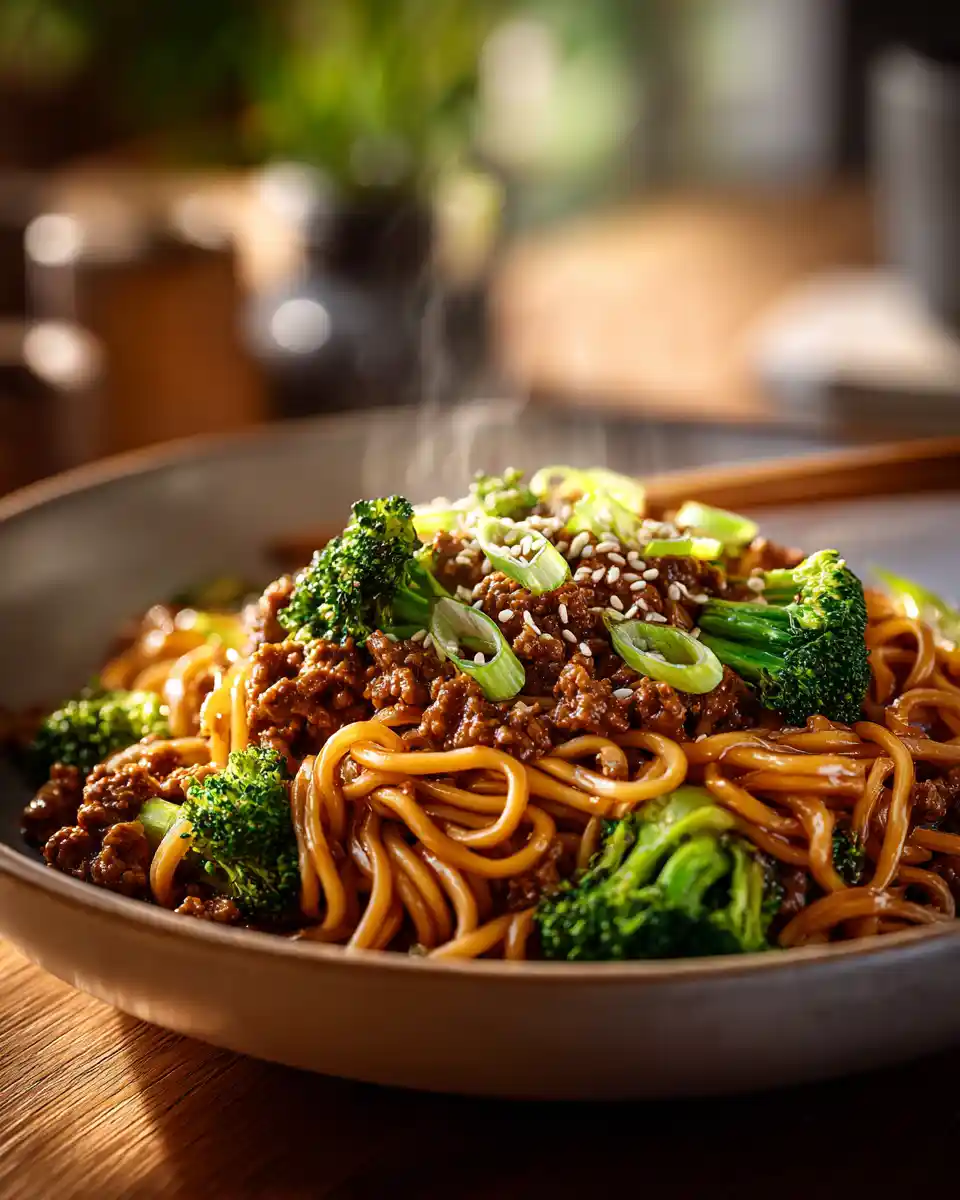
This Sesame-Ginger Ground Beef Noodles recipe isn’t just a stir-fry; it’s a study in texture and balance. We are taking the rich, savory depth of seared beef and cutting it with the sharp brightness of fresh ginger and the nutty aroma of toasted sesame oil.
The secret here lies in the sear. Most home cooks steam their beef by overcrowding the pan or moving it too much. Today, we are going to fix that. The result is crispy, caramelized beef clinging to chewy noodles in a sauce that hits every note: salty, sweet, umami, and aromatic.
The Flavor Profile
This dish relies on a classic Asian-inspired aromatic base but simplifies the execution for a weeknight timeline.
- Texture: Chewy noodles against crispy, browned beef bits.
- Taste: Deep soy umami, bright ginger heat, and a hint of sweetness to round out the salt.
- Finish: A nutty gloss from pure sesame oil added at the very end to preserve its delicate flavor compounds.
Pro Chef Tips for Success
- Don’t Rush the Brown: When you add the beef to the skillet, press it into a single layer and leave it alone for 3–4 minutes. We want a dark, crusty sear (the Maillard reaction). If you stir immediately, the meat releases water and steams, turning gray and rubbery.
- Grate, Don’t Chop: For the ginger and garlic, use a microplane or fine grater. This creates a paste that dissolves into the sauce, preventing jarring bites of raw garlic and ensuring even flavor distribution.
- Sauce Consistency: The sauce should glaze the noodles, not drown them. If it looks too thick, a splash of pasta water is your best friend to thin it out while keeping it silky.
Common Mistakes to Avoid
- Using Lean Beef: Avoid 90/10 or 96/4 beef for this. You need at least 85/15 or 80/20. The fat renders out and fries the aromatics. If there is too much grease, you can drain it, but you need that initial fat for flavor.
- Overcooking Noodles: Rinse your noodles under cold water immediately after boiling. This stops the cooking process and washes away excess starch, preventing a gummy, sticky mess in the wok.
- Burning the Sesame Oil: Toasted sesame oil has a low smoke point. Do not use it to sear the beef. Add it only at the end as a finishing seasoning.
Ingredients
The Protein & Noodles
- 1 lb Ground beef (85/15 recommended)
- 8 oz Ramen noodles, udon, or linguine (dried or fresh)
- 1 tbsp Neutral oil (avocado or vegetable oil) for searing
- 2 cups Broccoli florets, chopped small (optional for crunch)
- 1/4 cup Green onions, sliced thinly (green and white parts separated)
The Sesame-Ginger Sauce
- 1/3 cup Soy sauce (low-sodium preferred to control salt)
- 2 tbsp Brown sugar, packed
- 1 tbsp Fresh ginger, grated
- 3 cloves Garlic, grated or minced
- 1 tbsp Rice vinegar (adds necessary acid to cut the fat)
- 1 tbsp Toasted sesame oil (added at the end)
- 1 tsp Cornstarch mixed with 1 tbsp cold water (slurry)
- 1/2 tsp Red pepper flakes (optional, for heat)
- 1 tbsp Toasted sesame seeds (for garnish)
Instructions
1. Prep the Sauce (Mise en Place) In a small bowl, whisk together the soy sauce, brown sugar, grated ginger, minced garlic, rice vinegar, and red pepper flakes. Set the sesame oil and cornstarch slurry aside separately. Having this ready is crucial because stir-frying happens fast.
2. Boil the Noodles Cook the noodles according to package directions, but aim for al dente (usually 1 minute less than stated). Drain and immediately rinse under cold water to stop the cooking. Toss with a tiny drop of oil to prevent sticking.
3. Sear the Beef Heat the neutral oil in a large skillet or wok over medium-high heat. Once hot, add the ground beef. Break it into large chunks but do not crumble it completely yet. Let it sear undisturbed for 3–4 minutes until a dark brown crust forms.
4. Cook the Veggies Flip the beef and break it down into smaller pieces. Add the white parts of the green onions and the broccoli (if using). Cook for another 3–4 minutes until the beef is fully cooked and broccoli is tender-crisp.
5. Sauce and Simmer Pour the sauce mixture over the beef and veggies. Stir well to deglaze the pan (scrape up those brown bits!). Stir in the cornstarch slurry. Let it bubble for 1–2 minutes until the sauce thickens into a glossy glaze.
6. Toss and Finish Add the cooked noodles to the skillet. Use tongs to toss everything together, ensuring the noodles are fully coated in the sauce. Turn off the heat. Drizzle with the toasted sesame oil and toss one final time.
7. Plating Serve immediately in deep bowls. Garnish generously with the green parts of the green onions and toasted sesame seeds.
Comparison: Why The Sear Matters
A quick guide to why we use high heat for this recipe versus a standard simmer.
- Crowded Pan / Low Heat
- Result: Steamed, gray meat.
- Texture: Chewy and rubbery.
- Flavor: Bland; sauce slides off.
- High Heat / Space in Pan
- Result: Deep brown, caramelized crust.
- Texture: Crispy edges that hold sauce.
- Flavor: Complex, nutty, savory (Maillard reaction).
Frequently Asked Questions
Q: Can I use frozen vegetables instead of fresh broccoli? A: Yes. Frozen stir-fry blends work well. Add them directly to the skillet after the beef is browned. They will release water, so you may need to cook on high heat for an extra minute to evaporate the liquid before adding the sauce.
Q: What is the best type of noodle for this? A: I prefer dried ramen cakes (discard the seasoning packet) or fresh udon for a chewy texture. In a pinch, standard spaghetti or linguine works surprisingly well—just be sure not to overcook it.
Q: Is this recipe gluten-free? A: To make it gluten-free, swap the soy sauce for Tamari or Coconut Aminos, and use a gluten-free noodle like rice noodles or brown rice ramen.
Q: Can I meal prep this dish? A: Absolutely. It keeps well in the fridge for up to 4 days. When reheating, add a teaspoon of water before microwaving to loosen the sauce, as the starches will tighten up when cold.
Q: It’s too salty. How do I fix it? A: Soy sauces vary wildly in sodium content. If your finished dish is too salty, add a splash of water and a squeeze of lime juice. The acid and dilution will balance the salinity immediately.
What to Serve With This
While this is a complete meal in a bowl, here are a few suggestions to round out the table:
- Asian Chicken Salad with Crunchy Vegetables: A fresh, cold crunch pairs perfectly with the warm savory noodles.
- Honey Sriracha Meatball Meal Prep: If you are prepping for the week, these meatballs share a similar flavor profile.
- Honey Garlic Glazed Chicken Thighs: For those who prefer poultry, this recipe uses similar pantry staples.