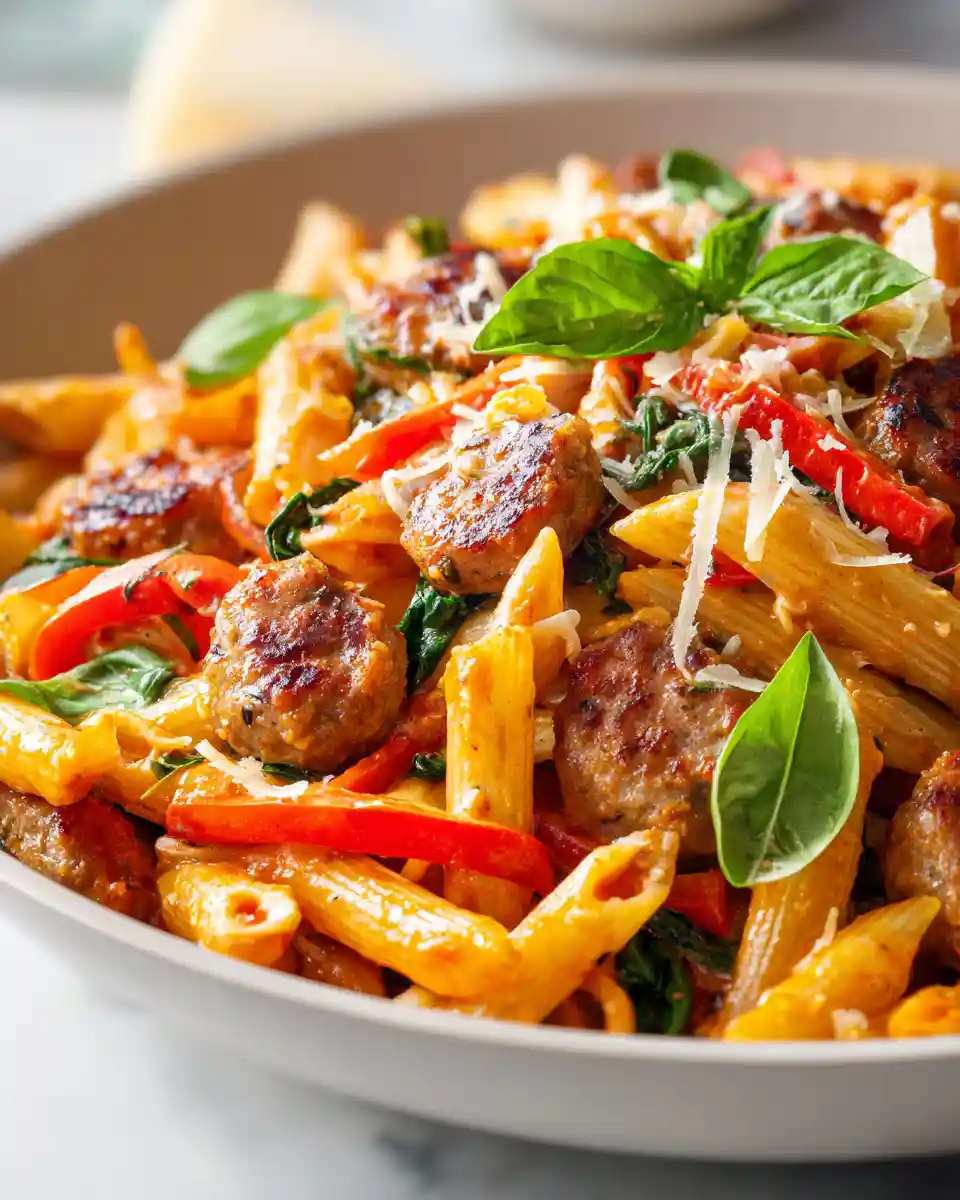
There is a specific, appetizing science to the moment sausage hits a hot skillet—the rendering of fat, the Maillard reaction creating that golden-brown crust, and the release of savory aromatics that instantly signal “dinner is ready.” This Sausage and Pepper Pasta Skillet isn’t just a meal; it’s a masterclass in building flavor layers in a single pan.
For many families, the “skillet dinner” is a survival tool. But nutritionally and texturally, they often fall flat, resulting in soggy noodles or one-note flavors. This recipe changes that. We are using the fond (those browned bits stuck to the bottom of the pan) to create a rich, clinging sauce that coats every ridge of the pasta. With the sweetness of bell peppers balancing the savory punch of the sausage, this dish offers a complete macronutrient profile—protein, carbohydrates, and fiber—without the cleanup of a three-course meal.
The Origins of a Street Fair Classic
While technically an Italian-American invention rather than a traditional Italian dish, the combination of sausage and peppers finds its roots in the street festivals of New York and New Jersey. Originally served on rolls, the transition to a pasta skillet allows for a more cohesive family dinner, transforming a street snack into a balanced, fork-friendly meal.
🛑 Stop the Skim: Top 3 Pro Tips for Skillet Success
If you want your pasta skillet to taste like it came from a restaurant kitchen rather than a box, follow these three rules:
- Sear, Don’t Steam: Brown your sliced sausage in batches if necessary. You want a deep, dark crust on the meat before adding the liquids. This texture contrast is vital.
- The Liquid Ratio is Math, Not Magic: One-pan pasta relies on the pasta starch thickening the liquid as it cooks. Do not rinse your pasta beforehand, and stick strictly to the liquid measurements below to ensure a velvety sauce, not a soup.
- Timing the Peppers: Add your bell peppers midway through the cooking process. If you add them too early, they disintegrate; too late, and they are raw. We want them tender-crisp to retain their Vitamin C and textural snap.
Ingredients
Produce & Meat
- 1 lb Italian sausage (Mild or Hot), casings removed or sliced into coins
- 1 red bell pepper, sliced into thin strips
- 1 yellow bell pepper, sliced into thin strips
- 1 yellow onion, thinly sliced
- 3 cloves garlic, minced
- 2 cups baby spinach (optional, for added iron/fiber)
Pantry & Liquids
- 12 oz Penne or Rotini pasta (uncooked)
- 2 ½ cups chicken broth (low-sodium preferred)
- 1 can (14.5 oz) fire-roasted diced tomatoes, undrained
- ½ cup heavy cream or half-and-half
- 1 tbsp olive oil
- 1 tsp dried oregano
- ½ tsp red pepper flakes (optional for heat)
- Salt and black pepper to taste
Garnish
- ½ cup Parmesan cheese, freshly grated
- Fresh basil, torn
Instructions
- Sear the Sausage: Heat the olive oil in a large, deep skillet or Dutch oven over medium-high heat. Add the sausage. Cook for 5–7 minutes, breaking it apart or flipping slices until well-browned. Remove sausage with a slotted spoon and set aside, leaving the rendered fat in the pan.
- Sauté Aromatics: Add the sliced onions and peppers to the hot skillet. Sauté for 3–4 minutes until they begin to soften and pick up color from the sausage fat. Add the minced garlic, oregano, and red pepper flakes. Cook for just 30 seconds until fragrant—do not burn the garlic.
- Deglaze and Build Sauce: Pour in the chicken broth and the can of fire-roasted tomatoes (juices included). Use a wooden spoon to scrape up the browned bits from the bottom of the pan—this is pure flavor. Bring the mixture to a low boil.
- Simmer the Pasta: Stir in the uncooked pasta, ensuring it is submerged in the liquid. Reduce heat to medium-low, cover, and simmer for 12–15 minutes. Stir occasionally to prevent sticking.
- Finish the Dish: When the pasta is al dente and most liquid is absorbed, stir the cooked sausage back into the pan. Stir in the heavy cream and baby spinach (if using). Cook for 2–3 minutes uncovered, allowing the sauce to thicken and the spinach to wilt.
- Serve: Remove from heat. Stir in half the Parmesan cheese. Garnish with remaining cheese and fresh basil before serving immediately.
🧐 Ingredient Substitution Guide
For dietary adjustments or pantry raids, use this quick guide.
- Italian Sausage → Turkey Sausage or Chicken Sausage: Lowers saturated fat significantly; you may need a splash more olive oil for searing.
- Heavy Cream → Coconut Milk or Greek Yogurt: Coconut milk adds a subtle sweetness; if using yogurt, stir it in off the heat to prevent curdling.
- Penne Pasta → Chickpea or Lentil Pasta: Increases protein and fiber. Reduce cooking time by 2–3 minutes as these break down faster.
- Chicken Broth → Vegetable Broth or Bone Broth: Bone broth adds collagen and extra protein.
Common Mistakes to Avoid
- Overcrowding the Pan: If your skillet is too small, the pasta will cook unevenly. Use a 12-inch skillet or a Dutch oven.
- Using High Heat for the Pasta: Once the pasta is added, keep it at a simmer. A rolling boil will evaporate the liquid too fast, leaving you with crunchy, undercooked noodles.
- Forgetting to Stir: Starch settles. If you don’t stir every few minutes, the pasta will glue itself to the bottom of the skillet.
Frequently Asked Questions
1. Can I use precooked sausage for this recipe? Yes. If using precooked sausage (like smoked kielbasa or chicken sausage), slice it and brown it quickly in step 1 just to warm it through and get some color. You won’t get as much rendered fat, so you might need a touch more oil for the vegetables.
2. How do I store leftovers? Store leftovers in an airtight container in the refrigerator for up to 3–4 days. The pasta will absorb more sauce as it sits. When reheating, add a splash of water or broth to loosen the sauce.
3. Can I freeze this dish? Cream-based pasta sauces generally do not freeze well; the texture can become grainy upon thawing. It is best enjoyed fresh or from the fridge.
4. Why is my sauce too runny? If the pasta is cooked but the sauce is thin, simply remove the lid and increase the heat slightly for 2–3 minutes. The evaporation will thicken the sauce rapidly. Stir constantly.
5. Is this gluten-free friendly? Absolutely. Swap the pasta for a high-quality gluten-free blend (like brown rice or corn pasta). Be vigilant with the cooking time, as GF pasta can go from perfect to mushy very quickly.
What to Serve Next?
If you enjoyed this hearty family meal, here are a few other GoodTasteRecipes favorites that master the balance of flavor and ease:
- Creamy Garlic Parmesan Chicken Pasta – Another creamy, protein-packed skillet winner.
- One-Pot Tomato Basil Chicken Pasta – A lighter, basil-forward variation for warmer evenings.
- Healthy Crockpot Tuscan Chicken – A hands-off approach to similar Italian flavors.
- Spinach Artichoke Chicken Pasta Bake – For when you want that oven-baked cheese crust.
For further reading on the science of one-pan pasta cooking, check out this guide from Serious Eats on starch water emulsion