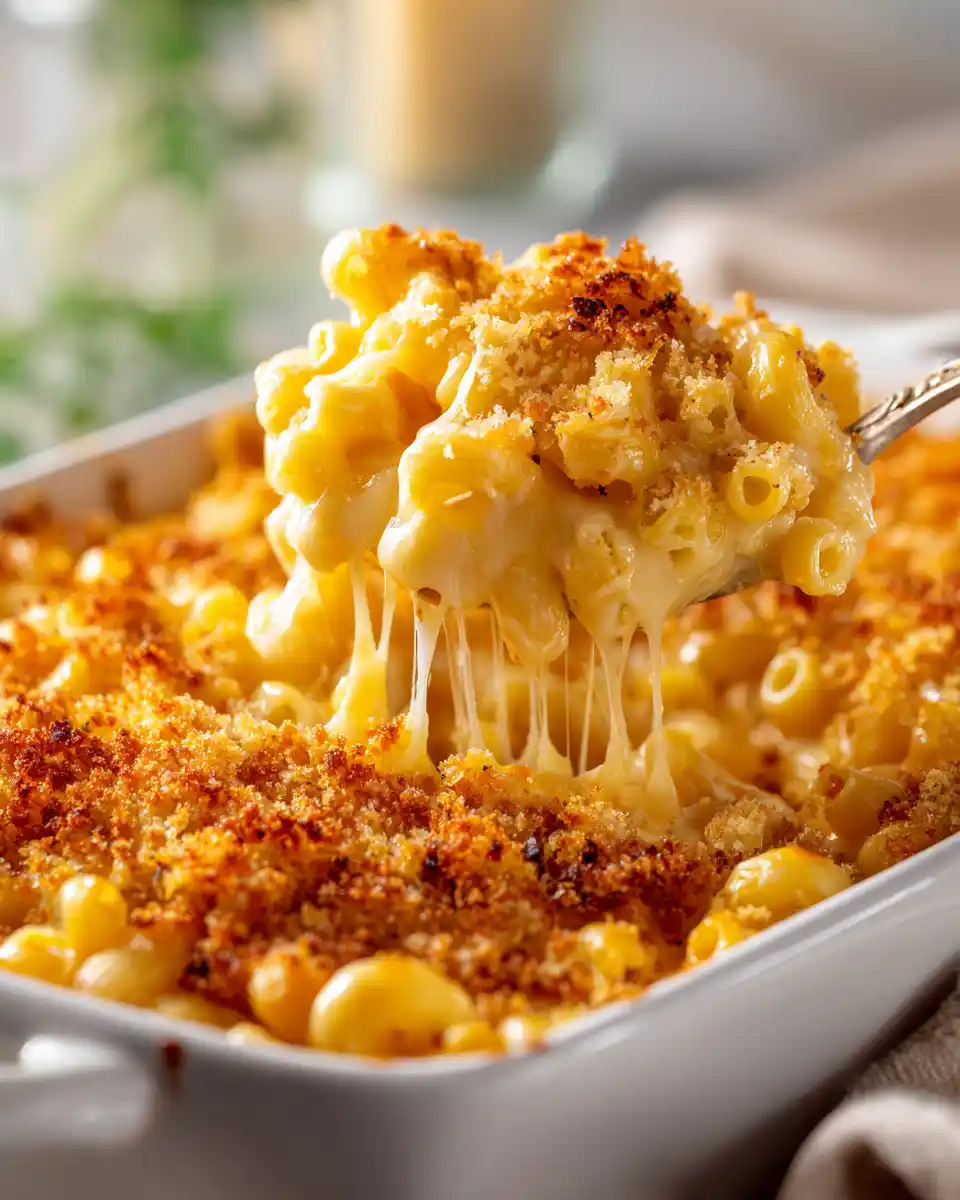
Why This Baked Mac and Cheese Actually Stays Creamy
If you clicked on this for a creamy baked mac and cheese with a golden top and a soft, cheesy center, this is exactly that recipe. The real problem with most baked mac and cheese is simple: it goes into the oven creamy and comes out dry, tight, and disappointing.
This version is built to fix that. You make a smooth cheese sauce that starts slightly looser than you think it should, coat the pasta generously, and bake just long enough to get that classic top without sacrificing the creamy middle. It is cozy, rich, and very much the kind of dish people go back for before the pan cools down.
I love recipes like this because they look simple, but texture is everything. A few small choices decide whether your mac and cheese feels silky and comforting or heavy and gluey.
The Ingredient Choices That Control Flavor and Texture
Baked mac and cheese is not just pasta plus cheese. It is a balance.
The pasta matters because overcooked noodles keep absorbing sauce in the oven. The milk matters because low-fat dairy can leave the sauce thin, while too much heavy cream can make it feel overly rich without giving you that classic mac and cheese flow. The cheese matters because not every cheese melts the same way.
The goal here is a sauce that tastes full and cheesy but still moves easily when you stir it. That is why I like using a mix of sharp cheddar for flavor and mozzarella or Monterey Jack for melt. Sharp cheddar alone can get a little oily or slightly grainy if pushed too hard. A blend gives you better control.
If you enjoy cozy baked pasta dinners, you could naturally link readers to recipes like Creamy Garlic Parmesan Chicken Pasta or Philly Cheese Steak Pasta (Easy Family Favorite) for more cheesy comfort-food ideas.
Ingredients
This recipe makes about 6 to 8 servings.
For the pasta
- 1 pound elbow macaroni
- 1 tablespoon salt for the pasta water
For the cheese sauce
- 5 tablespoons unsalted butter
- 1/4 cup all-purpose flour
- 4 cups whole milk, warmed
- 1 cup half-and-half
- 1 teaspoon Dijon mustard
- 1 teaspoon garlic powder
- 1/2 teaspoon onion powder
- 1/2 teaspoon smoked paprika
- 1 teaspoon kosher salt, plus more to taste
- 1/2 teaspoon black pepper
- 3 cups freshly shredded sharp cheddar cheese
- 2 cups freshly shredded mozzarella cheese
- 1 cup freshly shredded Monterey Jack cheese
- 1/2 cup grated Parmesan cheese
For the topping
- 1 cup panko breadcrumbs
- 2 tablespoons melted butter
- 1/4 cup grated Parmesan cheese
- 1/4 teaspoon smoked paprika
Optional add-ins
- 2 ounces cream cheese for extra richness
- a pinch of cayenne for gentle heat
- chopped parsley for finishing
Step-by-Step: How to Make Creamy Baked Mac and Cheese
1. Heat the oven and prep the dish
Preheat your oven to 375°F. Lightly butter a 9×13-inch baking dish.
This is a small step, but it helps the edges brown nicely and keeps the cheesy bits from welding themselves to the corners.
2. Boil the pasta just shy of done
Bring a large pot of salted water to a boil. Cook the elbow macaroni until just under al dente, usually about 1 to 2 minutes less than the package says.
That slightly undercooked center matters. The pasta will keep cooking in the sauce and in the oven. If you fully cook it now, it is much more likely to go soft and swollen later.
Drain the pasta and set it aside. Do not rinse it.
3. Build the roux
In a large pot or Dutch oven, melt the butter over medium heat. Whisk in the flour and cook for about 1 to 2 minutes.
You are not trying to brown it deeply. You just want to cook off the raw flour taste. It should smell buttery and a little nutty, not toasted and dark.
4. Add the milk slowly
Pour in the warmed milk a little at a time, whisking constantly. Then add the half-and-half.
This is where patience pays off. If you dump in cold liquid too fast, you make it harder for the sauce to stay smooth. Keep whisking until the mixture thickens enough to coat the back of a spoon.
5. Season before adding the cheese
Whisk in the Dijon mustard, garlic powder, onion powder, smoked paprika, salt, and black pepper.
This is a big flavor decision. Cheese alone does not automatically create a balanced sauce. The mustard will not make the dish taste mustardy. It simply wakes up the cheese flavor so the whole pan tastes more alive.
6. Melt in the cheese gently
Turn the heat to low. Add the cheddar, mozzarella, Monterey Jack, and Parmesan a handful at a time, whisking until melted before adding more.
Do not rush this part. High heat is one of the fastest ways to break a cheese sauce. You want the sauce glossy and smooth, not oily or clumpy.
If using cream cheese, stir it in here.
7. Combine the pasta and sauce
Add the drained macaroni and fold until every piece is coated.
At this point, the mixture should look slightly creamier and looser than your final goal. That is correct. The pasta will drink in some of that sauce in the oven.
8. Top and bake
Transfer the mac and cheese to the prepared baking dish.
In a small bowl, mix the panko, melted butter, Parmesan, and smoked paprika. Sprinkle evenly over the top.
Bake for 20 to 25 minutes, until bubbling around the edges and lightly golden on top. For extra color, broil for 1 to 2 minutes at the end, watching closely.
9. Rest before serving
Let it sit for about 5 to 10 minutes before scooping.
This short rest helps the sauce settle so you get creamy spoonfuls instead of a thin, runny pool. It is the difference between loose and luscious.
The Decision Fork: Extra Creamy vs More Baked and Firm
This is where you can steer the final result depending on what kind of mac and cheese you want.
Choose extra creamy if:
- you want a soft, saucy center
- you love stovetop mac and cheese but still want a baked top
- you plan to reheat leftovers later
How to do it:
- use the full amount of half-and-half
- add the optional cream cheese
- bake closer to 20 minutes
- do not over-broil
Choose more baked and firm if:
- you want cleaner slices or sturdier scoops
- you like more edge browning
- you are serving it at a potluck or holiday table
How to do it:
- reduce the half-and-half slightly
- bake closer to 25 minutes
- let it rest a full 10 to 15 minutes before serving
Neither version is wrong. It is just a question of whether your priority is spoonable creaminess or more casserole-style structure.
Common Mac and Cheese Mistakes That Ruin the Texture
Using pre-shredded cheese
Bagged shredded cheese is convenient, but it often contains anti-caking agents that keep it from melting as smoothly. Freshly shredded cheese gives a better sauce.
Overcooking the pasta
This is probably the most common mistake. The pasta keeps cooking later, so starting with fully soft noodles nearly guarantees a mushy final texture.
Making the sauce too thick before baking
A thick stovetop sauce can seem luxurious, but baked mac and cheese needs extra moisture because the oven dries things out. If the sauce already feels very tight in the pot, it will usually get even tighter in the oven.
Using heat that is too high for the cheese
Cheese wants gentle heat. If the sauce gets too hot, it can split and turn greasy. Lower heat gives you a smoother finish.
Baking too long
The goal is not to dry it into submission. You want bubbling edges and a lightly golden top. Once it hits that point, it is done.
If your readers enjoy cheesy party-style comfort food, a natural internal link here could point to Quick Cheesy Rotel Dip Recipe: Perfect Party Appetizer for another crowd-pleasing cheese recipe.
Good vs Bad Mac and Cheese Results
A good baked mac and cheese should feel creamy when you scoop into the center. The noodles should hold their shape but still feel tender. The top should add contrast, not hardness. The cheese flavor should be rich and savory, with just enough seasoning to keep it from tasting flat.
A bad result usually tells you exactly what went wrong.
If it is dry, it was likely baked too long or started with a sauce that was too thick.
If it is grainy, the cheese may have overheated or the cheese choice leaned too heavily on a sharp, dry variety without enough melt-friendly support.
If it tastes bland, it usually needs more salt or a little flavor lift from mustard, pepper, or paprika.
If the center is soupy, it may need a few more minutes of rest rather than more oven time. Resting often fixes texture more gently than extra baking.
For readers who like experimenting with pasta shapes and comfort-food variations, Ditalini Pasta Recipe is another useful internal link that feels relevant without forcing it.
What to Serve With Mac and Cheese
This baked mac and cheese can absolutely stand on its own, especially on a cold night when all you want is something warm and satisfying.
But it also works well with simple sides that lighten the plate a little.
Good options include:
- a crisp green salad with a tangy vinaigrette
- roasted broccoli or green beans
- tomato salad
- simple baked chicken
- barbecue-style mains for a holiday or weekend dinner spread
If you are building a comfort-food menu, this mac and cheese also fits nicely beside dishes with bold savory flavor, as long as the other items do not overpower the creamy cheese base.
Storage, Reheating, and Make-Ahead Tips
Store leftovers in an airtight container in the refrigerator for up to 4 days.
To reheat, add a splash of milk before warming. This is the easiest way to bring back the creamy texture. Reheat in the microwave in short bursts, stirring in between, or cover and warm in the oven at 325°F until hot.
For make-ahead prep, assemble the mac and cheese up to the point before baking. Cover and refrigerate for up to 24 hours. When ready to bake, let it sit at room temperature for about 20 to 30 minutes, then bake as directed.
If baking straight from the fridge, it may need a few extra minutes. The center should be hot and bubbling, but avoid baking so long that the top dries out.
FAQ
What is the best cheese for baked mac and cheese?
A mix works best. Sharp cheddar brings classic flavor, while mozzarella or Monterey Jack improves melt and keeps the sauce smoother.
Why is my baked mac and cheese dry?
Usually because the pasta was overcooked, the sauce was too thick before baking, or the dish stayed in the oven too long.
Can I make this ahead of time?
Yes. Assemble it, cover it, and refrigerate it before baking. Add a few extra minutes if it is still cold when it goes into the oven.
Should I cover baked mac and cheese in the oven?
Not for this recipe. Leaving it uncovered helps create the golden top. If your topping is browning too quickly, you can loosely tent it with foil.
Can I freeze mac and cheese?
Yes, though the texture is best fresh or refrigerated. Freeze tightly wrapped portions and thaw overnight in the fridge before reheating with a little milk.
Final Thoughts
A great baked mac and cheese is not complicated, but it is controlled. You want enough sauce, the right cheese blend, pasta that still has a little bite, and just enough oven time to create contrast without losing creaminess.
That is what makes this version feel reliable. It gives you the comfort-food payoff people want from mac and cheese, but with the kind of small texture decisions that keep it from turning dry or forgettable.
In Jake Moreno style, this is the kind of dish I would slide onto the table in a hot baking dish, listen for that first crack of the golden topping, and know before anyone says a word that it is about to disappear.