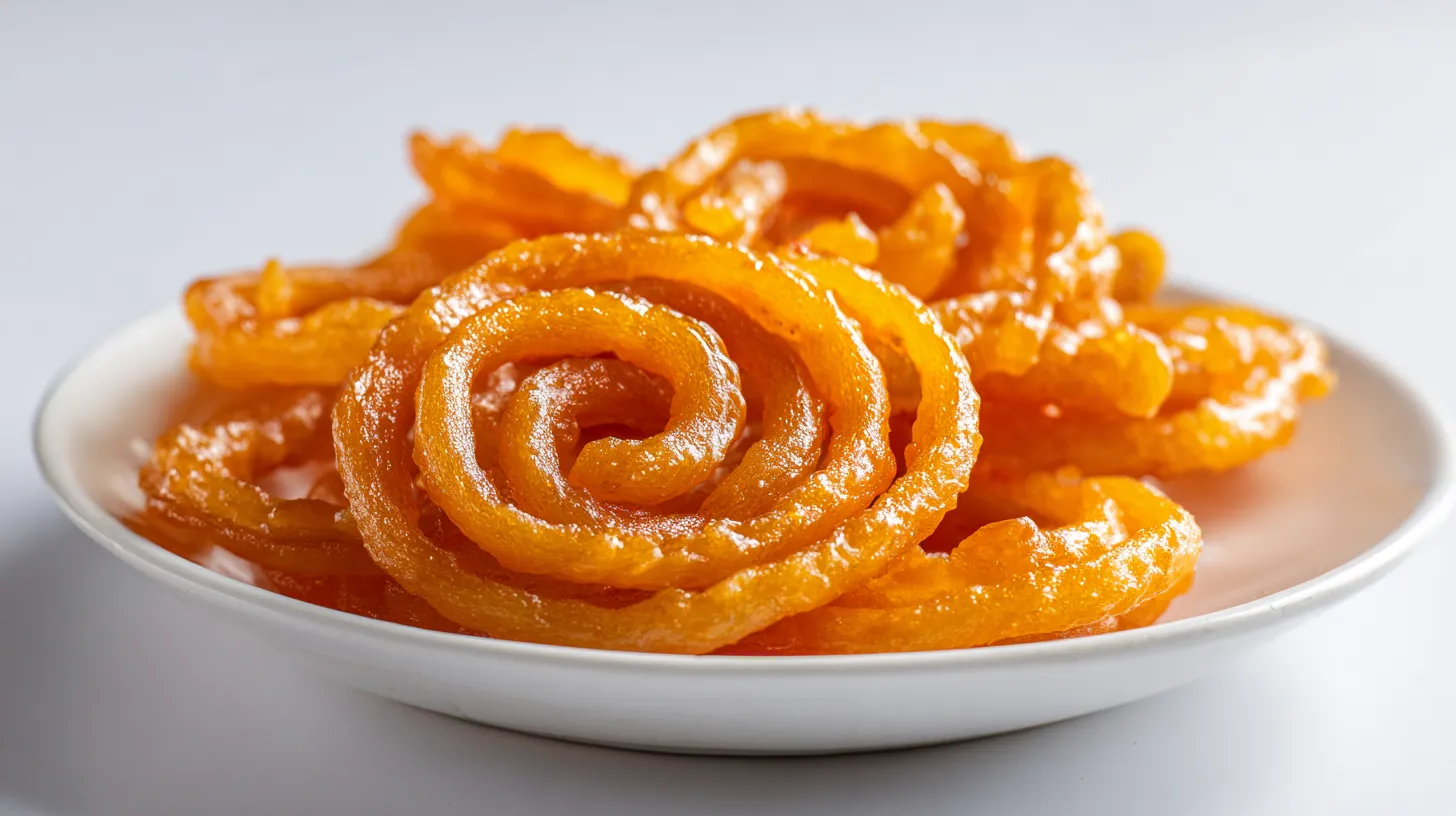
If you’re looking for the ultimate Jalebi recipe, you’ve come to the right place. There’s something truly magical about a plate of warm, sticky jalebi. That golden swirl of deep-fried dough, soaked lovingly in fragrant sugar syrup, has a way of taking you straight to a bustling street corner somewhere in Delhi or maybe to your childhood kitchen, where the smell of cardamom and ghee lingered just a little longer on festive mornings. In this guide, we’re diving into everything you need to know to make perfect jalebi at home from its intriguing history to the exact steps for that signature crisp texture and syrupy bite. Whether you’re new to Indian sweets or trying to recreate a family favorite, this one’s for you.
Print
Jalebi Recipe: The Ultimate Guide to Crispy, Syrupy Sweet Perfection
- Total Time: 12 hours (including fermenting)
- Yield: 12 jalebis 1x
- Diet: Vegetarian
Description
Crispy, syrup-soaked jalebi made at home using fermented batter and fragrant saffron syrup.
Ingredients
1 cup all-purpose flour (maida)
2 tbsp cornstarch
¼ tsp baking soda
¾ cup plain yogurt (room temp)
⅔ cup water
Pinch turmeric (optional)
1 cup sugar
½ cup water (for syrup)
¼ tsp cardamom powder
4–5 saffron strands
½ tsp lemon juice
1 tsp rose water (optional)
Ghee or oil for frying
Instructions
1. Mix flour, cornstarch, baking soda, yogurt, and water to make a smooth batter. Let ferment overnight.
2. Prepare syrup by simmering sugar, water, saffron, cardamom, and lemon juice to one-string consistency.
3. Heat ghee/oil. Pipe batter into spirals and fry until golden.
4. Soak fried jalebis in warm syrup for 20–30 seconds.
5. Serve immediately for best crisp texture.
Notes
Fermentation is key to texture.
Use squeeze bottle for perfect spirals.
Syrup should be warm—not hot or cold.
- Prep Time: 10 minutes
- Cook Time: 15 minutes
- Category: Dessert
- Method: Frying
- Cuisine: Indian
Nutrition
- Serving Size: 2 pieces
- Calories: 190
- Sugar: 23g
- Sodium: 10mg
- Fat: 9g
- Saturated Fat: 4g
- Unsaturated Fat: 4g
- Trans Fat: 0g
- Carbohydrates: 26g
- Fiber: 0.5g
- Protein: 2g
- Cholesterol: 10mg
The Sweet Story Behind Jalebi
A cozy morning and a crispy memory
Every time I make crispy jalebi, I’m transported back to my grandmother’s kitchen small, warm, and smelling like sugar and spice. On special mornings before Diwali, she would wake before dawn to prepare the batter, letting it rest and bubble overnight on the counter. She never measured a thing. The oil sizzled on instinct. And the moment those golden spirals hit the sugar syrup, our whole house smelled like celebration.
We’d sit around the table, still in our pajamas, dipping warm jalebis into tiny steel bowls of milk. It wasn’t just a recipe it was a ritual. That sticky sweetness, the crunch on the outside, the soft syrup-soaked center it felt like love in dessert form. Now, when I make jalebi recipe for my own family, I chase that same memory. I want to share that feeling with you, too.
The cultural swirl: Jalebi, zlabia, and a tale of syrup and silk roads
Jalebi might be beloved in Indian homes today, but its story starts far from our kitchens. Its ancestor, zlabia (or zalabiya), originated in the Middle East centuries ago. Traders and travelers carried the idea through the Silk Road and Persian empires, where it slowly transformed. By the time it reached India, jalebi had evolved gaining its signature spiral shape, saffron-laced syrup, and a firm place in the heart of every festival.
Over time, it picked up countless spellings and forms across regions. This easy jalebi recipe brings authentic Indian flavors to your kitchen. Learning how to make jalebi at home might seem challenging, but with the right technique, you’ll create perfectly crispy jalebi every time.
This recipe honors that long, delicious journey and brings it right to your kitchen crispy, syrupy, and made with heart.
How to Make Jalebi at Home
What You’ll Need to Master This Crispy Jalebi Recipe.
Making jalebi from scratch at home is completely doable you don’t need a street vendor’s copper wok to get that crispy, syrup-soaked magic. What you do need is the right mix of ingredients, a bit of patience, and a willingness to get a little sticky.
Here’s what you’ll need for the batter:
- 1 cup all-purpose flour (maida) (Optional: add 1-2 tablespoons chickpea flour/besan for a richer color and traditional chew)
- 2 tablespoons cornstarch
- ¼ teaspoon baking soda
- ¾ cup plain yogurt (room temperature)
- ⅔ cup water (adjust as needed)
- A pinch of turmeric or natural yellow food coloring (optional, for color)
For the sugar syrup:
- 1 cup granulated sugar
- ½ cup water
- 4–5 strands saffron (optional but traditional)
- ¼ teaspoon ground cardamom
- ½ teaspoon lemon juice (prevents crystallization)
- Rose water (1 teaspoon, optional)
For frying:
- Ghee or neutral oil (like sunflower oil) – use a wide, flat-bottomed pan for even heat and depth.
These ingredients are simple, but the jalebi’s magic lies in technique. It’s important to ferment the batter to get that slight tang and airy crispness that sets jalebi apart from similar sweets like zlabia. The syrup should be sticky but not thick so it clings to each fried loop without making it soggy.
Step-by-step instructions with helpful tips
- Make the batter
In a mixing bowl, whisk together the flour, cornstarch, and baking soda. Add yogurt and water, stirring to form a smooth, lump-free batter. It should be pourable but not runny. Cover the bowl and let it ferment at room temperature for 10–12 hours (or overnight). - Prepare the syrup
In a small saucepan, combine sugar and water. Bring to a boil, then reduce to a simmer for 8–10 minutes until it reaches a one-string consistency (sticky when pressed between your fingers). Add saffron, cardamom, rose water, and lemon juice. Keep warm. - Shape and fry
Transfer the batter into a piping bag or squeeze bottle fitted with a small round nozzle. Heat oil or ghee in a wide, flat pan to 330°F (165°C) — this temperature is crucial for perfect texture. If you don’t have a thermometer, drop a small bit of batter into the oil: it should float to the surface in 3–4 seconds when the oil is ready.- Pipe at Low Heat: Keep the heat on low-medium while piping the spirals so they hold their shape perfectly.
- Fry at Medium-High: Immediately increase the heat to medium-high after piping a batch. Fry until golden and crisp—about 2 minutes per side.
- Soak in syrup
Immediately transfer the hot jalebis to the warm syrup. Let them soak for 20–30 seconds, then remove and place on a wire rack.
Serve warm for the best crunch and syrupy bliss. The ultimate pairing is a bowl of chilled, sweet rabri (thickened milk) for that classic Indian sweet shop experience. Pair with milk, rabri, or enjoy as-is just like we did as kids.
This crispy jalebi recipe delivers restaurant-quality results at home. This isn’t just a dessert it’s a story, a tradition, and a joy to make at home.
Jalebi in an Hour: The Fast Instant Jalebi Recipe
This instant Jalebi recipe skips the overnight fermentation using simple leavening agents to deliver a quick, crispy sweet perfect for last-minute cravings.
Ingredients for Quick Jalebi Batter (Instant Method)
- 1 cup all-purpose flour (maida)
- 2 tablespoons cornstarch
- 1 teaspoon baking powder
- ¼ teaspoon baking soda
- ¾ cup plain yogurt (room temperature)
- ⅔ cup water (adjust as needed)
- A pinch of turmeric or yellow food coloring (optional)
- NOTE: The Sugar Syrup and Frying Ingredients remain the same as the traditional recipe.
Step-by-Step Instructions (Ready in 20 Minutes)
- Whisk the Batter: In a bowl, whisk together the flour, cornstarch, baking powder, and baking soda. Add yogurt and water, stirring to form a smooth, lump-free batter. It should be pourable but not runny.
- Quick Rest: Cover the bowl and let it rest at room temperature for just 20 minutes. Do not rest overnight.
- Fry & Soak: Follow the exact frying and soaking instructions from the traditional recipe below, paying close attention to the oil temperature for the crispiest result.
Jalebi Around the World
Zlabia, zalabiya & the global journey of jalebi
While jalebi is celebrated in India as a festive sweet, it has cousins across cultures that share the same irresistible combination of crisp dough and sugar syrup. In North Africa, there’s zlabia usually thicker, looser in shape, and often dyed bright red or orange. It’s common to find zlabia during Ramadan in countries like Tunisia or Algeria, where it’s eaten to break the fast.
In the Middle East, the treat appears as zalabiya more like fritters than spirals, sometimes filled with dates or drizzled in honey. Though the names vary slightly, the soul of the dish is familiar: fried dough, sweetness, and joy.
Even in Europe, similar treats like churros or funnel cakes hint at a shared love for fried batter and syrup. But jalebi is unique not just in shape or syrup, but in how it’s woven into Indian traditions. From morning temple offerings to sweet shops bustling during wedding season, it’s more than dessert. It’s emotion, ceremony, and nostalgia rolled into a crunchy spiral.
This connection is why jalebi remains a staple at every Indian sweet shop, no matter how many modern desserts enter the scene.
More than a sweet: Jalebi’s cultural and emotional role
In India, jalebi isn’t reserved only for festivals it’s comfort food. A warm bowl of jalebi paired with a bold cup of chai is the kind of breakfast you reach for when the morning calls for a little comfort. In places like Uttar Pradesh or Madhya Pradesh, jalebi is a morning staple, served alongside samosas or poha.
It also plays a role in language and humor. In Hindi, the phrase “Seedha jaise jalebi” (as straight as a jalebi) is used to jokingly describe someone clearly not straightforward because, well, just look at it!
For immigrants and expats, jalebi carries even more meaning. It’s the taste of home, the thing you crave when nothing else quite fills that particular kind of homesick ache. Whether you found this recipe by typing “jalbiteworldfood” or searching for a Diwali treat, chances are you’re chasing a memory.
And that’s exactly what this recipe gives back warmth, familiarity, and the satisfying crackle of a perfectly made jalebi.
Common Mistakes and Pro Tips for Perfect Jalebi
Troubleshooting soggy, flat, or chewy jalebi
Even experienced home cooks can struggle with jalebi on the first try. It’s a deceptively simple sweet just flour, sugar, and oil, right? But getting that signature crunch with a syrupy center takes a little finesse. Here are the most common pitfalls and how to fix them:
- Jalebis turn out soggy
If they’re limp and soft instead of crisp, your syrup may be too watery or the jalebis weren’t fried at the right temperature. Make sure your syrup has reached one-string consistency, and always fry over medium not low heat.- Pro-Tip: When dipping, the syrup should be WARM, not boiling hot. Too-hot syrup will cook the jalebi further and destroy the crispness. The jalebi should be hot, the syrup should be warm.
- They’re chewy instead of crisp
Over-soaking in syrup or under-fermented batter can cause this. Only soak for 20–30 seconds, and let the batter ferment at least 10–12 hours to build flavor and texture. - They don’t puff up or hold shape
Your batter might be too runny, or your oil too cool. Adjust the batter thickness it should be pourable but not watery and always test a small amount in hot oil first. - The syrup crystallizes
If your syrup turns grainy or hardens after cooling, it’s likely missing acid. Add a small amount of lemon juice to prevent crystallization and keep the syrup glossy.
Jalebi-making secrets from the home kitchen
- Use a squeeze bottle or piping bag
To control the shape and get tight spirals, skip spoons or funnels. A squeeze bottle gives steady pressure and cleaner loops. - Stick with ghee if possible
While oil works fine, ghee adds richness and aroma that elevates the flavor of jalebi, giving it that authentic sweet shop taste. - Color naturally if desired
Traditionally, turmeric was used for color not food dye. Just a pinch gives a golden hue without affecting flavor. - Prep everything ahead
Have your syrup warm and ready before you start frying. Timing is key hot jalebi should go into warm syrup immediately for the perfect soak.
Remember, the first try doesn’t have to be perfect. Every batch teaches you something. Just like grandma didn’t need a timer, soon you’ll start recognizing that golden moment by sight, sound, and smell.
This easy jalebi recipe at home provides everything you need for perfect results – sweet, crisp, and oh-so-worth it.
Frequently Asked Questions About Jalebi and Zlabia
What is the origin of zlabia?
Zlabia, often considered the Middle Eastern ancestor of jalebi, originated in countries like Iran and Tunisia. It’s believed to have first appeared during the medieval Islamic period and was traditionally prepared during Ramadan. The dish spread along trade routes, inspiring variations like India’s jalebi.
Who invented jalebi?
The exact origin of jalebi is hard to trace, but its roots likely stem from ancient Persia, where a similar dish called zalabiya or zlabia was popular. Jalebi as we know it today was introduced to the Indian subcontinent by Persian-speaking invaders and was later adapted into regional cuisines with unique twists.
Which country invented jalebi?
While jalebi is most commonly associated with India, its origins are believed to trace back to Persia. Over time, it was adopted into Indian cuisine and became a beloved dessert across South Asia. Today, it holds a prominent place in Indian festivals, weddings, and breakfast tables.
What is the composition of zlabia?
Zlabia is typically made from a simple batter of flour, yeast, and water, sometimes with added sugar and flavorings like orange blossom water. The batter is fermented, piped into hot oil in free-form spirals or shapes, then soaked in a fragrant sugar or honey syrup much like jalebi, but with regional variations in texture and taste.
Conclusion
Making jalebi at home is more than learning a new recipe it’s stepping into a centuries-old tradition, one sweet spiral at a time. Whether you’re preparing it for Diwali, sharing it with neighbors, or just treating yourself on a rainy morning, jalebi brings people together through taste and memory.
From the delicate balance of crispness and syrup to its Persian roots and Indian identity, jalebi is a dessert with a story in every bite. Whether you’re new to Indian sweets or perfecting your technique, this complete jalebi recipe delivers authentic taste and texture.
Don’t worry if your first batch isn’t perfect. With each loop you pipe and every syrupy dip, you’re closer to mastering one of the most beloved sweets in the world.
If you enjoyed this easy jalebi recipe for homemade Indian sweets, don’t forget to share it with your friends! ✨