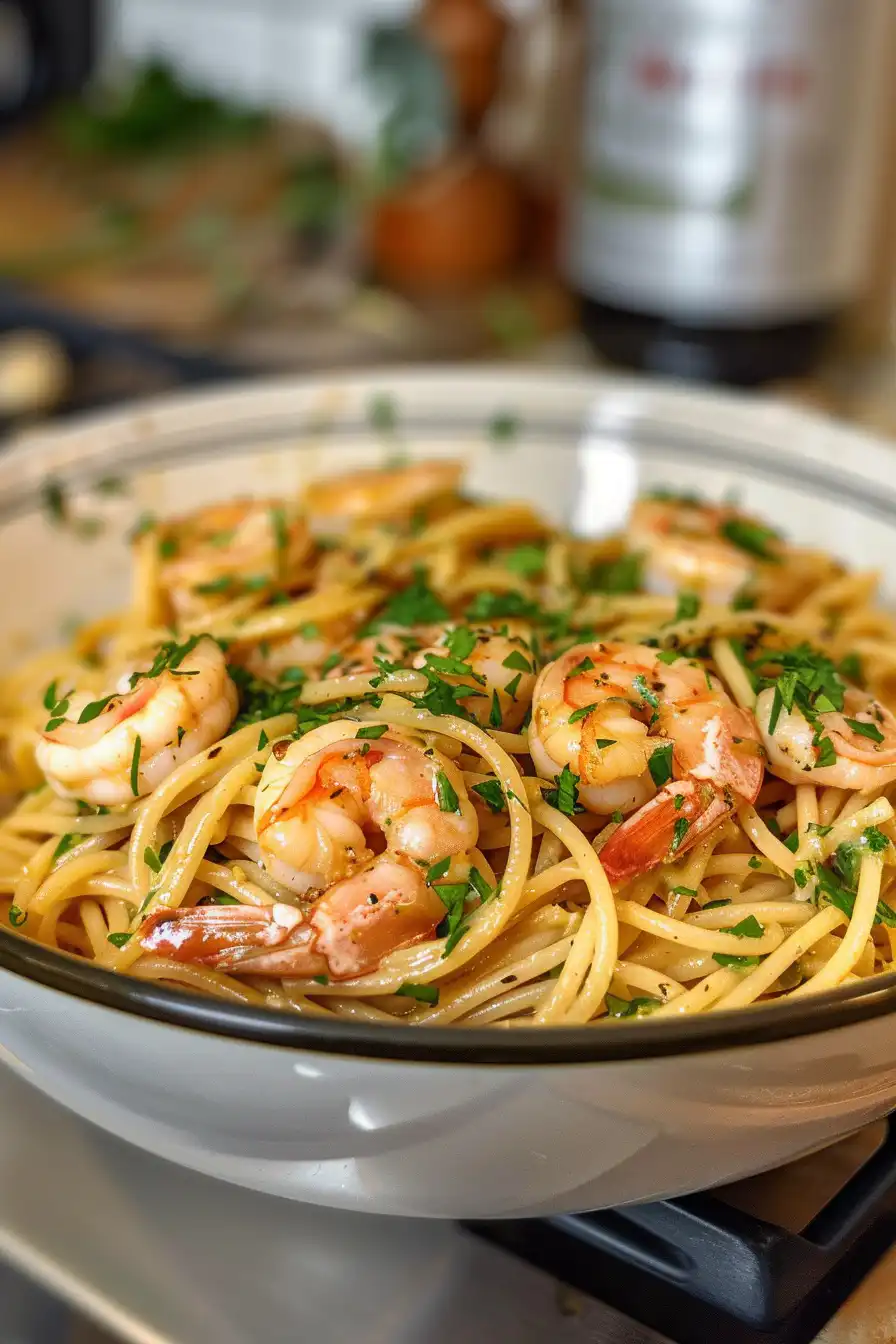
Garlic shrimp pasta is a restaurant-quality dinner that comes together in your home kitchen in under 25 minutes. Succulent shrimp pairs beautifully with tender pasta and a luxurious cream sauce infused with aromatic garlic, lemon, and fresh herbs. This dish delivers elegant flavor without requiring advanced cooking skills or unusual ingredients.
| Prep Time | Cook Time | Total Time | Servings | Difficulty | Cuisine |
|---|---|---|---|---|---|
| 10 minutes | 15 minutes | 25 minutes | 4 servings | Easy | Italian-Inspired |
Why This Recipe Works
This garlic shrimp pasta recipe solves the challenge of creating an impressive dinner on busy weeknights without sacrificing quality or taste. The combination of butter and olive oil creates a rich base that carries the garlic flavor throughout the dish, while heavy cream provides silky texture that clings beautifully to every strand of pasta. Lemon juice adds brightness and prevents the sauce from becoming heavy, balancing the richness with fresh acidity that complements both the shrimp and cream.
Shrimp cooks in just 90 seconds per side, making this the fastest protein option for a restaurant-quality dinner. Unlike chicken or beef that require longer cooking times, shrimp reaches perfect doneness almost instantly, keeping the entire dish streamlined and simple. The short cooking time also means shrimp maintains its delicate texture and sweet flavor profile.
The technique of reserving pasta water is essential to this recipe’s success. Starchy pasta water emulsifies naturally with the cream and butter, creating a silky sauce that coats pasta strands evenly. This simple step prevents the sauce from breaking and ensures every bite delivers consistent, velvety texture throughout the dish.
Ingredients You’ll Need
Each ingredient in this garlic shrimp pasta recipe serves a specific purpose in creating balanced, restaurant-quality flavor.
| Ingredient | Quantity | Notes |
|---|---|---|
| Large shrimp | 1 pound | Peeled and deveined; substitute medium shrimp if necessary, reducing cook time by 15-20 seconds per side |
| Pasta (fettuccine or linguine) | 1 pound | Flat noodles work best for sauce cling; linguine acceptable alternative |
| Fresh garlic cloves | 6 cloves, minced | Always use fresh; pre-minced garlic loses potency and flavor complexity |
| Heavy cream | 1 cup | Full-fat only; do not substitute with half-and-half or milk |
| Butter (unsalted) | 4 tablespoons | Divide into 2 tablespoons for shrimp searing, 2 tablespoons for sauce |
| White vegetable broth | 1/2 cup | Low-sodium preferred to control salt levels |
| Fresh lemon juice | 1/4 cup | Freshly squeezed essential; bottled lemon juice lacks brightness |
| Red pepper flakes | 1/2 teaspoon | Adjust to taste preference; omit if heat-sensitive |
| Salt | 1 teaspoon | Kosher salt preferred; adjust based on broth saltiness |
| Black pepper | 1/2 teaspoon | Freshly ground; pre-ground loses aromatic oils quickly |
| Fresh parsley | 1/2 cup, chopped | Add at end to preserve bright color and fresh flavor |
| Parmesan cheese | 1/4 cup, grated | Freshly grated from block; pre-grated contains anti-caking agents |
| Extra-virgin olive oil | 2 tablespoons | High heat tolerant variety; reserve premium olive oil for finishing |
Step-by-Step Instructions
Preparation Phase
- Bring a large pot of salted water to a rolling boil, filling pot three-quarters full
- Add pasta to boiling water and cook according to package directions until al dente
- Drain pasta through a fine-mesh strainer and set aside in a large bowl
- Reserve exactly 1 cup of pasta water in a separate measuring cup before discarding the rest
- Pat shrimp dry with paper towels to remove excess moisture
- Mince fresh garlic cloves into small, uniform pieces
- Chop fresh parsley and grate Parmesan cheese immediately before cooking
Shrimp Searing Phase
- Heat a large skillet over medium-high heat until the bottom shimmers
- Add 2 tablespoons olive oil and 2 tablespoons butter, allowing butter to melt completely
- Season shrimp evenly with salt and pepper on both sides
- Arrange shrimp in a single layer in the hot skillet
- Cook shrimp for exactly 1.5 to 2 minutes without moving them to develop color
- Flip each shrimp using tongs and cook the second side for another 1.5 to 2 minutes
- Transfer cooked shrimp to a clean plate and set aside
Sauce Building Phase
- Reduce the skillet heat to medium to prevent garlic from burning
- Add remaining 2 tablespoons butter to the same skillet
- Add minced garlic and red pepper flakes to the melted butter
- Stir constantly for 30 to 45 seconds until the kitchen fills with garlic aroma
- Pour white vegetable broth into the skillet and add fresh lemon juice
- Simmer for 2 minutes to allow the flavors to meld and concentrate
- Reduce heat to low and position a whisk over the skillet
- Slowly pour heavy cream into the broth while whisking continuously
- Continue whisking gently for 2 to 3 minutes until the sauce becomes silky and smooth
Finishing Phase
- Return the cooked shrimp to the skillet with the cream sauce
- Add the cooked pasta directly to the skillet with the shrimp and sauce
- Use two forks to toss everything together for 1 to 2 minutes
- Add reserved pasta water in small increments, 2 tablespoons at a time, if sauce is too thick
- Remove the skillet from heat and stir in chopped fresh parsley
- Divide the pasta mixture evenly among four serving bowls
- Top each bowl with freshly grated Parmesan cheese
- Serve immediately while the dish is still steaming hot
Pro Tips for Best Results
- Dry the shrimp completely: Wet shrimp creates steam instead of a golden sear. Pat shrimp thoroughly with paper towels immediately before cooking to achieve a caramelized exterior that locks in flavor.
- Use high-quality garlic: Fresh garlic cloves deliver exponentially more flavor than pre-minced versions. Mince just before cooking to preserve aromatic compounds that oxidize quickly when exposed to air.
- Temper the cream properly: Always reduce heat to low before adding cream to prevent the sauce from splitting. Whisking continuously while adding cream creates an emulsion that remains stable throughout cooking and serving.
- Control pasta water strategically: Starchy pasta water is your secret weapon for silky sauce. Add it gradually while tossing, allowing you to reach perfect consistency without oversaturating the dish.
- Time the parsley addition: Add fresh parsley after removing from heat to preserve its bright green color and fresh flavor. Heat causes parsley to darken and lose delicate aromatic qualities.
- Use proper skillet size: A 12-inch skillet prevents overcrowding and ensures even heat distribution. Crowded pans create steam, preventing proper shrimp browning and sauce development.
Common Mistakes to Avoid
Overcooking the Shrimp
What happens: Shrimp becomes rubbery and tough, losing its tender, sweet texture. Why it occurs: Shrimp requires minimal cooking time; even 30 extra seconds per side causes muscle fibers to contract excessively. How to fix it: Cook exactly 1.5 to 2 minutes per side and remove immediately when shrimp turns opaque pink. Practice timing with a kitchen timer until you develop visual recognition of perfect doneness.
Splitting the Cream Sauce
What happens: Sauce separates into oily puddles and breaks into grainy texture. Why it occurs: Adding cold cream to hot liquid or cooking at too high temperature causes the fat and water molecules to separate irreversibly. How to fix it: Always reduce heat to low before adding cream and whisk continuously for smooth emulsification. If splitting occurs, remove from heat and whisk in 1 tablespoon cold water at a time until sauce smooths.
Using Bottled Lemon Juice
What happens: Sauce tastes flat and one-dimensional despite adding lemon juice. Why it occurs: Bottled lemon juice loses volatile aromatic compounds during processing and contains preservatives that mute fresh citrus brightness. How to fix it: Always use fresh lemons; squeeze juice immediately before cooking. One lemon yields approximately 3 tablespoons of juice, which is sufficient for this recipe.
Neglecting Pasta Water
What happens: Sauce becomes thick and pasty, clinging unevenly to pasta strands. Why it occurs: Without starchy liquid, cream and butter separate instead of forming silky emulsion that coats pasta evenly. How to fix it: Always reserve 1 cup pasta water before draining. Add water gradually during the finishing phase, 2 tablespoons at a time, while tossing until you achieve creamy, flowing consistency.
Adding Garlic Too Early
What happens: Garlic turns dark brown and develops bitter, burnt flavor that ruins the entire dish. Why it occurs: Garlic burns rapidly at high temperatures, transforming from aromatic to acrid within seconds. How to fix it: Reduce heat to medium before adding minced garlic and stir constantly for no more than 45 seconds. Add broth immediately after to stop the cooking process and dilute any slight browning.
Variations and Substitutions
This garlic shrimp pasta recipe adapts beautifully to different preferences and dietary needs while maintaining its elegant character.
| Original Ingredient | Substitution Option | Flavor Impact |
|---|---|---|
| Heavy cream | Greek yogurt (1 cup) added slowly off-heat | Tangier, lighter sauce with probiotic benefits; reduce heat before adding to prevent curdling |
| Fettuccine pasta | Angel hair or thin spaghetti | More delicate texture; reduce total cooking time by 1-2 minutes for thinner noodles |
| White vegetable broth | Seafood stock or clam broth | Deeper umami notes complementing shrimp naturally; use half the quantity due to stronger flavor |
| Fresh lemon juice | Fresh lime juice | Tropical brightness with distinct citrus character; use same quantity as lemon |
| Red pepper flakes | Fresh bird’s eye chili (minced) | Fresh heat with herbal complexity; start with 1/4 teaspoon and adjust to taste |
| Parmesan cheese | Pecorino Romano | Sharper, saltier finish; reduce additional salt by 1/4 teaspoon |
| Fresh parsley | Fresh basil or dill | Distinct herb profiles; basil adds Italian richness, dill emphasizes seafood character |
| Butter | Ghee | Richer, nuttier flavor with higher smoke point; use identical quantity |
Serving Ideas
Garlic shrimp pasta shines as the centerpiece of intimate dinners, casual weeknight meals, and even impressive entertaining. For date night, plate the pasta individually using tongs to create height and elegance, then drizzle any remaining sauce around the pasta mound. Garnish with additional fresh parsley and a crack of black pepper for restaurant-style presentation.
Pair this dish with a crisp white wine alternative such as sparkling apple cider or fresh ginger ale to complement the cream sauce without competing with shrimp’s delicate sweetness. Serve with crusty bread or garlic bread on the side to soak up every drop of the luxurious sauce, turning your plate into a complete, satisfying meal.
For entertaining groups, prepare the sauce ahead and keep shrimp refrigerated separately. Cook shrimp and pasta just before serving, allowing guests to enjoy maximum freshness and optimal temperature. Arrange the pasta on a large platter family-style, letting guests serve themselves and customize their portions with Parmesan cheese and fresh herbs.
Light salads with vinaigrette balance the richness beautifully; try arugula with lemon vinaigrette or mixed greens with balsamic reduction. Roasted asparagus or steamed broccoli adds vegetables without overwhelming the delicate shrimp flavor, while garlic bread transforms the meal into a complete, indulgent dinner experience.
Storage and Reheating
| Storage Method | Duration | Reheating Instructions |
|---|---|---|
| Refrigerator (covered container) | Up to 2 days | Reheat gently in a skillet over low heat, stirring frequently. Add 2-3 tablespoons pasta water if sauce appears thick. Cook until warmed through, approximately 3-4 minutes. |
| Freezer (airtight container) | Up to 1 month | Thaw overnight in refrigerator. Reheat using stovetop method above. Texture will be slightly softer than fresh; best served as a casual lunch rather than special dinner. |
| Room temperature (short-term) | Up to 2 hours | Consume as-is without reheating for best texture. Cover with foil to prevent drying. Shrimp and pasta will have reached room temperature. |
| Microwave reheating | Individual portions | Place single portion in microwave-safe bowl. Add 1 tablespoon pasta water. Microwave at 50% power for 2-3 minutes, stirring halfway through. Tends to create slightly uneven heating but works for quick reheating. |
| Sauce and protein separated | Up to 3 days refrigerated | Store cooked shrimp in separate container from sauce. Prepare fresh pasta when ready to serve. Combine components and heat together gently for best results and maximum freshness. |
Nutritional Information
The following nutritional values are approximate and calculated per serving based on four total servings of this garlic shrimp pasta recipe.
| Nutrient | Amount per Serving |
|---|---|
| Calories | 385 |
| Total Fat | 16g |
| Saturated Fat | 8g |
| Cholesterol | 165mg |
| Protein | 28g |
| Total Carbohydrates | 32g |
| Dietary Fiber | 2g |
| Sugars | 2g |
| Sodium | 620mg |
| Potassium | 285mg |
| Iron | 3.2mg |
| Calcium | 95mg |
Shrimp provides excellent protein (28g per serving) making this garlic shrimp pasta dish satisfying despite moderate portion sizes. The combination of lean protein with carbohydrates from pasta creates a balanced macronutrient profile suitable for active lifestyles. Heavy cream contributes rich flavor from healthy fats, though moderating portions keeps saturated fat within recommended daily limits.
Frequently Asked Questions
Can I make this garlic shrimp pasta ahead of time for entertaining?
You can prepare components separately and assemble just before serving. Make the cream sauce up to 4 hours ahead and refrigerate in an airtight container. Cook shrimp and pasta fresh for maximum texture and flavor. Reheat sauce gently over low heat while cooking fresh pasta, then combine components for optimal results. This approach maintains restaurant-quality texture while reducing stress during entertaining.
What is the best pasta type for this creamy garlic shrimp recipe?
Flat pasta shapes like fettuccine, linguine, or pappardelle work best because their broad surfaces catch and hold creamy sauce more effectively than round noodles. Fettuccine is the traditional choice for cream sauces due to its balanced thickness and width. Angel hair works but tends to feel delicate beneath the heavy sauce. Avoid small shapes like penne or rigatoni that trap sauce internally rather than coating externally.
How do I prevent my easy creamy shrimp pasta sauce from becoming too thick or breaking?
Keep heat at low when adding cream and whisk continuously to create proper emulsification. Reserve pasta water specifically to adjust sauce consistency after combining components. If sauce breaks despite precautions, remove from heat and whisk in cold pasta water (1 tablespoon at a time) until it smooths. Never attempt to fix a broken sauce over heat; cold liquid will restore stability more effectively.
Can I substitute the heavy cream in this shrimp pasta recipe with lighter alternatives?
Full-fat Greek yogurt creates a tangy alternative when added off-heat in the finishing phase. Coconut cream provides richness with subtle tropical notes. Mascarpone cheese mixed with a little pasta water creates luxurious texture. Half-and-half produces thinner sauce lacking the signature creaminess that defines this dish. Each substitute changes flavor profile noticeably, so choose based on your preferences rather than seeking one-to-one replacements.
Why is my homemade garlic shrimp pasta less creamy than restaurant versions?
Restaurants often use higher butter-to-cream ratios and emulsify sauces by finishing in a hot pan while tossing vigorously with pasta. They also commonly add pasta starch strategically to enhance creaminess without making sauce feel heavy. Home cooks can replicate this by using the reserved pasta water generously and tossing the finished dish continuously for 1-2 minutes over gentle heat. Starting with a perfectly emulsified sauce base ensures your dish rivals any restaurant preparation.
Conclusion
This garlic shrimp pasta recipe delivers elegant, restaurant-quality dinner directly to your weeknight table in just 25 minutes. The combination of tender shrimp, silky cream sauce, and fresh aromatics creates a memorable meal that satisfies cravings for something special without requiring advanced cooking techniques. By following these detailed steps and pro tips, you’ll master a versatile dish that impresses family and guests while remaining simple enough for busy weeknights.
Whether serving for intimate dinners, casual entertaining, or simple weeknight meals, this easy creamy shrimp pasta adapts to any occasion while maintaining its signature elegance and flavor. Start cooking today and discover why this classic combination remains beloved across home kitchens and restaurant menus worldwide.
Print
Garlic Shrimp Pasta Recipe: Easy Creamy Dinner in 20 Minutes
- Total Time: 25
- Yield: 4 servings 1x
- Diet: Dairy-Free (optional), Gluten-Free (if using gluten-free pasta)
Description
Creamy garlic shrimp pasta with lemon, herbs, and Parmesan, ready in 25 minutes. Silky sauce clings to fettuccine for a restaurant-quality meal.
Ingredients
1 pound large shrimp, peeled and deveined
1 pound fettuccine or linguine pasta
6 cloves garlic, minced
3/4 cup butter
1/4 cup olive oil
1 cup heavy cream
1 cup grated Parmesan cheese
1 lemon (juice and zest)
1 teaspoon salt
1/2 teaspoon black pepper
2 tablespoons chopped fresh parsley
Instructions
Bring a large pot of salted water to a boil. Add pasta and cook until al dente (1-2 minutes less than package instructions). Reserve 1 cup pasta water before draining.
Heat olive oil in a large skillet over medium heat until shimmering. Add garlic and sauté for 30 seconds.
Increase heat to medium-high. Add butter to melt and blend into garlic mixture. Deglaze with lemon juice and zest, stirring to combine.
Pour in heavy cream and bring to a gently simmer. Cook for 2 minutes, stirring until sauce thickens slightly.
Add shrimp and cook for 1 minute per side until pink and opaque. Stir in Parmesan cheese until melted into sauce.
Toss cooked pasta into the skillet with sauce. Add reserved pasta water as needed to create a silky, clingy consistency.
Season with salt and pepper. Garnish with fresh parsley before serving.
Notes
For halal options, use ghee instead of butter if desired. Lemon juice can be substituted with white vinegar for tang, but lemon provides better flavor.
If the sauce is too thick, add a bit of reserved pasta water to reach desired consistency.
Shrimp can be pre-cooked for convenience, but fresh is preferred for texture.
- Prep Time: 10
- Cook Time: 15
- Category: Dinner
- Method: Stovetop/Simmering
- Cuisine: Italian-Inspired
Nutrition
- Serving Size: 1 serving
- Calories: 420
- Sugar: 4g
- Sodium: 820mg
- Fat: 24g
- Saturated Fat: 14g
- Carbohydrates: 40g
- Fiber: 2g
- Protein: 18g