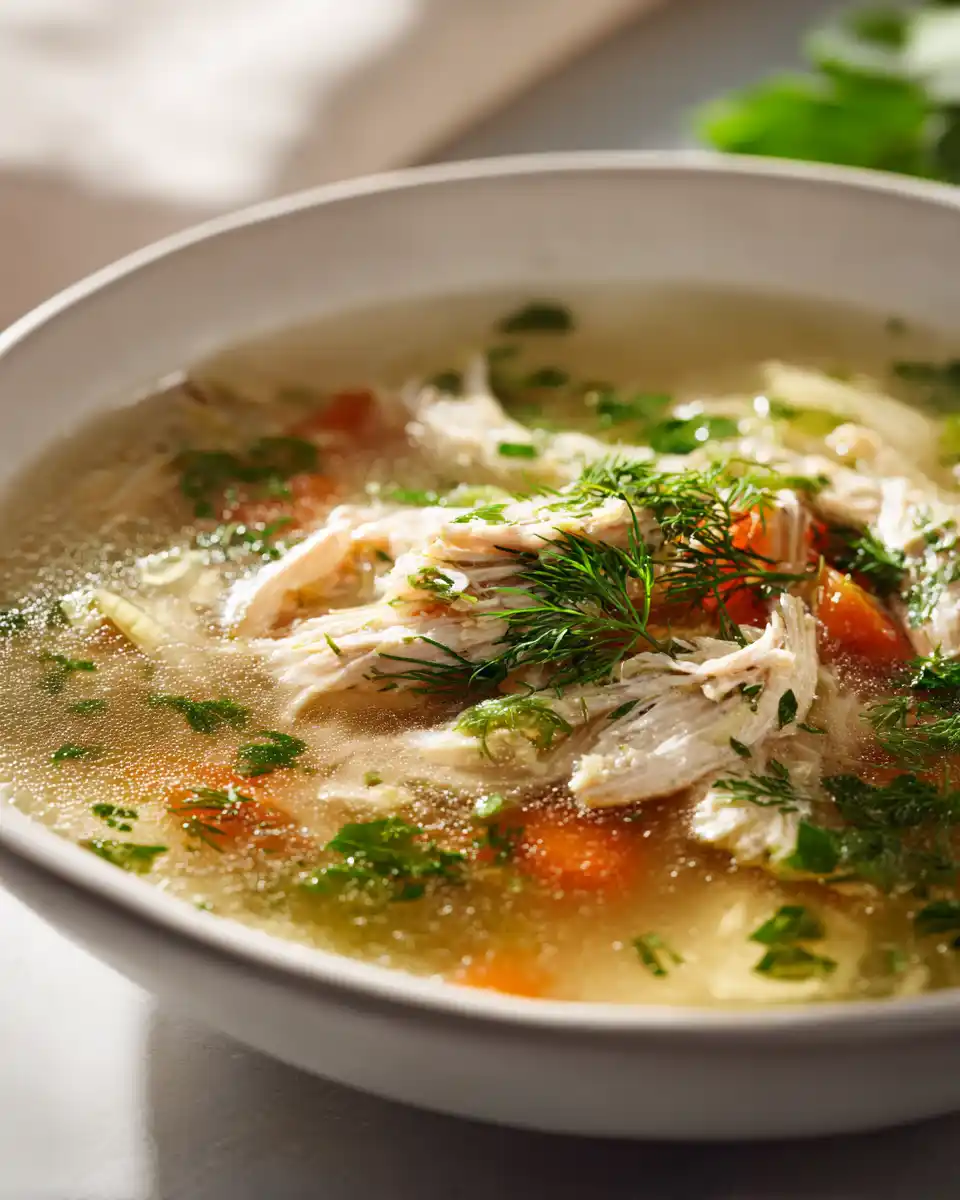
There are chicken soups you make because you need dinner, and then there are chicken soups you make because you want the kitchen to smell amazing for the next hour. This one lands squarely in the second category. It has all the comfort of a classic chicken soup, but the fresh herbs give it a cleaner, livelier finish that makes every spoonful taste a little brighter.
What I love here is the balance. You still get tender chicken, soft vegetables, and a soothing broth, but the parsley, dill, and thyme keep the soup from tasting sleepy or one-note. It is cozy, yes, but it also feels fresh enough for spring and light enough to crave year-round.
Why this soup feels different from ordinary chicken soup
A lot of chicken soup recipes lean heavily on salt and long simmering for flavor. That works, but it can sometimes leave you with a bowl that tastes comforting without being especially vivid. Herb chicken soup changes that by layering flavor in two stages: sturdy herbs early, delicate herbs later.
That timing matters. Woody herbs such as thyme hold up well during simmering, while tender herbs like parsley and dill are best stirred in closer to the end so they stay bright and aromatic. That is one of the simplest ways to make a broth taste fresher and more alive.
This is also the kind of soup that feels flexible. It can be your weeknight reset meal, your rainy-day comfort bowl, or the sort of simple lunch that somehow tastes even better the next day.
The herb combination that gives the broth its fresh character
For this version, I like to build the soup around three main herbs: thyme, parsley, and dill. Thyme gives the broth backbone. It has that subtle woodsy note that loves long cooking and pairs especially well with poultry.
Parsley is your freshness tool. It rounds out the savory notes and adds that clean green lift that makes a chicken soup feel homemade in the best possible way. Dill is optional if you want a more classic profile, but I strongly recommend it here because it brings a gentle brightness that pairs beautifully with lemon and chicken, a combination seen in several recent herb-forward chicken soup variations.
The trick is not to dump everything in at once. Use thyme during the simmer, then finish with chopped parsley and dill right before serving. That gives you depth first and freshness second.
Ingredients you need for the best flavor balance
Here is the lineup for a pot that tastes generous without feeling heavy:
- 2 tablespoons olive oil
- 1 medium yellow onion, diced
- 3 medium carrots, sliced
- 3 celery stalks, sliced
- 4 garlic cloves, minced
- 8 cups low-sodium chicken broth
- 1 pound boneless skinless chicken thighs or breasts
- 1 teaspoon kosher salt, plus more to taste
- 1/2 teaspoon black pepper
- 1 teaspoon dried thyme or 4 to 5 fresh thyme sprigs
- 1 bay leaf
- 3/4 cup ditalini pasta or cooked rice, optional
- 1/3 cup chopped fresh parsley
- 2 tablespoons chopped fresh dill
- 1 tablespoon fresh lemon juice
- 1 to 2 teaspoons lemon zest, optional
This ingredient list stays close to what readers expect from comforting chicken soup: onion, carrot, celery, garlic, chicken, and broth. That familiar base matches what appears again and again in popular chicken soup recipes, while the finishing herbs and lemon create the “garden flavor” angle that makes this version stand out.
If you like soup with a little more body, the ditalini is a great addition. For a cozy pasta option, you might also enjoy Ditalini Pasta Recipe, especially if you already love small pasta shapes in brothy meals.
A chef’s note on choosing chicken for tender, juicy bites
You can make this with chicken breasts or thighs, but they behave differently. Breasts give you a cleaner, leaner result. Thighs bring a richer flavor and stay juicy with a little less effort, which is why I reach for them when I want the broth to taste fuller.
If you want the soup to feel extra hearty, thighs are the easy win. If you are after a lighter bowl, breasts work beautifully as long as you do not overcook them.
No matter which cut you choose, chicken should reach a safe internal temperature of 165°F. That is the USDA recommendation for poultry, and it matters even in a simmered soup where visual cues alone are not always reliable.
How to build a broth that tastes layered, not flat
This is where the soup really earns its keep. Start by cooking the onion, carrot, and celery in olive oil until the onion softens and everything smells sweet and savory. You are not trying to brown the vegetables deeply. You are just creating the first flavor layer.
Then add the garlic, thyme, and bay leaf. Let the garlic cook briefly so it loses its raw edge, then pour in the broth. Once the liquid is in, add the chicken and let the pot come to a gentle simmer rather than an aggressive boil.
That gentler simmer is important. Boiling chicken hard can tighten the protein and cloud the broth. A calmer simmer keeps the meat tender and the soup more elegant. If you love chicken dinners that rely on herb-led flavor instead of heavy sauces, Slow Cooker Lemon Herb Chicken and Rice is another great direction to explore.
Step-by-step: how to make fresh herb chicken soup
- Heat the olive oil in a large Dutch oven or soup pot over medium heat.
- Add the onion, carrots, and celery. Cook for 6 to 8 minutes, stirring occasionally, until the onion is softened.
- Stir in the garlic, thyme, salt, pepper, and bay leaf. Cook for 30 seconds.
- Pour in the chicken broth and add the chicken. Bring the soup to a gentle simmer.
- Cover partially and cook for 18 to 22 minutes, or until the chicken is fully cooked and tender.
- Remove the chicken and shred or chop it into bite-size pieces.
- If using ditalini, bring the soup back to a simmer and cook the pasta until tender.
- Return the chicken to the pot.
- Turn off the heat and stir in the parsley, dill, lemon juice, and lemon zest if using.
- Taste and adjust with extra salt, pepper, or lemon juice until the broth feels bright and balanced.
That last step is where the soup comes alive. Once the tender herbs hit the hot broth, the whole pot shifts from comforting to irresistible. It is the difference between “good homemade soup” and “I need another bowl before this leaves the stove.”
If you want another comforting chicken dinner with familiar flavors, Delicious and Easy Chicken and Yellow Rice Recipe – Perfect Comfort Food! fits the same cozy mood from a different angle.
The biggest mistakes that dull the herb flavor
The first mistake is adding all the fresh herbs too early. Tender herbs lose a lot of their brightness with prolonged cooking, which is why parsley and dill are usually better as finishing herbs than simmering herbs.
The second mistake is under-seasoning the broth. Herbs are not a substitute for proper salt. They are a flavor amplifier, but only if the broth underneath them already tastes complete.
The third mistake is skipping acid. A squeeze of lemon at the end does not make the soup taste lemony unless you overdo it. It simply wakes up the chicken, herbs, and broth. Recent herb-forward chicken soup recipes frequently use lemon this way for exactly that reason.
Easy ways to customize the soup
This recipe is flexible enough to adapt to what you have on hand. If you want more vegetables, add chopped zucchini, spinach, or peas near the end. If you prefer a heartier bowl, swap the pasta for cooked rice or white beans.
You can also change the herb profile. Basil gives the soup a softer, sweeter finish. A little rosemary can add deeper savory character, but go lightly because it is stronger than parsley or dill.
For a meal-prep style variation with more vegetables on the plate, Sheet Pan Lemon Herb Chicken and Veggies is a useful companion recipe to keep in rotation.
What to serve with herb chicken soup
This soup does not need much, but a few sides make it feel like a complete meal. Crusty bread is the obvious answer because it gives the broth somewhere to go. Toasted sourdough, a simple grilled cheese, or buttery crackers all work well.
If you want to keep the meal lighter, a crisp green salad with lemon vinaigrette is a smart choice. That acidity echoes the soup’s finish without competing with it.
For gatherings, I would serve this soup in shallow bowls with extra chopped herbs on top and black pepper cracked right before it hits the table. It looks fresher, smells better, and honestly photographs beautifully.
How to store, reheat, and freeze it
Let the soup cool before refrigerating it in an airtight container. It will keep well for about 3 to 4 days. The flavor often improves on day two because the herbs and broth have more time to settle together.
Reheat gently on the stove over medium-low heat. If the soup thickens in the fridge, add a splash of broth or water to loosen it. If you plan to freeze it, the best move is to do so before adding pasta, since pasta tends to soften too much after thawing.
If frozen in a well-sealed container, it should hold up nicely for up to 3 months. Add a fresh sprinkle of parsley after reheating to bring back that just-made feeling.
Frequently asked questions
Can I use rotisserie chicken?
Yes. That is the fastest version. Build the broth with the vegetables and herbs first, then stir in shredded rotisserie chicken near the end just long enough to warm through.
Which herbs are best if I only have two?
Go with thyme and parsley. Thyme gives the soup structure, and parsley gives it freshness. Dill is wonderful, but those first two create the core flavor.
Can I make it without lemon?
Absolutely. The soup will still be delicious. Lemon just sharpens the finish and helps the herbs pop a little more.
Is it better with noodles or rice?
That depends on the mood. Noodles make it feel classic and cozy. Rice makes it a little more soothing and substantial.
How do I know the chicken is done?
Use a thermometer when possible. Poultry should reach 165°F according to USDA food safety guidance.