Why Most Homemade Pancakes Miss the Fluffy Mark
A lot of pancake recipes promise sky-high stacks, but the real problem is usually not the ingredients. It is the method. Overmixed batter, old leavening, or heat that is too high can turn a comforting breakfast into something flat, chewy, or unevenly browned.
This fluffy pancakes recipe solves that. It is quick enough for a weekday breakfast, easy enough for beginners, and reliable enough to make again and again when you want that soft diner-style texture at home.
The goal here is not just to give you a list of ingredients and a few steps. It is to show you how to make better pancake decisions so your stack comes out light, tender, and golden the first time.
The 15-Minute Pancake Plan
This recipe is built for speed, but not rushed cooking. Here is the rhythm that makes it work:
- 5 minutes to mix the dry and wet ingredients
- 2 minutes to let the batter rest
- 8 minutes to cook the pancakes in batches
You do not need special tools. A mixing bowl, whisk, measuring cups, nonstick skillet or griddle, and a spatula are enough.
This is the kind of breakfast that fits beautifully next to cozy morning favorites like Apple Cinnamon Oatmeal or a protein-packed option such as Cottage Cheese Pancakes. But when you want classic comfort, this fluffy stack is hard to beat.
Your Texture Blueprint: What Each Ingredient Is Doing
Instead of just throwing everything into a bowl, it helps to know why each ingredient matters. That is what keeps the pancakes fluffy instead of heavy.
What you need
- 1 1/2 cups all-purpose flour
- 3 1/2 teaspoons baking powder
- 1 tablespoon granulated sugar
- 1/2 teaspoon salt
- 1 1/4 cups milk
- 1 large egg
- 3 tablespoons melted butter
- 1 teaspoon vanilla extract
Why these ingredients work
Flour gives the pancakes structure. All-purpose flour is ideal here because it is sturdy enough to hold the bubbles created by the baking powder but still soft enough for a tender bite.
Baking powder is the engine behind the fluff. It creates gas bubbles in the batter, which expand on the hot pan and lift the pancakes. If your baking powder has been sitting in the pantry for ages, your pancakes may stay disappointingly flat.
Sugar is not just for sweetness. It also helps the pancakes brown nicely and gives the edges that inviting golden tone.
Salt balances the flavor. Without it, pancakes can taste bland even with syrup on top.
Milk loosens the batter and helps create a tender crumb. Whole milk gives the richest result, but 2% works well too.
Egg binds everything and supports structure. It also helps the pancakes rise evenly.
Melted butter adds richness and keeps the pancakes soft. You can swap in neutral oil, but butter gives a warmer, more classic breakfast flavor.
Vanilla is optional in a technical sense, but it makes a noticeable difference in aroma and overall comfort-factor.
The Batter Rules That Matter More Than Fancy Equipment
If you only remember one part of this article, let it be this section. Fluffy pancakes are mostly about how you handle the batter.
Rule 1: Mix dry and wet separately first
Whisk the flour, baking powder, sugar, and salt in one bowl. In another, whisk the milk, egg, melted butter, and vanilla. Then combine them.
This helps distribute the baking powder evenly, so you do not get random flat pancakes in one batch and thick ones in another.
Rule 2: Stop mixing early
Once the wet and dry ingredients come together, stir just until no large pockets of flour remain. Small lumps are completely fine.
That slightly lumpy batter is a good sign. Overmixing develops gluten, and that is what makes pancakes tough instead of soft.
Rule 3: Let the batter rest briefly
A short 2- to 5-minute rest gives the flour time to hydrate and allows the baking powder to start working. The batter will look a little puffier and more cohesive after the rest.
Rule 4: Do not thin the batter too much
A fluffy pancake batter should be pourable but not watery. If it runs across the pan like crepe batter, it is too thin. A thicker batter helps build height.
Cook the Stack: A Simple Pancake Flow That Works
Now that the batter is ready, here is the easiest cooking sequence.
Step-by-step pancake flow
- Heat a nonstick skillet or griddle over medium heat.
Give it a minute or two to warm up evenly. A pan that is too hot will burn the outside before the center sets. - Lightly grease the surface.
Use a small amount of butter or neutral oil. Wipe away excess so the pancakes brown evenly instead of frying in fat. - Pour about 1/4 cup batter per pancake.
Leave space between each one so they spread slightly without merging. - Watch for surface bubbles and set edges.
When bubbles rise and pop on top and the edges look less wet, usually after 2 to 3 minutes, they are ready to flip. - Flip once and cook the second side for 1 to 2 minutes.
The second side usually cooks faster. - Move cooked pancakes to a warm plate.
If making a larger batch, keep them in a low oven while finishing the rest.
How to know the heat is right
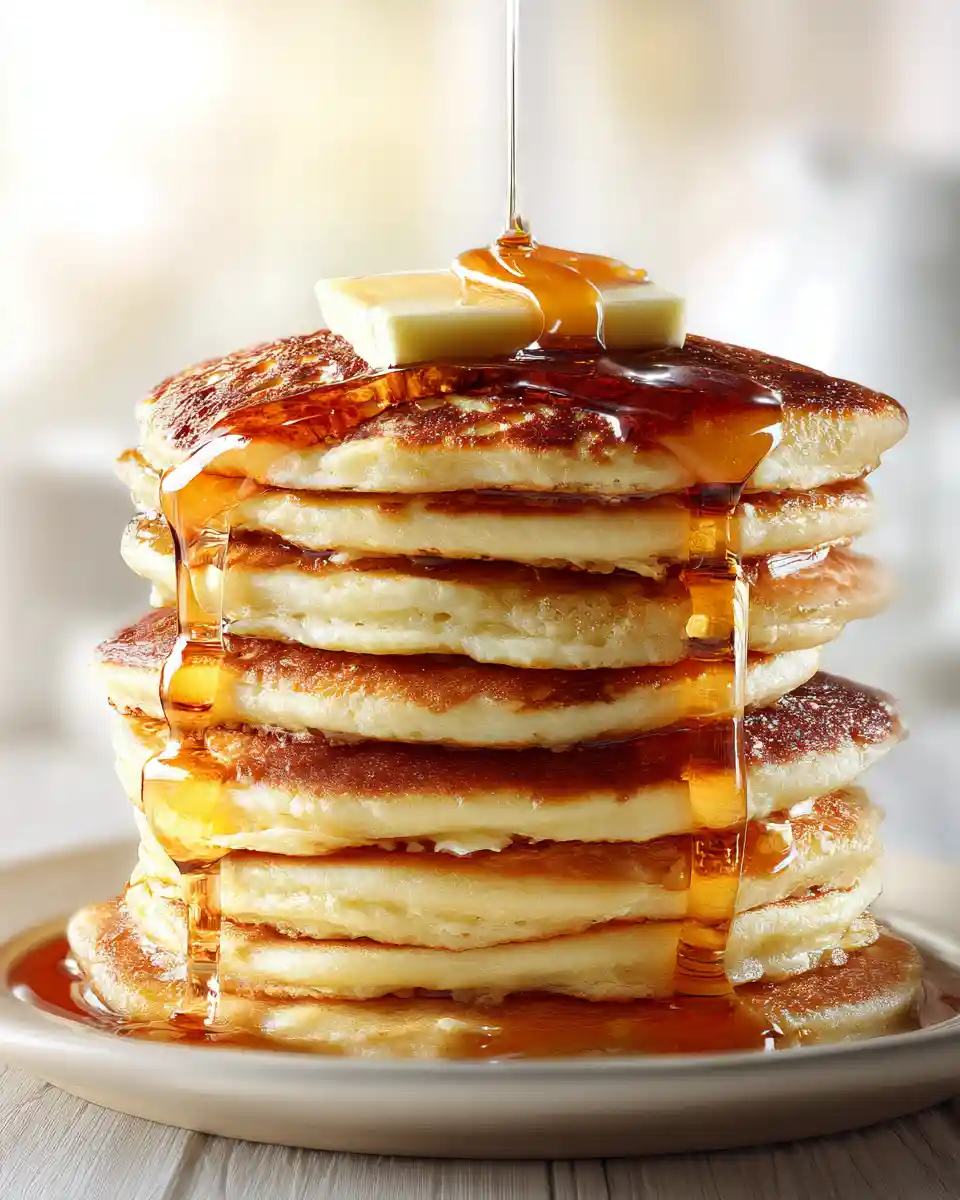
Your pancakes should become golden brown, not dark brown, in about 2 to 3 minutes on the first side. If they brown too fast, lower the heat. If they stay pale and spread too much, raise it slightly.
Serve them warm with butter, maple syrup, berries, banana slices, or a spoonful of yogurt.
What to Fix if Your Pancakes Turn Out Flat, Dense, or Pale
Pancakes are one of those recipes where little errors show up fast. The good news is that most problems are easy to diagnose.
If they are flat
- Your baking powder may be old
- The batter may be too thin
- You may have overmixed and knocked out too much lift
If they are dense
- Too much stirring likely developed gluten
- The pan may have been too cool, causing slow, heavy cooking
- You may have packed the flour too tightly when measuring
If they are too dark outside and raw inside
- The heat is too high
- The pancakes are too large or too thick for the pan temperature
If they are pale
- The pan may be underheated
- A little more sugar can help browning, but heat is usually the main issue
This is also the kind of breakfast technique that pairs nicely with make-ahead ideas like Greek Yogurt Overnight Oats with Berries when you want different morning options across the week.
Easy Ways to Change the Flavor Without Losing the Fluff
A good pancake recipe should be flexible, but some add-ins can weigh down the batter if you are not careful. The trick is to keep the pancake base stable.
Best add-ins for this recipe
- Fresh blueberries
- Mini chocolate chips
- Cinnamon
- Mashed banana in small amounts
- Lemon zest
Smart way to use add-ins
Instead of mixing a lot into the whole bowl, sprinkle add-ins onto each pancake after pouring the batter onto the skillet. That gives you better distribution and keeps the batter lighter.
Flavor variations that still keep the texture
- Add 1/2 teaspoon cinnamon for a warm breakfast feel
- Use almond extract instead of vanilla for a bakery-style twist
- Top with sliced strawberries and whipped cream for a brunch vibe inspired by Fresh Strawberry Shortcake
- Serve with a simple iced drink like Javy Coffee Iced Vanilla Latte for an easy breakfast pairing
Turn Pancakes Into a Full Breakfast Spread
Pancakes can be the whole breakfast, but they also work beautifully as the cozy center of a bigger spread.
For a simple weekday plate, pair them with fruit and coffee. For a more filling brunch, add scrambled eggs, turkey sausage, or yogurt on the side.
If you are serving a crowd, keep toppings in small bowls:
- maple syrup
- softened butter
- berries
- toasted nuts
- banana slices
- Greek yogurt
- a light dusting of powdered sugar
This setup makes breakfast feel special without turning the morning into a complicated event.
Save, Reheat, and Freeze Without Ruining the Texture
Classic pancakes are best fresh, but leftovers can still be very good if you handle them right.
Refrigerator
Store cooled pancakes in an airtight container for up to 3 days. Place parchment or wax paper between layers if needed.
Freezer
Freeze pancakes in a single layer first, then transfer to a freezer bag. This keeps them from sticking together. They will keep well for up to 2 months.
Best reheating options
- Toaster: best for reviving the edges and keeping them light
- Skillet: great for a fresh-off-the-pan feel
- Microwave: fastest, but use short bursts so they do not get rubbery
If you love keeping breakfast ready to go, you may also enjoy Protein Muffins for another easy grab-and-go morning option.
Quick Questions Real Pancake Makers Ask
Can I make the batter ahead of time?
It is better to mix it shortly before cooking. Pancake batter loses some lift as it sits, so freshly mixed batter gives the fluffiest result.
Can I use buttermilk?
Yes. Buttermilk adds tang and tenderness. If you use it, reduce the milk by the same amount. You can also replace part of the milk rather than all of it for a balanced flavor.
Can I make these without butter?
Yes, neutral oil works, though the flavor will be a little less rich.
Why are my pancakes gummy in the middle?
Usually because the heat was too high or the batter was overmixed. The outside cooked too fast while the inside stayed dense.
What is the best syrup pairing?
Classic maple syrup is always a winner, but berry sauce, honey, or warm cinnamon apples also work beautifully.
The Cozy Breakfast You Can Repeat Any Day
This fluffy pancakes recipe works because it focuses on the things that truly matter: balanced batter thickness, minimal mixing, and steady pan heat. That combination gives you soft centers, golden outsides, and a breakfast that actually looks as good as it tastes.
Whether you are cooking for kids, making a slow weekend brunch, or just trying to improve your pancake game on a regular Tuesday, this is the kind of recipe that earns a permanent spot in your breakfast rotation. Once you see how easy it is to get that fluffy texture at home, boxed mix starts to feel a lot less tempting.