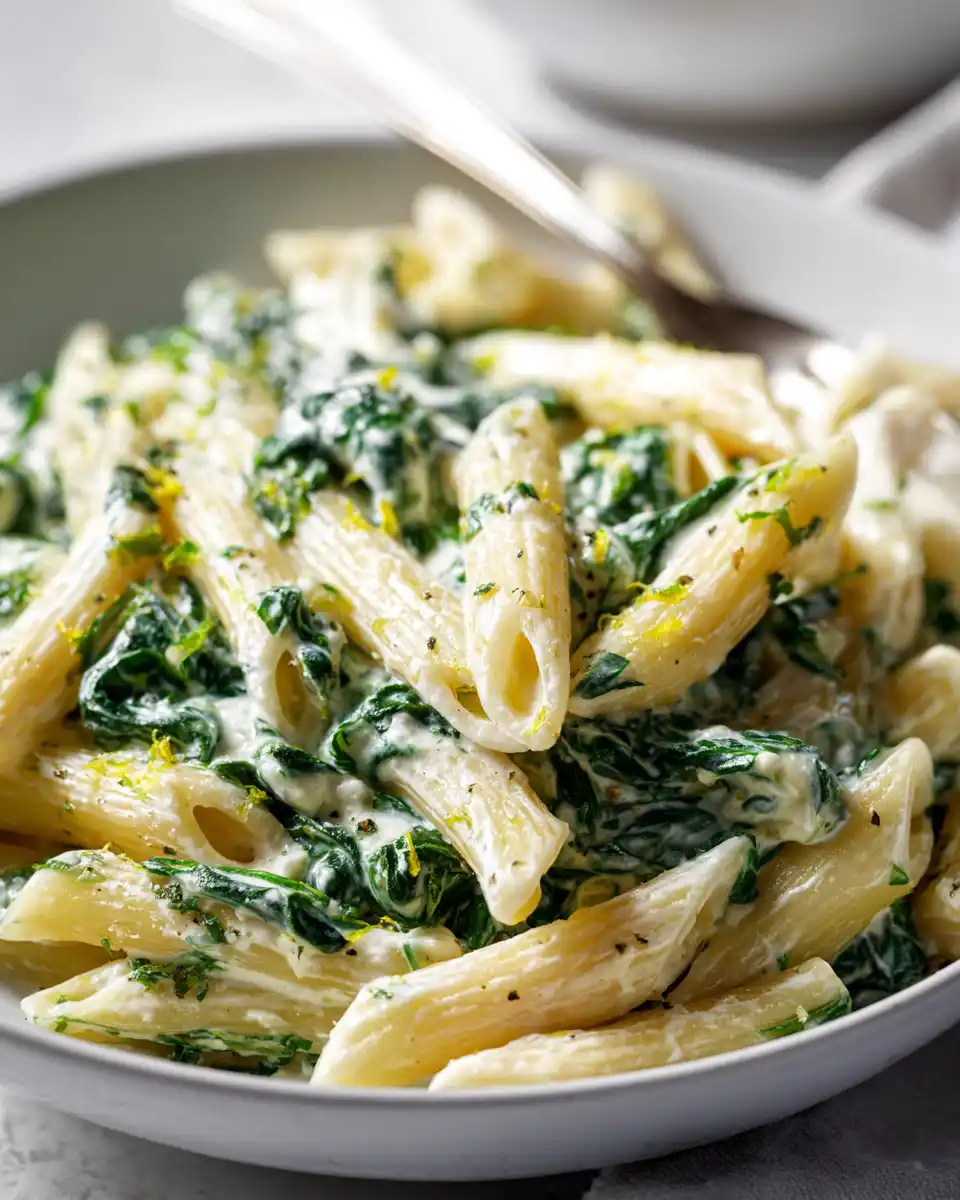
There is a misconception in the culinary world that “high protein” pasta dishes have to taste like chalk or sacrifice that luxurious, velvety mouthfeel we crave from Italian classics. That ends today.
This Creamy Spinach Ricotta Protein Pasta is an exercise in technique as much as it is nutrition. By leveraging the starch released from protein-fortified pasta and emulsifying it with whipped ricotta, we create a sauce that coats the back of a spoon perfectly without needing heavy cream. It’s savory, bright with lemon zest, and packed with nutrients.
Whether you are refueling after a workout or just need a 20-minute dinner that hits your macro goals, this recipe delivers restaurant-quality texture with home-cooked health benefits.
The Chef’s Secret: “Liquid Gold”
The difference between a dry, clumpy pasta and a glossy, creamy one is pasta water. When using protein pasta (chickpea, lentil, or fortified wheat), the water becomes incredibly starchy. We don’t dump this down the drain. We use it to temper the ricotta, raising its temperature slowly so it melts into a smooth sauce rather than seizing into curds.
🛒 Ingredients List
The Base
- 12 oz High-Protein Pasta: (Chickpea, lentil, or fortified wheat shapes like penne or rotini work best to hold the sauce).
- 5 oz Fresh Baby Spinach: Rough chopped.
- 1 tbsp Olive Oil: For sautéing garlic.
The Ricotta Cream Sauce
- 1 cup Part-Skim Ricotta Cheese: High quality matters here; look for one with no stabilizers if possible.
- 1/2 cup Parmesan Cheese: Freshly grated (pre-grated contains anti-caking agents that ruin the melt).
- 2 cloves Garlic: Minced finely.
- 1 tsp Lemon Zest: Freshly grated (adds brightness to cut the heavy dairy).
- 1/2 tsp Salt: Plus more for the pasta water.
- 1/4 tsp Black Pepper: Freshly cracked.
- 1/2 to 1 cup Reserved Pasta Water: The critical binding agent.
- Optional: 1/4 tsp Red Chili Flakes for a subtle heat.
🔪 Step-by-Step Instructions
Step 1: The Pasta Boil
Bring a large pot of water to a rolling boil. Heavily salt the water (it should taste like the ocean). Add your protein pasta.
- Chef’s Tip: Protein pasta breaks down faster than semolina pasta. Cook it 1 minute less than the package instructions state. It will finish cooking in the sauce.
Step 2: Prep the Flavor Base
While the pasta boils, heat the olive oil in a large skillet over medium heat. Add the minced garlic and sauté for 60 seconds until aromatic but not browned (burnt garlic tastes bitter).
Add the fresh spinach to the skillet and sauté for 2–3 minutes until just wilted. Remove from heat and set aside.
Step 3: Temper the Ricotta
In a medium mixing bowl, whisk together the ricotta, parmesan, lemon zest, salt, and pepper.
- Crucial Step: Before draining the pasta, carefully scoop out 1.5 cups of the starchy boiling water.
- Slowly drizzle 1/2 cup of the hot pasta water into the ricotta mixture while whisking vigorously. This tempers the cheese and creates a smooth slurry.
Step 4: Emulsify and Combine
Drain the pasta. Immediately return the hot pasta to the large pot (or the skillet with spinach if it’s large enough).
Pour the tempered ricotta mixture and the wilted garlic-spinach over the pasta.
Toss gently over low heat. Add more reserved pasta water, 1/4 cup at a time, stirring constantly until the sauce becomes glossy and coats every noodle.
Step 5: Plate and Serve
Taste and adjust salt if needed. Serve immediately, topped with extra parmesan and a crack of black pepper.
🥗 Healthy Swaps: Texture vs. Nutrition
To make the best decision for your dietary needs, here is a quick breakdown of how ingredient swaps affect the final dish.
| Ingredient | Substitution | Resulting Texture/Flavor |
| Protein Pasta | Whole Wheat Pasta | Chewier texture, earthier flavor, slightly less protein per serving. |
| Part-Skim Ricotta | Cottage Cheese (Blended) | Higher protein, slightly tangier taste. Must blend until smooth before using. |
| Fresh Spinach | Frozen Spinach | Works fine, but you must squeeze out all excess water or the sauce will be soupy. |
| Parmesan | Nutritional Yeast | A dairy-free nutty flavor profile, lowers the fat content but changes the classic Italian taste. |
🧬 Nutritional Deep Dive: Why This Works
As a chef, I focus on flavor, but I respect the science of nutrition. Here is why this dish is a powerhouse:
- The Protein Matrix: By combining protein-fortified pasta with ricotta and parmesan, we are stacking multiple protein sources. This creates a “complete protein” meal that aids in muscle recovery and satiety.
- Bioavailability: Spinach is rich in non-heme iron. The addition of Lemon Zest (Vitamin C) in this recipe isn’t just for flavor; Vitamin C significantly increases the absorption of iron from the spinach.
- Satiety: The combination of fiber from the pasta/greens and the casein protein in the cheese means this digests slowly, keeping you full for hours without the blood sugar spike of white flour pasta.
❓ Frequently Asked Questions
1. My protein pasta turned to mush, what happened?
Protein pasta (especially lentil or chickpea based) has a weaker gluten structure than wheat pasta. If you overcook it even by a minute, it disintegrates. Always test it 2 minutes before the timer goes off.
2. Can I use frozen spinach?
Yes. Thaw it completely and wring it out in a clean kitchen towel until it is bone dry. If you leave the water in, your creamy sauce will turn watery and separate.
3. The sauce is grainy, how do I fix it?
Graininess usually comes from overheating the ricotta or using low-fat cheese that curdled. Next time, ensure you temper the cheese with water before adding it to the pot, and do not let the sauce boil once combined.
4. How do I reheat this without it drying out?
Pasta absorbs moisture in the fridge. To reheat, add a splash of water or milk to the pasta before microwaving or heating on the stove. This reconstitutes the creamy emulsion.
5. Can I add meat to this?
Absolutely. This pairs perfectly with grilled chicken or shrimp. For a seamless integration, check out our Healthy Creamy Pesto Chicken Recipe for protein cooking techniques.
🍽️ What to Serve With This
Since this is a rich, high-protein bowl, keep the sides light and acid-forward to cut through the creaminess.
- A Crisp Salad: Try a variation of this Mediterranean Chickpea Salad (omit chickpeas if you want fewer carbs).
- Protein Boost: If you need even more protein, top this with sliced chicken using the method from our Healthy Baked Tuscan Chicken.
- Alternative Base: If you love the sauce but want a different vessel, this ricotta mixture works beautifully inside a Cottage Cheese Wrap for a low-carb lunch.