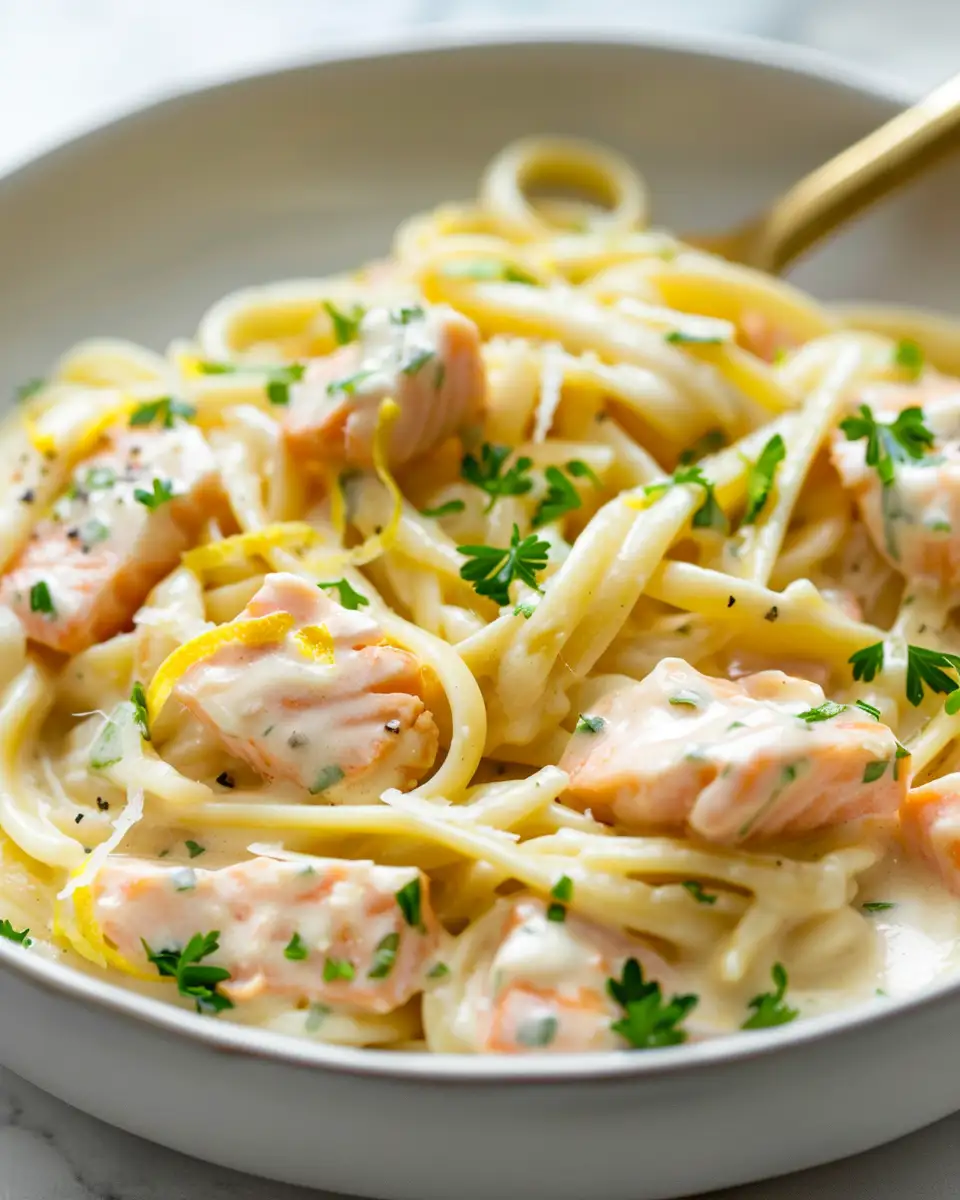
There is something undeniably luxurious about the way velvety cream sauce clings to perfectly al dente pasta, punctuated by the savory, buttery flakes of pan-seared salmon. This Creamy Garlic Salmon Pasta is more than just a quick weeknight dinner; it is a sensory experience. From the aromatic sizzle of minced garlic hitting the pan to the bright pop of fresh lemon, this dish hits every note of flavor and texture.
As a chef, I’ve found that many home cooks are intimidated by cooking salmon and cream together. They fear the fish will become dry or the sauce will turn heavy and cloying. Today, I’m going to show you how to master the perfect sear and create a balanced, restaurant-grade sauce that is light yet indulgent. We are skipping the wine and pork entirely, focusing instead on high-quality fats, fresh aromatics, and technical precision.
The Origin of the Dish
While cream-based seafood pastas are often associated with Italian-American “Alfredo” styles, this specific preparation leans into the bistro traditions of the Pacific Northwest and coastal Europe. It celebrates the richness of the salmon by pairing it with a sharp, garlicky base. Unlike heavier casseroles, this dish is prepared “à la minute,” meaning we cook the components fresh to ensure the salmon remains moist and tender.
If you enjoy the brightness of seafood, you might also love my sheet pan lemon herb salmon for a lighter weeknight alternative.
🛒 Ingredients You’ll Need
To achieve that professional finish, your ingredients should be at room temperature before you start. This ensures even cooking and a smoother sauce.
- 1 lb Salmon Fillets: Skin removed, cut into 1-inch cubes (or left whole if you prefer to flake them later).
- 12 oz Long Pasta: Linguine, fettuccine, or spaghetti work best.
- 2 cups Heavy Cream: For that signature velvety texture.
- 4-5 Cloves Garlic: Freshly minced (avoid the jarred variety for better flavor).
- 1/2 cup Parmesan Cheese: Freshly grated to ensure it melts into the sauce.
- 2 tbsp Butter: Unsalted is preferred to control the seasoning.
- 1 tbsp Olive Oil: For searing the salmon.
- 1 tsp Lemon Zest & 1 tbsp Lemon Juice: To cut through the richness.
- 1/2 cup Reserved Pasta Water: The secret weapon for sauce consistency.
- Fresh Parsley: Chopped for a vibrant finish.
- Seasonings: Kosher salt, cracked black pepper, and a pinch of red pepper flakes.
👨🍳 Step-By-Step Instructions
1. Prep and Sear the Salmon
Pat the salmon dry with paper towels—moisture is the enemy of a good sear. Season generously with salt and pepper. In a large skillet, heat the olive oil over medium-high heat. Add the salmon and cook for 3–4 minutes per side until a golden-brown crust forms and the center is just opaque. Remove the salmon from the pan and set it aside on a plate.
2. Boil the Pasta
While the salmon is searing, bring a large pot of heavily salted water to a boil. Cook your pasta according to the package instructions, but stop 1–2 minutes before al dente. It will finish cooking in the sauce. Crucial: Save 1/2 cup of the starchy pasta water before draining.
3. Build the Garlic Cream Base
Lower the skillet heat to medium. Add the butter and the minced garlic. Sauté for about 1 minute until fragrant and soft, but do not let the garlic brown or it will turn bitter. Pour in the heavy cream and bring to a gentle simmer. Let it reduce for 3–5 minutes until it slightly thickens.
4. Emulsify and Season
Whisk in the grated Parmesan cheese, lemon juice, lemon zest, and red pepper flakes. Stir constantly until the cheese is fully melted and the sauce is smooth. If you find the sauce too thick, add your reserved pasta water one tablespoon at a time. This water contains starch that helps the sauce bind to the noodles.
5. The Final Toss
Add the cooked pasta and the seared salmon back into the skillet. Gently toss everything together for 1–2 minutes over low heat. The pasta will soak up that garlicky goodness, and the salmon will stay succulent. Garnish with a handful of fresh parsley and an extra crack of black pepper.
For more high-protein pasta inspiration, check out my turkey meatball alfredo bake.
💡 Top 3 Pro Tips for Success
- Don’t Overcook the Protein: Salmon continues to cook once removed from the heat (carryover cooking). Aim for medium-rare in the pan, and it will be a perfect medium by the time it hits the table.
- The “Pasta Water” Insurance: Never drain your pasta without saving the water. If your cream sauce looks “broken” or oily, a splash of starchy water and a vigorous stir will emulsify it back to a creamy state.
- Grate Your Own Cheese: Pre-shredded cheese is coated in potato starch to prevent clumping, which can make your sauce grainy. Buy a block of Parmesan and grate it yourself for a silky finish.
⚠️ Common Mistakes to Avoid
- Crowding the Pan: If you add too much salmon at once, the pan temperature drops, and the fish will steam rather than sear. Work in batches if necessary.
- Boiling the Cream Too Hard: High heat can cause heavy cream to separate. Keep it at a gentle simmer to maintain a consistent texture.
- Skipping the Salt in Pasta Water: This is your only chance to season the pasta itself. The water should taste like the sea.
📋 Ingredient Substitution Matrix
| Ingredient | Best Substitute | Note |
| Heavy Cream | Half and Half + 1 tsp Cornstarch | Will be slightly less rich but still creamy. |
| Salmon | Steelhead Trout | Very similar flavor profile and fat content. |
| Linguine | Penne or Bowtie | Short pasta shapes hold onto the chunks of salmon well. |
| Parmesan | Pecorino Romano | Adds a saltier, sharper tang to the dish. |
| Fresh Garlic | Garlic Shallot Confit | Provides a much deeper, sweeter aromatic base. |
❓ Frequently Asked Questions
Can I use frozen salmon for this recipe?
Absolutely. Ensure the salmon is completely thawed and patted dry before searing. Frozen salmon often releases more moisture, so the drying step is even more critical for a good crust.
How do I store and reheat leftovers?
Store in an airtight container for up to 2 days. To reheat, add a splash of milk or water to the pasta and heat on low in a skillet. Avoid the microwave if possible, as it can make the salmon rubbery.
Is there a way to make this lighter?
You can substitute half of the heavy cream with chicken broth, but you will need to simmer it longer to reduce. You can also try my steak creamy garlic shrimp for a different take on surf-and-turf flavors.
What vegetables go well inside the pasta?
Fresh baby spinach, sautéed asparagus tips, or frozen peas are fantastic additions that don’t require extra pans.
Can I use salmon with the skin on?
You can sear it skin-side down first to get it crispy, but for a creamy pasta, most people prefer the skin removed so the texture remains consistent throughout the dish.
If you’re looking for more quick and savory meals, try this one pot tomato basil chicken pasta or my popular creamy chicken pesto pasta.