This cozy chicken soup is a warm, comforting dinner made with tender chicken, onion, carrots, celery, garlic, herbs, broth, and noodles. It’s the kind of soup that tastes calm, rich, and homemade without requiring a whole afternoon in the kitchen.
If you want something soothing for a quiet evening, this recipe hits the sweet spot between light and hearty. The broth stays clear and flavorful, the chicken stays juicy, and every spoonful feels like a soft landing at the end of the day.
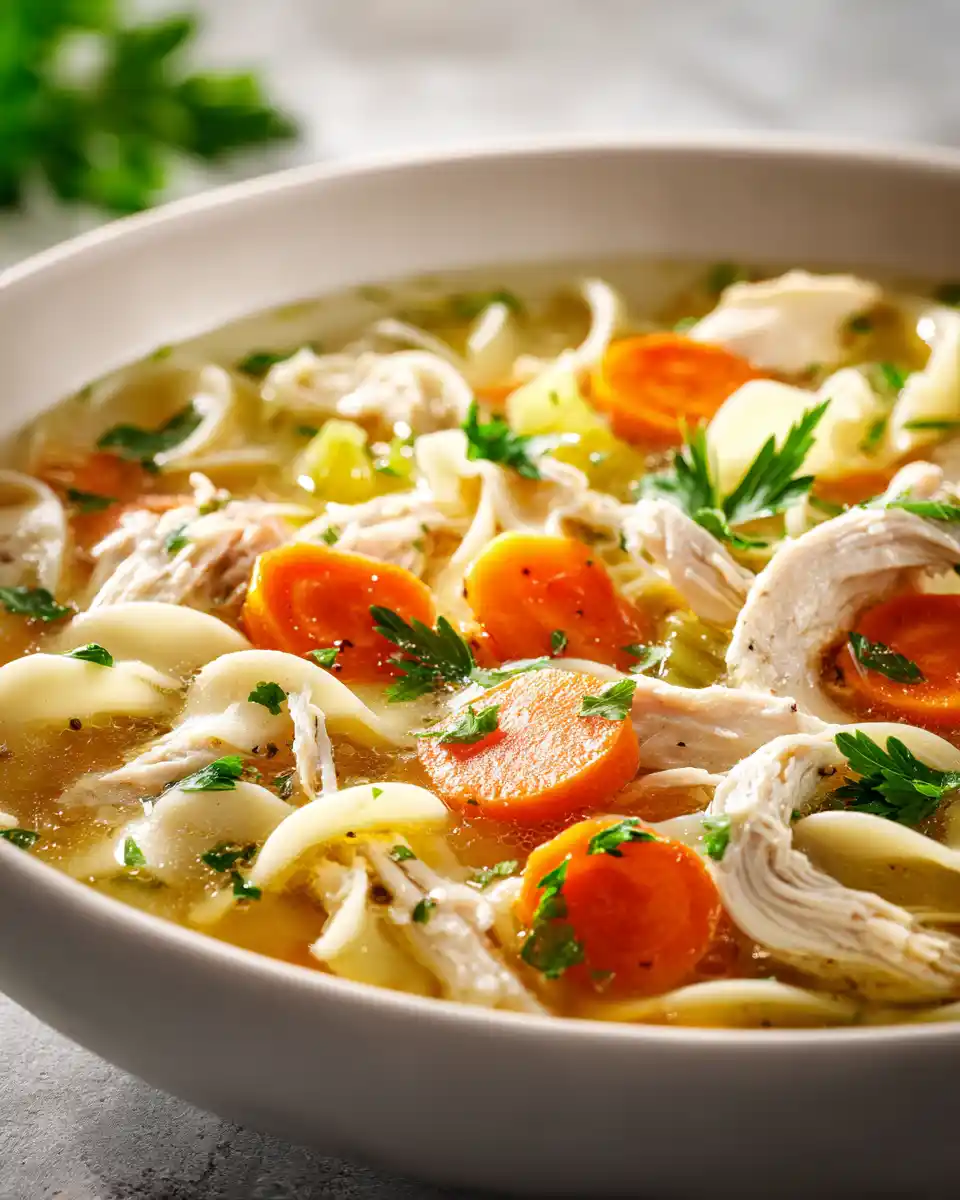
Why This Bowl Feels So Good on a Quiet Night
Some dinners are loud. They’re crispy, spicy, cheesy, or dramatic. This one is different.
A good chicken soup settles the room. You hear the spoon hit the bowl, you catch the scent of thyme and garlic in the steam, and suddenly dinner feels less like a task and more like a reset. That is exactly the kind of recipe this is.
Because this article is written in Jake Moreno’s style, I want to say this clearly: the difference between an average chicken soup and one you crave again tomorrow is not complexity. It’s how you build flavor in the first 15 minutes. A little patience with the vegetables, a gentle simmer, and the right finish turn a simple soup into something memorable.
What Goes Into a Truly Cozy Chicken Soup
Here’s what you’ll need:
- 2 tablespoons olive oil or butter
- 1 medium yellow onion, diced
- 3 medium carrots, sliced
- 3 celery stalks, sliced
- 4 garlic cloves, minced
- 1 1/2 pounds boneless, skinless chicken thighs or chicken breasts
- 8 cups low-sodium chicken broth
- 1 teaspoon kosher salt, plus more to taste
- 1/2 teaspoon black pepper
- 1 teaspoon dried thyme
- 1 teaspoon dried parsley
- 1 bay leaf
- 2 cups uncooked egg noodles
- 1 tablespoon lemon juice
- 2 tablespoons chopped fresh parsley
- 1 cup frozen peas, optional
Why these ingredients work
The onion, carrot, and celery create the classic aromatic base. They bring sweetness, body, and that familiar homey aroma that tells you dinner is going in the right direction.
Chicken thighs give the broth a deeper, richer personality. Chicken breast works too, especially if you want a lighter bowl, but thighs are more forgiving and stay tender longer.
Egg noodles make the soup feel like dinner instead of just a starter. They soften into the broth and give each spoonful a little comfort-food weight.
The lemon juice at the end is subtle, but important. It doesn’t make the soup taste lemony. It makes the broth taste alive.
Smart Ingredient Swaps That Still Keep the Soul of the Dish
Need to adjust the recipe? These swaps work well:
- Chicken thighs → chicken breast
- Egg noodles → ditalini, small shells, or cooked rice
- Fresh parsley → fresh dill for a brighter finish
- Dried thyme → Italian seasoning
- Peas → chopped spinach or green beans
- Butter → olive oil
- Lemon juice → a small splash of apple cider vinegar
If you like smaller pasta shapes in soup, the site’s Ditalini Pasta Recipe is a useful reference point for that cozy spoonable texture.
One of the best things about this soup is that it tolerates small changes without losing its identity. That matters on real weeknights when you’re using what’s already in the fridge.
The Best Way to Build a Deep, Golden Broth
The secret is not a long ingredient list. It’s sequence.
If you sauté your vegetables first, even just for a few extra minutes, they release sweetness and soften in a way that gives the broth depth. If you toss everything into the pot all at once, the soup can still be fine, but it usually tastes flatter.
You also want a gentle simmer, not a rolling boil. Chicken cooked too aggressively can tighten and turn dry. A softer simmer keeps the broth clearer and the meat more tender.
For food safety, chicken should reach 165°F at the thickest part before serving.
Step-by-Step: How to Make Cozy Chicken Soup
1. Start with the aromatics
Heat the olive oil or butter in a large Dutch oven or soup pot over medium heat.
Add the onion, carrots, and celery. Cook for 6 to 8 minutes, stirring every so often, until the onion looks translucent and the vegetables begin to smell sweet and mellow.
2. Wake up the garlic and herbs
Add the garlic, thyme, parsley, and black pepper.
Cook for about 30 seconds. This is just enough time to bloom the aromatics without browning the garlic.
3. Add the broth and chicken
Place the chicken into the pot and pour in the broth. Add the bay leaf and salt.
Bring the soup to a gentle boil, then reduce the heat to low and let it simmer partially covered for 20 to 25 minutes. The chicken should be fully cooked and tender.
4. Remove and shred
Lift the chicken out of the pot and place it on a cutting board or shallow bowl.
Use two forks to shred it into bite-size pieces. Return the shredded chicken to the broth.
5. Cook the noodles
Add the egg noodles and simmer for 6 to 8 minutes, or until just tender.
If you’re using peas, stir them in during the last 2 minutes. They add a little sweetness and make the bowl look brighter.
6. Finish the soup
Turn off the heat.
Stir in the lemon juice and fresh parsley. Taste, then adjust the salt and pepper if needed. That final tasting step is where a good soup becomes a great one.
Chef Notes for Better Texture, Better Flavor
- Use thighs for the coziest result. They stay juicy and give the broth more body.
- Don’t rush the vegetable base. Even 2 extra minutes of sautéing makes a difference.
- Season at the end too. Broth brands vary, and noodles absorb salt as they cook.
- Keep the heat moderate. Gentle simmering protects both flavor and texture.
- Add acid at the finish. Lemon wakes up the soup without making it sharp.
If you’re into weeknight chicken comfort food beyond soup, Delicious and Easy Chicken and Yellow Rice Recipe – Perfect Comfort Food! fits the same soothing dinner mood.
Small Mistakes That Can Make Soup Flat or Mushy
The first mistake is under-seasoning the broth. Soup needs enough seasoning to carry through liquid, chicken, vegetables, and noodles. Taste at the end, not just at the start.
The second mistake is overcooking the noodles. That’s the fastest way to lose the texture that makes a chicken soup feel carefully made. If you expect leftovers, cook the noodles separately and add them to each bowl before serving.
The third mistake is letting leftovers sit out too long. USDA guidance says perishable leftovers should be refrigerated within 2 hours, and cooked leftovers are generally best used within about 4 days in the refrigerator.
Easy Ways to Change the Mood of the Recipe
Creamier and richer
Stir in 1/3 cup heavy cream at the end for a silkier broth.
More veggie-forward
Add zucchini, spinach, or peas to make the bowl feel greener and a little lighter.
Cozier and starchier
Swap the noodles for cooked rice for a softer, old-school comfort-food feel.
Shortcut version
Use shredded rotisserie chicken and add it after the vegetables have simmered in broth for about 15 minutes. This is perfect when you want homemade flavor with less work.
If you’re building a full comfort-food rotation, A Cozier, Faster Chicken Pot Pie is another natural fit for readers who love warm, spoonable dinners.
What to Serve Alongside It
This soup works well on its own, but a side can turn it into a small event instead of just a bowl of soup at the counter.
Great pairings include:
- warm crusty bread
- garlic toast
- a crisp salad
- buttery crackers
- a soft flatbread
- a half sandwich
For a savory side with a soft bite, Soft and Savory Cottage Cheese Flatbread Recipe – Perfect for Any Meal! pairs especially well with this broth.
If you want dessert afterward, something simple and familiar works best. You don’t need a fancy finish after a bowl like this. You need something that keeps the night feeling easy.
Leftovers, Make-Ahead Tips, and Reheating
This soup is excellent for meal prep, especially if you store the noodles separately.
To store in the fridge
Let the soup cool slightly, then transfer it to airtight containers. Refrigerate within 2 hours for safety.
How long it lasts
The soup is best within 3 to 4 days in the refrigerator.
To reheat
- Warm it gently on the stovetop over medium-low heat, or
- Microwave individual portions in short bursts, stirring between rounds
If the broth has thickened in the fridge, add a splash of water or broth while reheating.
To freeze
Freeze the soup without noodles for the best texture. Broth, vegetables, and chicken freeze well, while cooked noodles tend to soften too much after thawing.
For another make-ahead chicken dinner idea, Slow Cooker Lemon Herb Chicken and Rice is a good one to bookmark.
Quick Nutrition Snapshot
Per serving, this soup is approximately:
- Calories: 320
- Protein: 27g
- Carbohydrates: 24g
- Fat: 12g
- Fiber: 2–3g
- Sodium: depends heavily on the broth used
These are reasonable estimates for a homemade chicken noodle-style soup. USDA MyPlate chicken soup examples show how much nutrition can vary depending on broth, pasta, and cut of chicken, which is why using low-sodium broth is such a smart move here.
Questions Readers Usually Ask
Can I make this soup ahead of time?
Yes. In fact, the broth often tastes even better the next day. For the best texture, store the noodles separately and add them when reheating.
What’s the best cut of chicken for cozy chicken soup?
Chicken thighs give the richest flavor and the tenderest texture. Chicken breast is leaner and still works well if you prefer a lighter bowl.
How do I keep chicken soup from tasting bland?
Build the base properly. Sauté the onion, carrot, celery, garlic, and herbs before adding broth, then finish the soup with salt, pepper, and a little acid like lemon juice.
Can I freeze chicken noodle soup?
Yes, but it freezes best without the noodles. Freeze the broth, vegetables, and chicken, then cook fresh noodles when you’re ready to serve it again.
How do I know when the chicken is safe to eat?
Use a thermometer and cook the chicken to 165°F. That is the USDA safe minimum internal temperature for poultry.
How long can homemade chicken soup stay in the fridge?
It’s best within 3 to 4 days when refrigerated promptly in a sealed container.
Can I use rotisserie chicken in this recipe?
Absolutely. It’s one of the easiest shortcuts for a fast version. Just make sure you still simmer the vegetables and broth long enough to build flavor into the base.