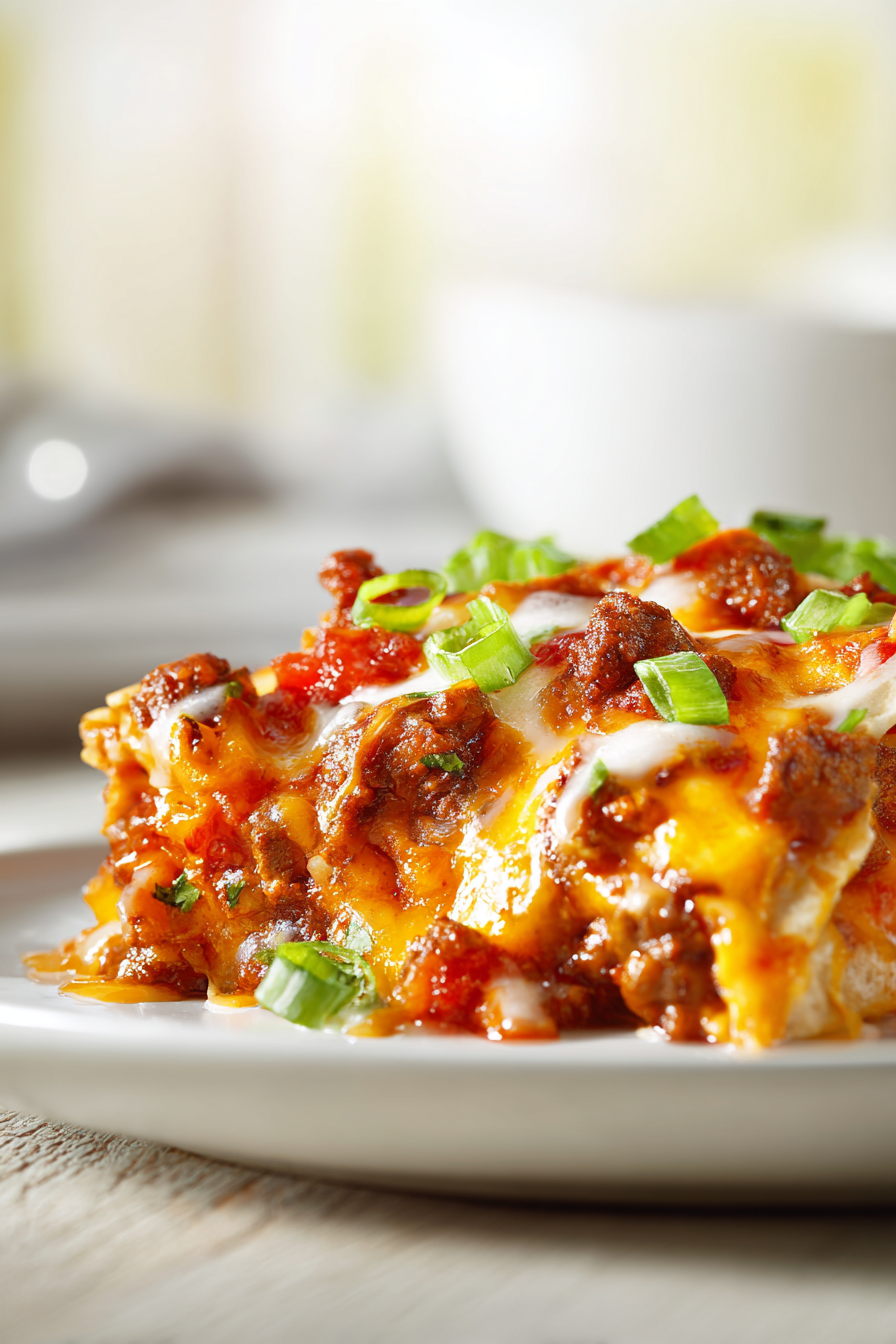
Cheesy beef quesadilla casserole is a layered Tex-Mex bake that combines seasoned ground beef, melted cheddar cheese, flour tortillas, and fresh salsa into one irresistible dish. This casserole transforms traditional quesadilla flavors into a family-friendly format that serves six to eight people with minimal prep work. Unlike individual quesadillas that require stovetop attention, this beef casserole bakes hands-off in the oven, delivering the same satisfying taste in a fraction of the time.
| Prep Time | Cook Time | Total Time | Servings | Difficulty | Cuisine |
|---|---|---|---|---|---|
| 15 minutes | 30 minutes | 45 minutes | 6-8 servings | Easy | Tex-Mex |
Why This Recipe Works
This cheesy beef quesadilla casserole solves the age-old dinner dilemma: delivering restaurant-quality flavor without demanding hours of your time. The casserole format eliminates the need to flip individual quesadillas one by one, replacing that repetitive task with a single oven-to-table transfer. The layered construction allows cheese to melt evenly throughout, creating pockets of creaminess in every bite rather than keeping it confined to the surface.
Ground beef forms the protein foundation, offering an economical and quick-cooking alternative to shredded chicken or pork. The tortillas soften during baking, absorbing the juices from the beef and salsa while maintaining enough structure to deliver satisfying bites. Fresh onions add sharp notes that cut through the richness of multiple cheese layers, preventing flavor fatigue across six or eight servings.
Cheddar cheese provides a bold, familiar taste that appeals to both adults and children, making this beef casserole naturally popular for mixed-age households. The combination of salsa moisture and cheese fat creates a self-basting effect during baking, ensuring no dry edges or tough spots emerge from the oven.
Ingredients
This cheesy beef quesadilla casserole requires simple pantry staples and fresh produce for maximum flavor development.
| Ingredient | Quantity | Notes |
|---|---|---|
| Ground beef | 2 pounds | 80/20 blend preferred for optimal moisture and browning |
| Flour tortillas | 8-10 large (10-inch) | Choose soft, pliable tortillas; thinner versions prevent layering issues |
| Cheddar cheese | 3 cups shredded | Use block cheese shredded fresh; avoid pre-shredded for better melting |
| Fresh salsa | 2 cups (16 ounces) | Medium heat recommended; adjust spice level to household preference |
| Yellow onion | 1 medium | Diced small for even distribution and quick cooking |
| Garlic powder | 1 teaspoon | Optional but enhances beef seasoning depth |
| Cumin | 1 teaspoon | Adds traditional Tex-Mex warmth; essential for authentic flavor |
| Salt and black pepper | To taste | Season beef mixture conservatively; salsa adds additional sodium |
| Cooking oil | 1 tablespoon | Neutral oil prevents sticking during beef browning |
Step-by-Step Instructions
Preparation Phase
- Preheat your oven to 350 degrees Fahrenheit and position the rack to the middle setting for even heat distribution.
- Dice the yellow onion into small, uniform pieces approximately one-quarter inch to ensure even cooking throughout the casserole.
- Shred fresh cheddar cheese by hand using the largest holes on a box grater, allowing it to fall loosely into a separate bowl.
- Line a 9×13-inch baking dish with parchment paper or lightly coat with cooking spray to prevent sticking during baking.
Beef Cooking Phase
- Heat one tablespoon of neutral cooking oil in a large skillet over medium-high heat until shimmering, approximately two minutes.
- Add ground beef to the hot oil, breaking it into small pieces with a wooden spoon while cooking until no pink remains, roughly seven to ten minutes.
- Drain excess fat from the cooked beef using a fine-mesh strainer placed over a bowl, returning the beef to the skillet afterward.
- Add diced onions to the cooked beef and stir continuously for two minutes until onions begin releasing their fragrant oils.
- Sprinkle cumin, garlic powder, salt, and black pepper over the beef mixture, stirring vigorously for thirty seconds to distribute spices evenly.
- Pour fresh salsa into the beef mixture and stir gently until all ingredients combine, creating a uniform wet mixture with no dry beef spots visible.
Assembly and Baking Phase
- Spread a thin layer of the beef and salsa mixture on the bottom of your prepared baking dish, covering approximately one-third of the surface.
- Arrange three to four flour tortillas over the beef layer, overlapping them slightly to ensure complete coverage with minimal gaps.
- Distribute approximately one cup of shredded cheddar cheese evenly across the tortilla layer using your fingertips for consistent coverage.
- Repeat the layering process: beef mixture, tortillas, cheese, creating three distinct layers with the final layer being cheese on top.
- Reserve one-half cup of cheddar cheese to sprinkle across the very top of the casserole for visual appeal and enhanced browning.
- Cover the casserole with aluminum foil, ensuring the foil does not touch the cheese layer directly by creating a small tent with the foil.
- Bake the covered casserole for twenty minutes, maintaining the oven temperature at 350 degrees Fahrenheit.
- Remove the aluminum foil carefully and sprinkle the reserved cheddar cheese across the top of the casserole.
- Return the uncovered casserole to the oven and bake for an additional ten minutes until the top cheese layer melts completely and turns light golden brown at the edges.
- Remove the casserole from the oven and allow it to rest for five minutes before serving, allowing the layers to set slightly for cleaner portions.
Pro Tips for Best Results
- Use block cheddar cheese shredded fresh immediately before assembly. Pre-shredded varieties contain anti-caking agents that prevent smooth, cohesive melting and create a grainy texture throughout your beef casserole.
- Drain excess fat from the browned beef completely before combining with salsa. Residual fat creates a greasy mouthfeel and prevents the tortillas from absorbing flavorful liquid, resulting in soggy rather than tender layers.
- Tent the aluminum foil above the cheese layer rather than placing it directly on top. Direct contact causes cheese to stick to the foil, leaving bare spots on your finished casserole and creating a disappointing presentation.
- Choose flour tortillas specifically; corn tortillas break apart during layering and create a crumbly, incoherent texture. Large flour tortillas (10-inch) provide optimal surface coverage and structural integrity through the baking process.
- Allow the casserole to rest five minutes after baking before cutting. This resting period lets melted cheese resolidify slightly, keeping layers intact rather than collapsing into a homogeneous puddle when plated.
- Toast tortillas very briefly in a dry skillet for one minute per side before assembling if your tortillas are particularly thick. This step prevents an overly doughy texture in the finished beef quesadilla casserole.
Common Mistakes to Avoid
Mistake 1: Skipping the Beef Draining Step
Many home cooks pour the cooked beef directly into the salsa without removing excess fat. Beef naturally releases significant moisture during browning, and this fat rises to the top, creating an oily layer that prevents proper cheese adhesion. Fix this by pouring the cooked beef into a fine-mesh strainer positioned over a bowl, letting gravity do the work for two minutes before returning the lean beef to your skillet.
Mistake 2: Using Corn Tortillas Instead of Flour
Corn tortillas tear easily and absorb too much moisture during baking, transforming into a mushy, incoherent layer. Flour tortillas provide structural support and maintain their integrity through the cooking process. Always select large (10-inch) flour tortillas for this beef casserole format to ensure adequate coverage and texture throughout.
Mistake 3: Covering Cheese Directly with Aluminum Foil
Placing foil directly on melted cheese causes it to stick, pulling away from the casserole when you remove the foil and leaving bare patches. Create a tent by positioning four toothpicks or small skewers upright in the corners of your baking dish before laying foil over them, maintaining one-half inch clearance above the cheese layer.
Mistake 4: Baking at Excessive Temperature
Temperatures above 375 degrees Fahrenheit cause the cheese to brown too quickly while tortilla layers remain tough and undercooked. The 350-degree Fahrenheit temperature used in this recipe allows even baking throughout all layers without burning the surface. Lower temperatures ensure a tender, cohesive beef quesadilla casserole.
Mistake 5: Skipping the Resting Period
Cutting into the casserole immediately after removal from the oven causes layers to separate and cheese to ooze uncontrollably onto the plate. Allowing five to ten minutes of rest lets the cheese set slightly, maintaining layer integrity and creating presentable portions of your beef casserole.
Variations and Substitutions
| Ingredient | Substitution | Flavor Impact |
|---|---|---|
| Ground beef | Ground turkey (93% lean) | Creates a leaner casserole with subtle poultry notes; increase salt by one-quarter teaspoon to compensate for reduced beef richness |
| Cheddar cheese | Monterey Jack cheese | Delivers milder, creamier texture with less sharp bite; use same three-cup quantity for equivalent coverage |
| Fresh salsa | Salsa Verde | Introduces tart, herbal notes from tomatillos and cilantro; creates brighter flavor profile suitable for warmer seasons |
| Yellow onion | White onion | Provides sharper, more pungent bite with less sweetness; reduce quantity by one-quarter onion to prevent overpowering casserole |
| Flour tortillas | Homemade tortillas | Improves texture and allows customization of thickness; freshly made tortillas absorb sauce better, creating tender layers |
| Cumin | Chili powder | Adds deeper heat and smoky undertones; use three-quarters teaspoon to avoid overwhelming other flavors |
Serving Ideas
Serve your cheesy beef quesadilla casserole directly from the baking dish for casual family dinners, pairing it with fresh lime wedges and extra salsa for guests who prefer additional moisture and acidity. For more formal occasions, plate individual portions using a sharp spatula dipped in warm water between each cut, garnishing with thinly sliced jalapeños, fresh cilantro sprigs, and a dollop of sour cream positioned to one side.
This beef casserole pairs exceptionally well with Mexican street corn salad (elote-inspired corn with lime, cotija cheese, and chili powder) as a bright, refreshing counterbalance to the rich cheese layers. For heartier appetites, offer black beans seasoned with cumin and garlic on the side, allowing guests to customize their plates with additional protein and fiber.
During summer gatherings, serve the casserole alongside a crisp cucumber and cilantro salad dressed with lime vinaigrette, which cuts through the cheese richness and provides textural contrast. At casual weeknight dinners, pair with simple rice pilaf or Mexican street rice to create a complete meal that requires no additional cooking beyond the casserole itself.
For entertaining crowds, cut the beef quesadilla casserole into bite-sized squares and serve warm as an appetizer on small plates, allowing guests to enjoy multiple portions without committing to a full dinner plate. This presentation works particularly well at game-day gatherings or informal cocktail parties where standing and mingling replace formal seating.
Storage and Reheating
| Method | Duration | Instructions |
|---|---|---|
| Refrigerator Storage | 3-4 days | Allow casserole to cool completely to room temperature. Transfer to an airtight container or cover the baking dish tightly with plastic wrap. Store on a middle shelf where temperature remains consistent. |
| Freezer Storage | 2-3 months | Cool completely, then wrap the entire baking dish in plastic wrap followed by aluminum foil to prevent freezer burn. Label with the date. Alternatively, cut into portions and freeze in freezer-safe containers. |
| Oven Reheating | 20-25 minutes | Preheat oven to 325 degrees Fahrenheit. Place refrigerated casserole (uncovered) on middle rack for 20-25 minutes until heated through to 165 degrees Fahrenheit internal temperature. Cover with foil if edges brown too quickly. |
| Microwave Reheating | 2-4 minutes | Cut casserole into individual portions and place on microwave-safe plates. Cover loosely with damp paper towels to retain moisture. Microwave at 50% power for 2-4 minutes, checking halfway through for even heating. |
| Stovetop Reheating | 8-10 minutes | Cut casserole into bite-sized pieces and place in a large skillet over medium heat. Add two tablespoons water or broth and cover with a lid, stirring occasionally until heated through completely. |
| Frozen-to-Oven Cooking | 45-50 minutes | Do not thaw. Preheat oven to 350 degrees Fahrenheit and increase baking time by 20-25 minutes. Cover with foil for first 30 minutes to prevent surface from browning too quickly before interior heats through. |
Nutritional Information
The following nutritional values represent approximate amounts per serving based on eight equal portions of the cheesy beef quesadilla casserole with standard ingredients.
| Nutrient | Amount per Serving |
|---|---|
| Calories | 485 kcal |
| Protein | 32 grams |
| Total Fat | 28 grams |
| Saturated Fat | 14 grams |
| Unsaturated Fat | 12 grams |
| Carbohydrates | 31 grams |
| Dietary Fiber | 2 grams |
| Total Sugars | 3 grams |
| Sodium | 680 milligrams |
| Calcium | 420 milligrams |
| Iron | 3.2 milligrams |
Frequently Asked Questions
Can You Make Cheesy Beef Quesadilla Casserole Without a Baking Dish?
Yes, a cast-iron skillet or Dutch oven works equally well for this beef casserole, though you may need to cut tortillas to fit the alternative shape. Cast iron distributes heat exceptionally evenly, often producing more consistent browning on the cheese top. Allow two to three additional minutes of baking time in cast iron due to its superior heat retention properties compared to ceramic baking dishes.
What Is the Best Way to Layer a Beef Quesadilla Casserole for Maximum Flavor?
Distribute beef mixture evenly across each tortilla layer rather than piling it in the center, ensuring every bite contains proportional amounts of meat and cheese. The most effective layering pattern starts with a thin beef base, followed by tortillas, cheese, then repeats this sequence twice more with cheese as the final top layer. This three-layer approach allows adequate adhesion between components while preventing the casserole from becoming top-heavy.
How Do You Keep a Cheesy Beef Quesadilla Casserole Warm for Serving?
Transfer the baked casserole to a warming drawer set to 150 degrees Fahrenheit or place it on a warming tray designed for food service. If neither option exists, cover the casserole loosely with foil and allow it to rest at room temperature for up to thirty minutes; residual heat keeps it adequately warm. Never place a hot baking dish directly on a table or counter without protective trivet placement, as the heat can damage furniture surfaces.
Can Ground Turkey Replace Ground Beef in This Easy Dinner Casserole?
Ground turkey substitutes successfully in beef quesadilla casserole, though the flavor profile shifts toward milder, more poultry-forward notes. Use 93% lean ground turkey to prevent excessive dryness during baking, and increase salt by one-quarter teaspoon since turkey lacks the natural savory richness of beef. The cooking time remains identical, and the casserole achieves the same texture and presentation as the beef version.
What Toppings Work Best for Serving Beef Quesadilla Casserole at Parties?
Fresh cilantro, thinly sliced jalapeños, sliced radishes, and lime wedges provide textural contrast and bright acidic notes that balance the rich cheese casserole. Sour cream dollops, cotija cheese crumbles, and chopped fresh onions add additional layers of flavor and visual appeal to individual portions. Avoid heavy toppings like guacamole or beans that compete with the casserole’s inherent richness; instead, offer these as optional side dishes for guests to incorporate according to personal preference.
Conclusion
Cheesy beef quesadilla casserole transforms traditional Mexican flavors into an accessible weeknight dinner that serves six to eight people with minimal active cooking time. This easy dinner combines seasoned ground beef, melted cheddar cheese, and fresh salsa in convenient layered format that eliminates the stovetop attention quesadillas typically demand. Make this beef casserole tonight to experience how simple, delicious cooking satisfies families without sacrificing authentic taste or quality ingredients.
Print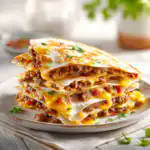
Cheesy Beef Quesadilla Casserole: Easy Dinner Recipe
- Total Time: 45
- Yield: 6-8 servings
Description
A Tex-Mex casserole blending seasoned ground beef, melted cheddar, flour tortillas, and fresh salsa for a hands-off, family-friendly dinner. Layers of gooey cheese and juicy beef deliver restaurant-quality flavor in 45 minutes.
Ingredients
Ground beef – 2 pounds
Flour tortillas – 8-10 large (10-inch)
Cheddar cheese – 3 cups shredded
Fresh salsa – 2 cups (16 ounces)
Yellow onion – 1 medium, diced
Garlic powder – 1 teaspoon
Instructions
Preheat oven to 375°F (190°C)
Cook ground beef in a skillet over medium-high heat, breaking into small pieces, until browned
Stir in diced onion and garlic powder; cook until onion softens (2-3 minutes)
Drain excess fat from the beef mixture
Spread a thin layer of salsa in a 9×13-inch baking dish
Layer 2-3 tortillas over the salsa, then top with half the beef
Sprinkle with 1 cup cheese, then repeat layering with remaining tortillas, beef, and cheese
Cover with remaining salsa and top with final 1 cup cheese
Bake 25-30 minutes until bubbly and golden
Notes
Use block cheddar cheese for better melting
Thin tortillas prevent soggy layers
Ground beef can be substituted with halal-friendly ground lamb
- Prep Time: 15
- Cook Time: 30
- Category: Dinner
- Method: Baking
- Cuisine: Tex-Mex
Nutrition
- Serving Size: 1 serving
- Calories: 500
- Sugar: 6g
- Sodium: 1000mg
- Fat: 28g
- Saturated Fat: 12g
- Carbohydrates: 45g
- Fiber: 3g
- Protein: 28g
- Cholesterol: 110mg