There is a distinct difference between “cooking dinner” and “crafting a meal,” even on a busy Tuesday night. Often, home cooks assume that achieving the glossy, umami-rich coating of restaurant-style Lo Mein requires a blazing hot commercial wok and three different pots of boiling water. That is a misconception.
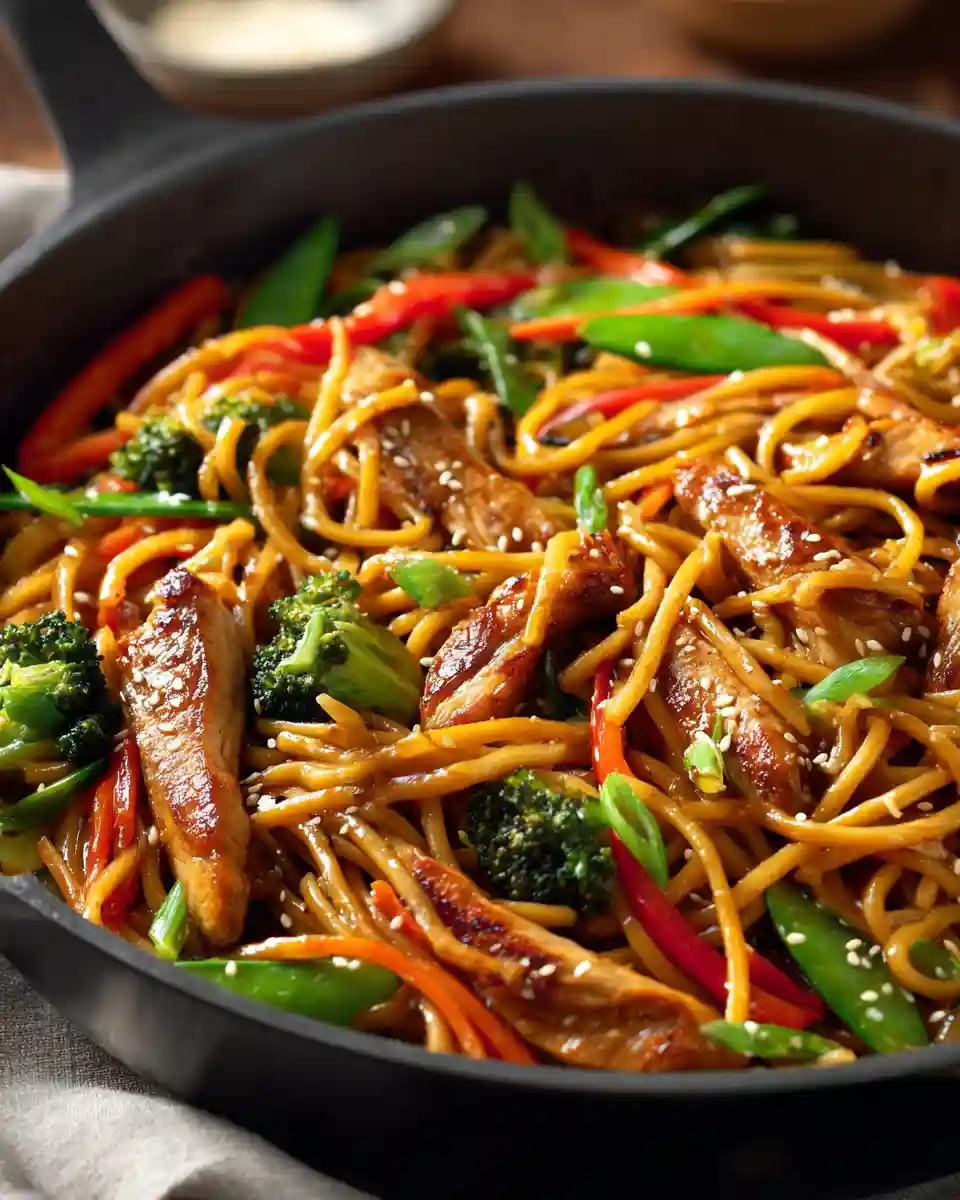
The One Pan Chicken Lo Mein Skillet is not just a shortcut; it is a technique-driven approach to flavor absorption. By cooking the noodles directly in the skillet with the chicken and aromatics, we utilize the natural starches released by the pasta to emulsify the sauce, creating a velvety, clingy glaze that coats every strand—something you simply cannot achieve by boiling noodles separately.
This recipe delivers the snap of fresh vegetables, the tender bite of savory chicken, and the rich, salty-sweet depth of classic takeout, all strictly contained within a single vessel. It is efficient, it is precise, and frankly, it tastes better than what comes in the white cardboard box.
The Origin: American-Chinese Comfort
While traditional Lo Mein (“tossed noodles”) involves stirring boiled noodles into a sauce, this one-pan skillet method leans into a modern, practical adaptation. It borrows the flavor profile of Cantonese cooking—soy, sesame, ginger, garlic—but utilizes the one-pot pasta technique popularized in Western kitchens to minimize cleanup and maximize starch utilization.
🔪 Top 3 Pro Tips for Skillet Success
- Velvet Your Chicken: In professional kitchens, we “velvet” meat—coating it in cornstarch and oil—to protect it from high heat. Even in this quick skillet version, tossing your chicken strips in cornstarch before searing ensures they stay juicy and develop a golden, crispy exterior that grabs the sauce.
- Mise en Place is Non-Negotiable: Stir-fries happen fast. Once the heat is on, you won’t have time to chop garlic or measure soy sauce. Have your Sauce Base mixed and your veggies chopped before you heat the pan.
- The “Tooth” Test: Because noodles vary by brand and thickness (spaghetti vs. egg noodles), the liquid ratios can fluctuate slightly. Taste a noodle 2 minutes before the package instructions say it’s done. You want it al dente (firm to the bite) because it will continue to cook in the residual heat of the sauce.
📝 The Ingredients List
The Protein & Aromatics:
- 1 lb Boneless skinless chicken breasts (or thighs), sliced into thin strips against the grain
- 1 tbsp Cornstarch (for velveting)
- 1 tsp Salt
- 1/2 tsp Black pepper
- 2 tbsp Vegetable oil or avocado oil (divided)
- 1 tbsp Fresh ginger, minced
- 3 cloves Garlic, minced
The Sauce Base:
- 1/2 cup Low-sodium soy sauce
- 1 tbsp Dark soy sauce (optional, for color)
- 2 tsp Sesame oil (toasted)
- 1 tbsp Brown sugar (packed)
- 1 tbsp Rice vinegar (adds acidity without alcohol)
- 1 tbsp Sriracha or chili garlic sauce (optional, for heat)
The Skillet Base:
- 3.5 to 4 cups Chicken broth (low sodium)
- 8 oz Uncooked noodles (Spaghetti, linguine, or dried egg noodles work best)
- 2 cups Broccoli florets, chopped small
- 1 cup Red bell pepper, sliced into strips
- 1 cup Snow peas or sugar snap peas
- 1 cup Carrots, julienned or shredded
Garnish:
- 2 Green onions, sliced on the bias
- 1 tsp Toasted sesame seeds
🥣 Step-by-Step Instructions
1. Prep and Velvet the Chicken
In a medium bowl, toss the sliced chicken strips with cornstarch, salt, and pepper. Ensure the chicken is evenly coated. This cornstarch layer acts as a barrier, keeping the juices inside while creating a texture that allows the sauce to adhere.
2. Sear the Protein
Heat 1 tablespoon of oil in a large high-walled skillet or Dutch oven over medium-high heat. Once the oil shimmers, add the chicken in a single layer.
- Chef’s Note: Do not crowd the pan. If necessary, cook in two batches. Sear for 2–3 minutes per side until golden brown. Remove the chicken from the pan and set aside on a plate. (It doesn’t need to be 100% cooked through yet).
3. Bloom the Aromatics
In the same hot skillet, add the remaining 1 tablespoon of oil. Add the minced ginger and garlic. Sauté for 30–45 seconds, strictly until fragrant. Do not let the garlic burn, or it will turn bitter.
4. Deglaze and Simmer
Pour in the chicken broth, soy sauce, sesame oil, brown sugar, rice vinegar, and Sriracha (if using). Scrape the bottom of the pan with a wooden spoon to release any browned bits (fond) from the chicken—this is pure flavor. Bring the liquid to a rolling boil.
5. Cook the Noodles
Break the noodles in half (if using spaghetti) and add them to the boiling liquid. Ensure they are submerged. Reduce heat to medium, cover, and cook for 5 minutes.
- Tip: Uncover halfway through and use tongs to separate the noodles so they don’t clump together.
6. Add Vegetables
After the noodles have cooked for 5 minutes, uncover the skillet. Add the broccoli, carrots, and bell peppers. Toss well to combine. Cover and cook for another 3–4 minutes, or until the noodles are tender and most of the liquid has absorbed into a thick, glossy sauce.
7. Final Toss & Serve
Add the snow peas and the reserved cooked chicken back into the pan. Toss continuously for 1–2 minutes over medium heat. The heat will crisp the snow peas (keeping them crunchy) and finish cooking the chicken.
- Observation: The sauce should coat the back of a spoon. If it is too dry, splash in 2 tablespoons of water.
- Garnish with green onions and sesame seeds. Serve immediately.
⚠️ Common Mistakes to Avoid
| Mistake | The Consequence | The Fix |
| Using High-Sodium Broth | The dish becomes inedibly salty. | Always use low-sodium broth and soy sauce; you can add salt later, but you can’t take it out. |
| Overcooking Veggies | Mushy texture, loss of vibrant color. | Add hearty veg (broccoli/carrots) first, and delicate veg (snow peas/spinach) at the very end. |
| Crowding the Noodles | Pasta clumps together into a brick. | Use tongs to agitate and separate noodles vigorously during the first minute of boiling. |
| Skipping the Sear | Pale, rubbery chicken. | Don’t rush step 2. That golden crust provides the “wok hay” flavor profile. |
❓ Frequently Asked Questions
1. Can I use frozen vegetables for this recipe?
Yes, absolutely. Frozen stir-fry blends are a great time-saver. However, frozen vegetables release more water than fresh ones. If using frozen veggies, reduce your chicken broth by about 1/4 cup to prevent the sauce from becoming too thin. Add them in the last 3 minutes of cooking.
2. What type of noodles works best for one-pan cooking?
Standard Italian spaghetti or linguine are surprisingly excellent substitutes for Chinese egg noodles because they hold up well to boiling in broth without turning to mush. If you have access to dried Asian egg noodles, those are perfect. Avoid fresh noodles or instant ramen for this specific one-pan method, as they cook too fast and may dissolve before the liquid reduces.
3. How do I store and reheat leftovers?
Store leftovers in an airtight container in the refrigerator for up to 3 days.
- Reheating Tip: The noodles will soak up the sauce in the fridge. When reheating in the microwave or stovetop, add a splash of water or chicken broth to loosen the pasta and bring the sauce back to life.
4. Can I make this gluten-free?
Yes. Substitute the soy sauce for Tamari or Coconut Aminos. Ensure your chicken broth is certified gluten-free, and use a gluten-free spaghetti or rice noodle. Note: Rice noodles release starch differently; you may need to stir more frequently to prevent sticking.
5. Why is my sauce too runny?
If the noodles are cooked but the liquid is still soupy, simply remove the lid, increase the heat to high, and toss vigorously for 1–2 minutes. The evaporation combined with the starch agitation will thicken the sauce rapidly.
🥗 What to Serve with Chicken Lo Mein
Since this is a complete meal with protein, carbs, and veggies, you don’t need heavy sides. However, these appetizers make for a great “fakeout takeout” night:
- Quick Sesame Chicken Noodles: Done in 20 Minutes (If feeding a larger crowd and need extra noodles!)
- Easy Shrimp Lo Mein at Home (For a surf-and-turf variation).
- Savory Black Pepper Chicken Delight (An excellent contrasting protein dish).
- Beef and Broccoli Recipe (One Pan, 25 Minutes!) (Another one-pan winner).