There is a fundamental difference between a soup made for tonight’s dinner and a soup designed for the week. Most home cooks make the mistake of treating them the same. The result? By Wednesday, your bright, aromatic soup has turned into a cloudy, starchy sludge with disintegrated vegetables and bloated noodles.
If you are meal prepping chicken soup, you need a technical approach. We are looking for a broth that retains its clarity, vegetables that hold their snap after reheating, and a protein that doesn’t dry out.
This guide covers my professional method for constructing a Chicken Soup specifically engineered for meal prep containers. We focus on stabilizing the broth and managing the absorption rates of your starches so every bowl tastes like it was made fresh that morning.
Why It Works
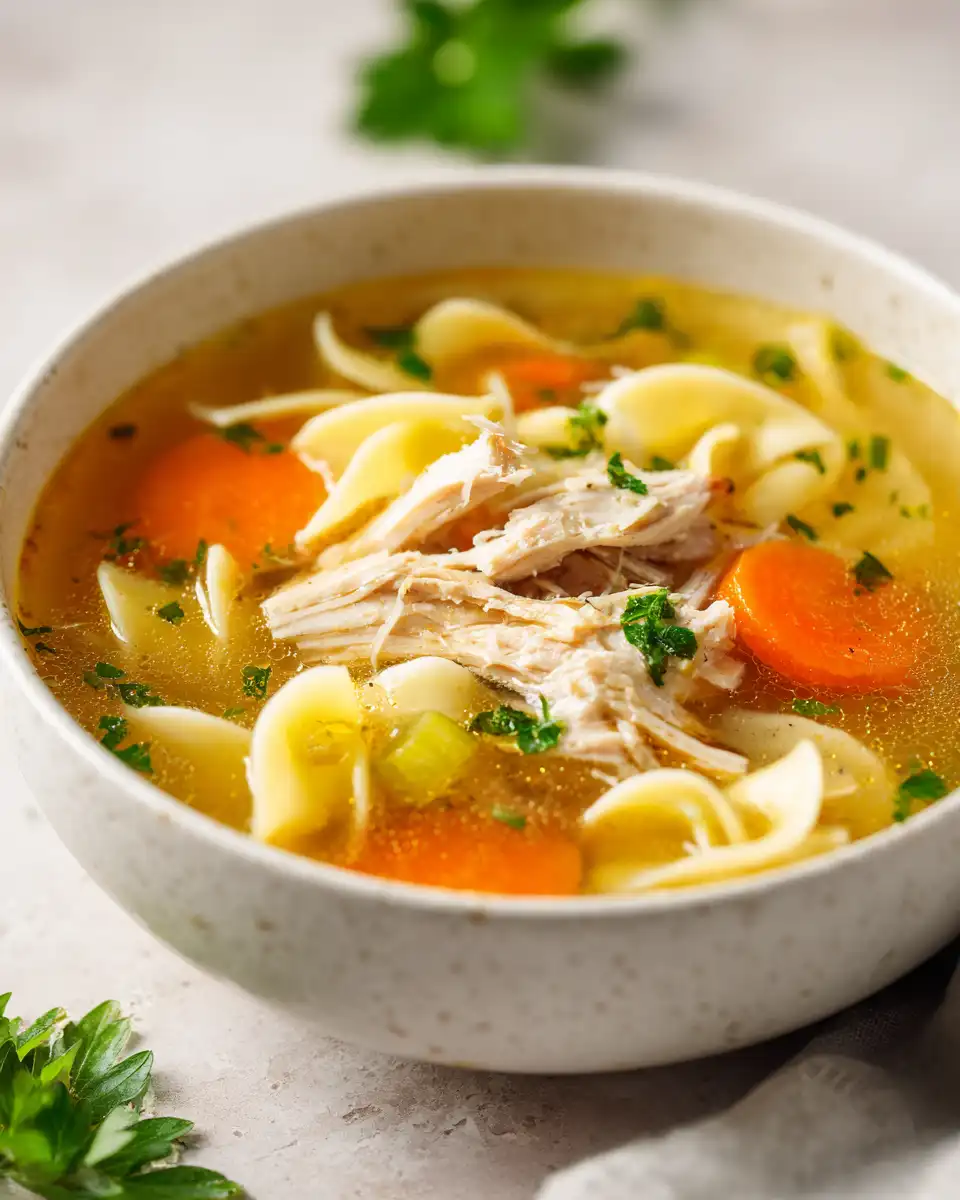
- The Protein Choice: We utilize bone-in, skin-on chicken thighs initially for the broth, but shred the meat later. Thighs have enough intramuscular fat to withstand reheating without becoming chalky, unlike breast meat.
- Starch Separation: The “Pro Chef” secret to meal prep soup is simple: never store the noodles in the broth. Pasta acts as a sponge. In this recipe, we prep them separately to maintain texture integrity.
- Aromatic Layering: We sauté the mirepoix (carrots, celery, onion) until they just begin to sweat, locking in flavor before boiling. We also hold back fresh herbs until the very end to preserve their volatile oils.
Ingredient Deep Dive
- Chicken Thighs (Bone-In, Skin-On): 2 lbs. The bones provide the collagen needed for a velvety mouthfeel (viscosity) in the broth.
- Mirepoix:
- 3 large carrots, peeled and sliced into 1/2-inch rounds (cut thicker for meal prep to prevent mushiness).
- 3 stalks celery, sliced.
- 1 large yellow onion, diced.
- Aromatics:
- 4 cloves garlic, minced.
- 1 inch fresh ginger, grated (adds a background heat that preserves freshness).
- 2 bay leaves.
- 1 tsp dried thyme.
- 1/2 tsp turmeric (for golden color and anti-inflammatory properties).
- Liquids:
- 8 cups high-quality chicken stock (low sodium preferred so you can control salinity).
- 2 tbsp lemon juice (added at the end to brighten the fat).
- The Starch (Cooked Separately):
- 8 oz Egg noodles, Ditalini, or Rotini.
- Finishers:
- 1/4 cup fresh parsley, chopped.
- Salt and black pepper to taste.
- 1 tbsp olive oil or avocado oil for sautéing.
Step-by-Step Instructions
- Sear the Chicken: In a large Dutch oven or stockpot, heat the oil over medium-high heat. Pat the chicken thighs dry and season generously with salt and pepper. Sear skin-side down for 5–6 minutes until the skin is deep golden brown and the fat has rendered. Flip and sear for 2 minutes. Remove chicken and set aside (it will not be fully cooked yet).
- Build the Flavor Base: Lower the heat to medium. In the rendered chicken fat, add the onion, carrots, and celery. Sauté for 5 minutes, scraping up the browned bits (fond) from the bottom of the pot. Add the garlic, ginger, thyme, turmeric, and bay leaves. Cook for 60 seconds until fragrant.
- Simmer: Pour in the chicken stock. Return the chicken thighs (and any accumulated juices) to the pot. Bring to a boil, then immediately reduce to a low simmer. Cover and cook for 35–45 minutes, or until the chicken is tender and pulling away from the bone.
- Prep the Starch: While the soup simmers, bring a separate pot of salted water to a boil. Cook your pasta to al dente (usually 1 minute less than the package instructions). Drain and toss with a teaspoon of olive oil to prevent sticking. Do not add this to the soup pot.
- Shred and Finish: Remove the chicken thighs. Discard the skin and bones. Shred the meat and return it to the pot. Stir in the lemon juice and fresh parsley. Taste and adjust salt and pepper.
- Cooling Strategy: If meal prepping, let the soup cool until it reaches room temperature (do not leave out longer than 2 hours) before dividing into containers.
Storage & Meal Prep Guide
For professional-grade meal prep, assembly is key.
| Component | Storage Method | Why? |
| The Broth & Veg | Air-tight glass containers | Glass prevents staining and reheating is safer. |
| The Pasta/Rice | Small separate baggie or top divider | Prevents the starch from absorbing all the broth and becoming mushy. |
| The Herbs | Add fresh after reheating | Heat destroys the delicate flavor of parsley or dill. |
The “Dump & Go” Compromise:
If you absolutely must mix everything together for convenience, use a sturdy pasta shape like Ditalini or Orzo, and undercook it by 3 minutes before adding it to the soup. It will finish cooking continuously as the soup sits in the fridge.
5 Creative Variations
- Lemon-Dill Detox: Swap thyme for fresh dill and double the lemon juice. Add 2 cups of fresh spinach just before portioning.
- Golden Anti-Inflammatory: Double the turmeric and black pepper. Add 1 cup of cauliflower florets with the carrots.
- Spicy Ginger Garlic: Increase ginger to 2 tbsp, add 1 tsp red pepper flakes, and swap the pasta for rice noodles (stored separately).
- Creamy (Dairy-Free): Stir in 1/2 cup of coconut milk at the end for a rich, velvety texture without the risk of dairy curdling during reheat.
- Rotisserie Hack: Short on time? Skip step 1. Sauté veg, add stock, and toss in shredded Rotisserie chicken at the end. Simmer for only 20 minutes to meld flavors.
Frequently Asked Questions
1. How long does this chicken soup stay fresh in the fridge?
Properly stored in airtight containers, this soup stays fresh for 4 to 5 days. The flavor actually improves on day 2 as the aromatics meld.
2. Can I freeze this soup?
Yes, but freeze only the soup base (broth, chicken, vegetables). Do not freeze the noodles, as they will break down into a grainy texture upon thawing. Freeze for up to 3 months.
3. Why does my soup turn into jelly in the fridge?
That is a sign of success! It means your chicken bones released plenty of gelatin and collagen. It will liquefy instantly when reheated and provides a richer, silkier mouthfeel than water-based soups.
4. What are the best containers for soup meal prep?
I recommend glass snap-ware containers. Plastic often holds onto onion/garlic odors and can stain from the turmeric or carrots.
5. How do I reheat this without overcooking the chicken?
Microwave on high for 2–3 minutes, stirring halfway through. If you stored the pasta separately, add it in for the last 60 seconds of heating just to warm it through.
Related Recipes
- If you enjoy hearty, prep-friendly meals, try the Hearty Chicken Veggie Soup for a tomato-based variation.
- For another high-protein option that stores well, look at the Healthy Crockpot Tuscan Chicken.
- Looking for comfort food? My Easy Chicken Pot Pie Casserole is a crowd favorite.
- If you prefer rice over noodles, the Slow Cooker Lemon Herb Chicken and Rice utilizes similar flavor profiles.
Author’s Note: Quality stock makes or breaks this dish. If you aren’t making your own, buy “Bone Broth” from the store rather than standard “Chicken Broth” for better protein content and mouthfeel.