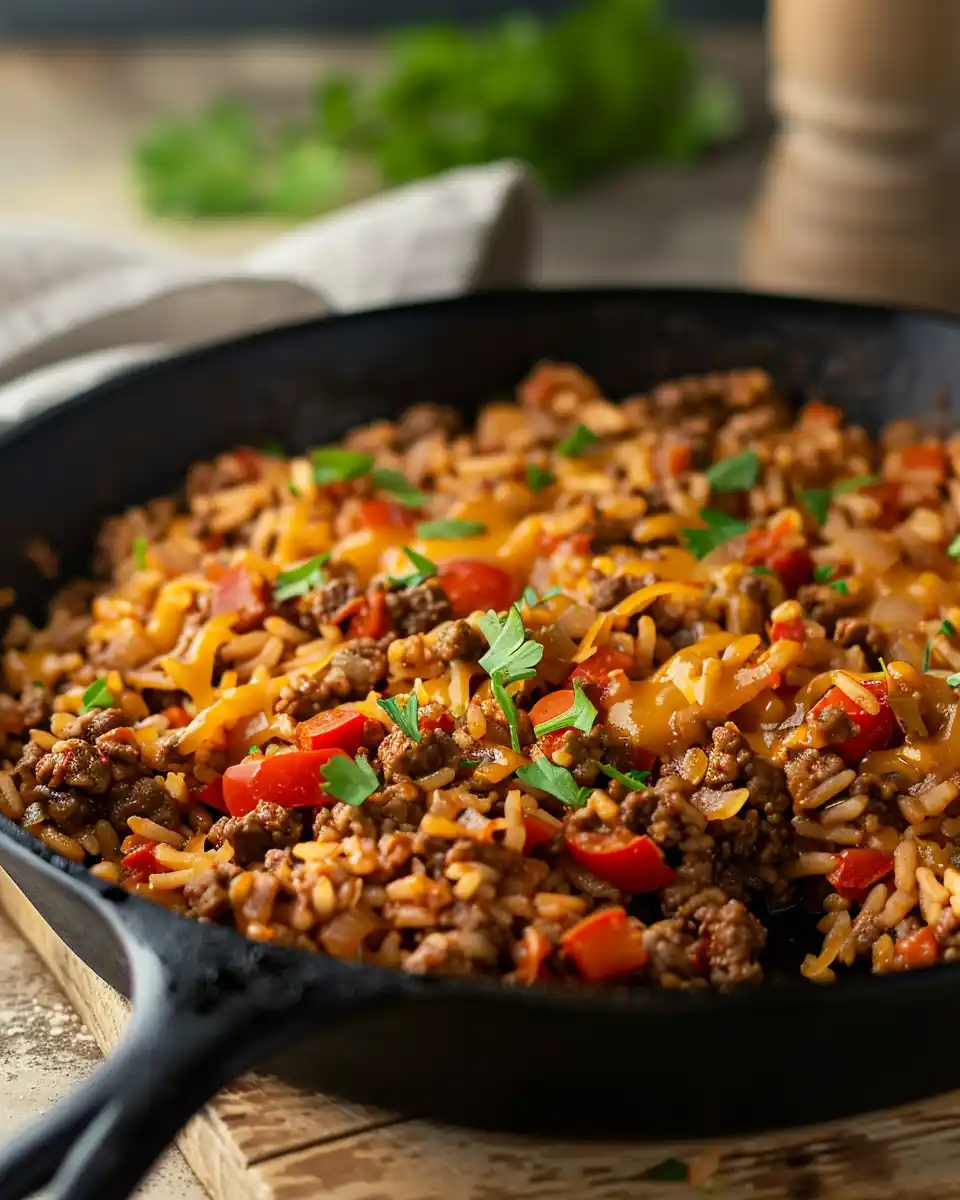
There is a misconception in home cooking that “budget-friendly” implies a compromise on flavor or technique. As a chef, I argue the opposite: economical ingredients often require the most precise execution to shine. This One Pan Beef and Rice Skillet is not just a “dump-and-stir” meal; it is a study in building layers of flavor—using the rendered beef tallow to toast the aromatics, caramelizing the tomato paste to unlock deep umami, and allowing the rice to absorb a rich, savory broth.
We aren’t just making dinner; we are maximizing the potential of humble ingredients. This dish delivers a robust, savory profile with the convenience of a single vessel, ensuring cleanup is minimal while satisfaction is maximized.
The Chef’s Approach: Why This Works
The success of this dish relies on the Maillard reaction and absorption. By properly searing the beef, we create a fond (those brown bits stuck to the pan) that serves as the flavor foundation. Toasting the uncooked rice in this rendered fat adds a nutty complexity that boiling simply cannot achieve.
Top 3 Pro Tips for Success
If you want to elevate this dish from “good” to “restaurant quality,” follow these technical adjustments:
- Don’t Crowd the Pan: When browning the beef, let it sit undisturbed for 60–90 seconds before breaking it up. You want a deep brown sear, not gray steamed meat. Color equals flavor.
- Toast the Rice: Before adding liquid, sauté the dry rice with the beef and aromatics for 2 minutes. This coats the starch granules in oil, preventing them from clumping and resulting in distinct, fluffy grains rather than a mushy texture.
- The Tomato Paste “fry”: Do not simply stir the tomato paste into the broth. Add it to the hot pan directly and cook it for 1 minute until it turns a rusty, brick-red color. This caramelizes the sugars and removes the raw metallic taste.
Common Mistakes to Avoid
- Stirring While Simmering: Once the lid is on, do not touch it. Agitating the rice releases excess starch, which turns the skillet into a gummy risotto-like consistency rather than a fluffy pilaf.
- Using Lean Beef: I recommend 85/15 or 80/20 ground beef. You need the rendered fat to cook the vegetables and toast the rice. If you use 93/7, you will need to add extra olive oil or butter.
- Cold Broth: Adding fridge-cold broth to a hot pan drops the temperature instantly and can seize the meat. If possible, use room temperature or warm broth to keep the cooking momentum going.
Ingredient Checklist
- 1 lb Ground Beef (85% lean recommended)
- 1 cup Long-Grain White Rice (uncooked, rinsed until water runs clear)
- 2 cups Beef Broth (low sodium preferred to control salinity)
- 1 medium Yellow Onion, finely diced
- 1 medium Red Bell Pepper, diced (adds necessary acidity and sweetness)
- 2 cloves Garlic, minced
- 2 tbsp Tomato Paste
- 1 tsp Smoked Paprika
- 1 tsp Dried Oregano
- 1/2 tsp Cumin
- 1/2 tsp Salt (adjust to taste)
- 1/4 tsp Black Pepper
- 1 cup Shredded Cheddar Cheese (optional, for finishing)
- Fresh Parsley, chopped (for garnish)
Technique: The “Searing vs. Steaming” Difference
Here is how a chef approaches a skillet meal versus the standard home cook method.
| Standard Home Method | Chef Jake’s Technique |
| Dumps beef and veggies together immediately. | Sears beef first to develop crust, then adds veggies. |
| Boils rice in the liquid. | Toasts rice in beef fat for nutty flavor and texture. |
| Uses plain water or bouillon. | Uses rich beef broth and deglazes the pan fond. |
| Serves immediately. | Rests for 5 minutes to let residual steam fluff the rice. |
Step-by-Step Instructions
- Sear the Beef: Heat a large skillet (cast iron preferred) over medium-high heat. Add the ground beef. Press it into the pan and let it sear undisturbed for 1–2 minutes to develop a crust. Break it apart and cook until fully browned (about 5–7 minutes).
- Sauté Aromatics: Drain excess fat if there is more than 2 tablespoons. Add the diced onion and red bell pepper. Sauté for 3–4 minutes until the onions are translucent and the peppers have softened. Add the minced garlic and cook for 30 seconds until fragrant.
- Bloom the Spices: Push the meat and vegetables to the side. Add the tomato paste, smoked paprika, oregano, cumin, salt, and pepper to the center of the pan. Cook this mixture for 1 minute, allowing the spices to bloom in the residual fat. Mix everything together.
- Toast the Rice: Add the uncooked, rinsed rice to the skillet. Stir constantly for 2 minutes. You want the rice grains to turn opaque and smell slightly nutty.
- Deglaze and Simmer: Pour in the beef broth. Scrape the bottom of the pan with a wooden spoon to release the flavorful fond. Bring the liquid to a rolling boil.
- The Steam: Reduce the heat to low. Cover the skillet with a tight-fitting lid. Simmer for 18–20 minutes. Do not lift the lid during this time.
- Rest and Finish: Remove the skillet from heat. Keep the lid on and let it rest for 5 minutes. This creates fluffier rice. Remove the lid, fluff gently with a fork, and sprinkle with cheddar cheese if using. Cover for 1 minute to melt the cheese, then garnish with fresh parsley and serve.
Frequently Asked Questions
Q: Can I use brown rice instead of white rice?
A: You can, but it requires adjustment. Brown rice has the bran layer intact, meaning it takes longer to cook. You will need to increase the liquid to roughly 2.5 cups and extend the simmer time to 40–45 minutes. Check for doneness before resting.
Q: Why is my rice crunchy after 20 minutes?
A: This usually happens if the lid wasn’t tight enough (steam escaped) or the heat was too high (liquid evaporated before rice cooked). Add 1/4 cup of hot water, cover, and steam on low for another 5 minutes.
Q: Can I use ground turkey to reduce fat?
A: Yes. However, turkey lacks the fat content of beef. To mimic the mouthfeel and flavor, add 1 tablespoon of olive oil or butter when sautéing the onions, and increase the spices slightly, as turkey is milder than beef. For a similar poultry dish, check out my analysis on the Ground Turkey Taco Skillet.
Q: How do I store and reheat this?
A: Store in an airtight container for up to 4 days. When reheating beef and rice, add a splash of water or broth before microwaving to rehydrate the rice grains, preventing them from becoming dry and hard.
Q: What vegetables can I add to bulk this up?
A: This recipe is a great vehicle for produce. Diced zucchini, corn kernels, or peas work well. Add harder vegetables (carrots) with the onions, and softer ones (peas, corn) when you add the broth. If you enjoy veggie-heavy skillets, you might like the technique used in my Ground Beef & Mushroom Umami Skillet.
Final Thoughts
This dish proves that “cheap” does not have to mean “boring.” By applying proper culinary heat control and timing, you transform basic staples into a cohesive, flavorful dinner. If you are looking for more robust beef recipes, I recommend trying the Texas Roadhouse Butter Chicken Skillet (swapping the protein works brilliantly) or the comfort-food classic Cheesy Ground Beef & Potato Casserole.
For a lighter variation, consider the Garlic Butter Ground Beef & Green Beans Skillet.