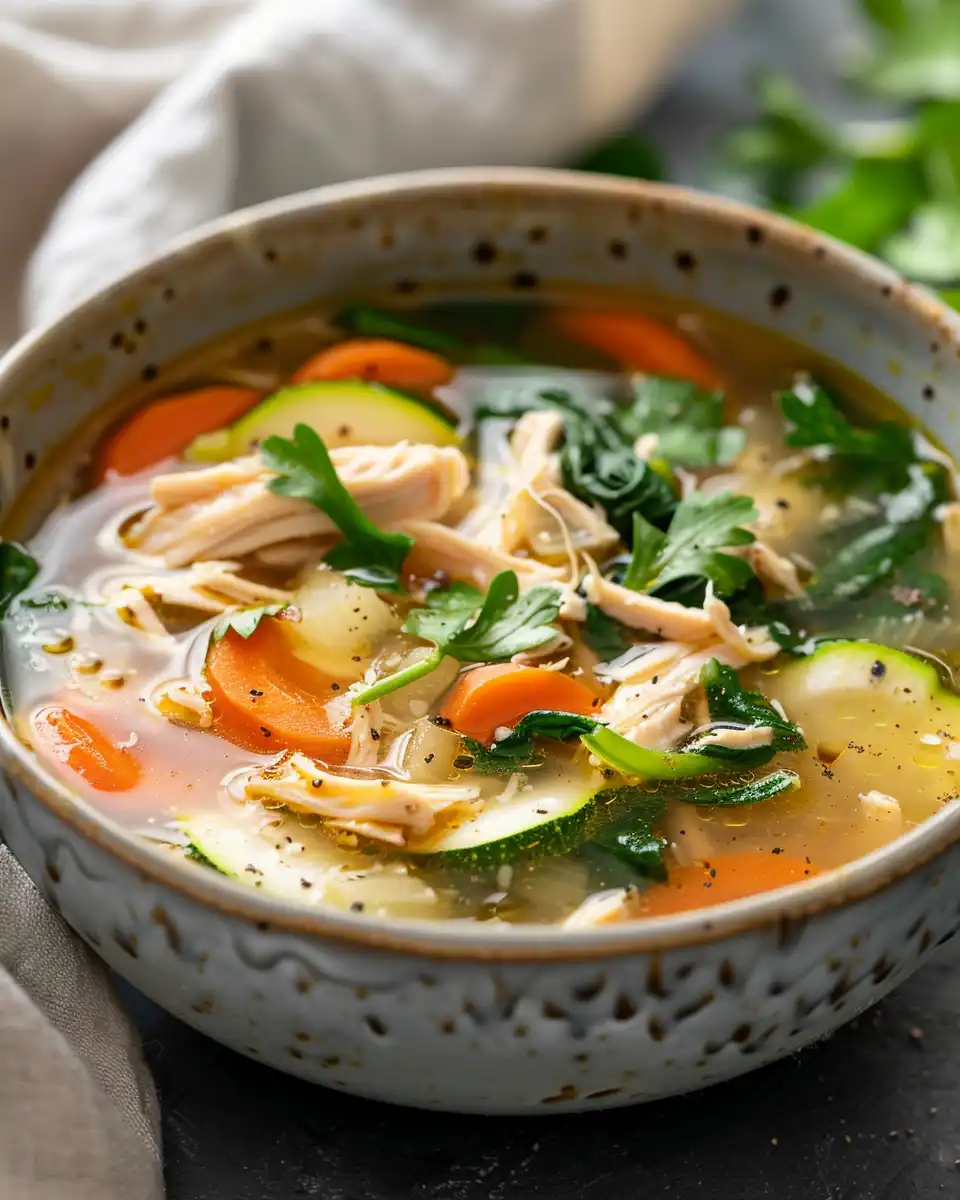
There is a distinct difference between a soup that tastes like hot vegetable water and one that tastes like a restorative, culinary embrace. The difference isn’t usually the ingredients—it’s the technique.
When I develop a recipe like this Vegetable Packed Chicken Soup, my goal is to balance the freshness of the produce with the depth of the broth. Too often, home cooks throw everything into the pot at once. The result? Mushy zucchini, disintegrated carrots, and rubbery chicken.
This recipe is designed to respect the integrity of every vegetable. We build flavor in stages: searing the protein to develop a fond, sweating the aromatics to release natural sugars, and staging the vegetable additions so every bite has the perfect “al dente” snap. It’s healthy, it’s vibrant, and it demonstrates that comfort food can be technically precise.
🔪 Chef’s Guide to Soup texture
The secret to a professional-grade vegetable soup is staggered cooking times. Hard vegetables (root vegetables) need time to soften, while soft vegetables (zucchini, spinach) only need to be heated through.
Hard vs. Soft Vegetable Timing
| Vegetable Type | Examples | When to Add | Cooking Goal |
| Aromatics | Onions, Garlic, Celery | Step 1 (Sauté) | Translucent & Sweet |
| Hard Veg | Carrots, Potatoes, Turnips | Step 2 (Simmer) | Tender but firm |
| Soft Veg | Zucchini, Green Beans | Last 10 Mins | Bright color, crisp-tender |
| Greens | Spinach, Kale, Chard | Flame Off | Wilted via residual heat |
👨🍳 3 Pro Tips for Success
- Uniformity is Key: Cut your vegetables, particularly the carrots and celery, into a uniform 1/2-inch dice. Uniform cuts ensure uniform cooking rates. If your chunks vary wildly in size, you will end up with some pieces raw and others dissolving into the broth.
- Bloom Your Spices: Don’t just dump dried herbs into the liquid. Add your thyme, oregano, and pepper to the hot oil after sautéing the onions but before adding the broth. This heat activates the essential oils in the herbs, resulting in a more potent aroma.
- The Acid Finish: A soup that feels “heavy” or “flat” is usually missing acid, not salt. A squeeze of fresh lemon juice right before serving acts as a highlighter for the palate, cutting through the savory fat and making the vegetable flavors pop.
🚫 Common Mistakes to Avoid
- Boiling the Chicken: Never let your soup come to a violent, rolling boil once the chicken is back in. High heat causes the muscle fibers in the chicken to contract tightly, squeezing out moisture and leaving you with dry, chalky meat. Maintain a gentle simmer.
- Overcrowding the Pan: When searing your chicken initially, give the pieces space. If you crowd the pot, the chicken will steam instead of sear, and you will miss out on the caramelized “brown bits” (fond) on the bottom of the pan that provide the soup’s foundational flavor.
- Forgetting to Season in Stages: Salt your chicken before searing. Salt your vegetables when sweating. Salt the broth. Seasoning at every stage creates a complex flavor profile that simply salting at the end cannot achieve.
🛒 Ingredients List
The Protein
- 1.5 lbs boneless, skinless chicken thighs (preferred for moisture) or breasts
- 1 tbsp olive oil
- 1 tsp kosher salt
- 1/2 tsp black pepper
The Aromatics & Hard Veg
- 1 large yellow onion, diced
- 3 large carrots, peeled and sliced into rounds
- 3 ribs celery, sliced
- 4 cloves garlic, minced
The Broth & Herbs
- 6 cups high-quality chicken broth (low sodium preferred so you can control salinity)
- 1 tsp dried thyme
- 1 tsp dried oregano
- 1 bay leaf
The Finish (Soft Veg)
- 1 medium zucchini, sliced into half-moons
- 1 cup green beans, trimmed and cut into 1-inch pieces
- 2 cups fresh spinach, roughly chopped
- 1 tbsp fresh lemon juice
- 1/4 cup fresh parsley, chopped
📝 Step-by-Step Instructions
- Sear the Chicken: In a large Dutch oven or heavy-bottomed pot, heat the olive oil over medium-high heat. Pat the chicken dry (crucial for searing) and season with salt and pepper. Sear the chicken for 4–5 minutes per side until golden brown. It does not need to be cooked through yet. Remove chicken and set aside.
- Sweat the Aromatics: Reduce heat to medium. Add the onions, carrots, and celery to the same pot. Stir to coat in the leftover chicken fat and oil. Cook for 5–7 minutes until the onions are translucent and the carrots begin to soften. Add the minced garlic, thyme, and oregano; cook for 60 seconds until fragrant.
- Deglaze and Simmer: Pour in a splash of the chicken broth to deglaze the pan, scraping up any browned bits from the bottom with a wooden spoon. Add the remaining broth and the bay leaf.
- Poach the Chicken: Return the seared chicken (and any accumulated juices) to the pot. Bring the liquid to a boil, then immediately reduce to a low simmer. Cover and cook for 15–20 minutes, or until the chicken is cooked through and tender.
- Shred and Add Soft Veg: Remove the chicken and shred it with two forks. Return the shredded meat to the pot. Add the zucchini and green beans. Simmer uncovered for 5–8 minutes. You want the zucchini to be tender but still hold its shape.
- The Finish: Turn off the heat. Stir in the spinach; the residual heat will wilt it perfectly in about 1 minute. Stir in the fresh lemon juice and parsley. Taste and adjust salt and pepper if needed.
🙋♀️ Frequently Asked Questions
Q: Can I use a rotisserie chicken to save time?
A: Absolutely. If using pre-cooked rotisserie chicken, skip Step 1. Start by sautéing your vegetables. Add the shredded rotisserie chicken in Step 5 along with the zucchini and green beans just to warm it through. This prevents the meat from becoming stringy.
Q: How do I store this for meal prep?
A: This soup stores beautifully. Let it cool completely, then transfer to airtight containers. It will keep in the refrigerator for 3–4 days. Reheat gently on the stove or in the microwave.
Q: Can I add noodles or rice?
A: Yes, but cook them separately. If you cook pasta or rice directly in the soup, they will release starch (making the broth cloudy) and absorb too much liquid (becoming mushy leftovers). Add a scoop of cooked rice or noodles to the bowl right before serving.
Q: Can I freeze this soup?
A: Yes, but vegetables like zucchini can get a bit soft upon thawing. For the best freezer results, slightly undercook the vegetables in Step 5. Freeze in portion-sized containers for up to 3 months.
Q: Is breast or thigh meat better?
A: As a chef, I prefer chicken thighs. They have a higher fat content and connective tissue that breaks down during simmering, keeping the meat juicy. Chicken breasts are leaner but prone to drying out if overcooked even slightly.
🔗 You Might Also Like
- Hearty Chicken Veggie Soup – A variation focusing on hearty root vegetables.
- Slow Cooker Lemon Herb Chicken and Rice – Similar flavors adapted for the slow cooker.
- Healthy Crockpot Tuscan Chicken – A creamy, dairy-free alternative.
- The Ultimate Anti-Inflammatory Meal Prep Guide – More healthy meal prep inspiration