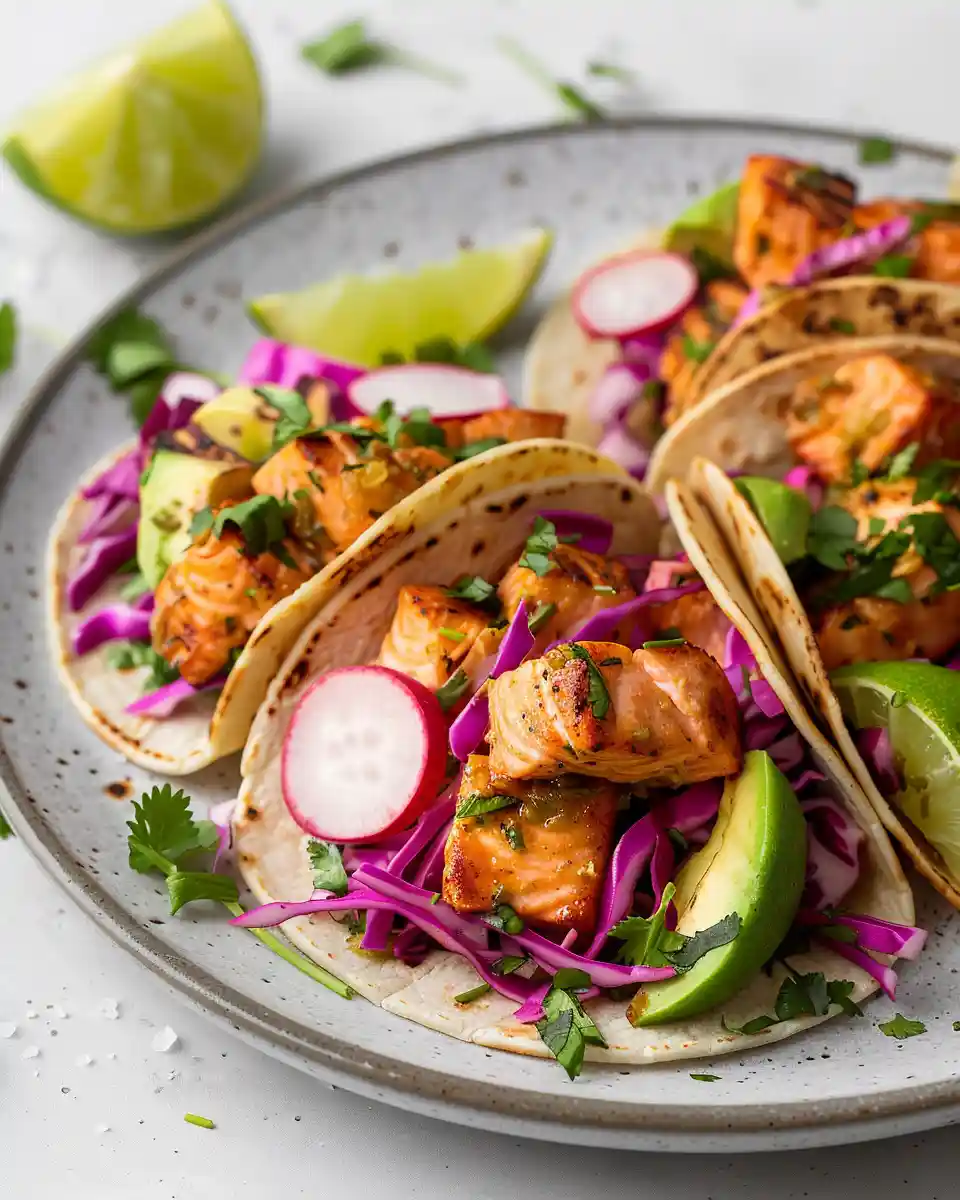
There is a specific magic that happens when high-quality seafood meets the char of a hot pan and the brightness of a lime-drenched slaw. In professional kitchens, we view the taco not just as a handheld snack, but as a canvas for flavor architecture. These Easy Salmon Street Tacos are designed to hit every sensory note: the velvety richness of perfectly seared salmon, the crisp snap of purple cabbage, and the creamy finish of a spiced crema.
Whether you are hosting a summer gathering or looking to upgrade your Tuesday night routine, this recipe moves away from the heavy, fried fish tacos of the past. Instead, we are focusing on clean, bold ingredients that highlight the natural beauty of the salmon.
The Story Behind the Dish
Street tacos, or tacos de esquina, originated as a functional, fast-paced meal for workers in Mexico. Traditionally featuring meats like beef or lamb, the “street” style is defined by its small scale—usually two-bite corn tortillas—and its reliance on fresh, raw garnishes to cut through savory fats.
Bringing salmon into this format is a modern, Pacific-Northwest-inspired evolution. Salmon provides a fatty, savory base that mimics the richness of traditional meats but with a much faster cook time and a cleaner finish. For a chef, the goal with a salmon taco is to achieve the Maillard reaction (that beautiful golden crust) on the outside while maintaining a tender, medium-rare to medium interior. This ensures the fish flakes easily into the tortilla, absorbing the juices of the salsa and lime.
The Essential Ingredients
To achieve professional results, ingredient quality is paramount. Here is what you will need for the ultimate salmon street taco experience.
For the Salmon:
- 1.5 lbs Salmon Fillets: Skinless, cut into 1-inch cubes for maximum surface area and seasoning coverage.
- 2 tbsp Avocado Oil: Chosen for its high smoke point to ensure a perfect sear without burning.
- 1 tsp Smoked Paprika: To add a hint of earthiness.
- 1 tsp Cumin: For that traditional taco warmth.
- 1/2 tsp Garlic Powder: For a savory depth of flavor.
- 1/2 tsp Sea Salt and Cracked Black Pepper: To taste.
For the Cabbage Slaw:
- 2 cups Purple Cabbage: Thinly shredded for a vibrant visual pop and crunch.
- 1/4 cup Fresh Cilantro: Chopped roughly.
- 1 large Lime: Juiced (approximately 2 tablespoons).
- 1 tsp Honey: To balance the acidity of the lime.
For the Assembly:
- 12 small Corn Tortillas: The 4-inch “street taco” size is preferred.
- 1 Avocado: Sliced or mashed.
- Optional: Radish slices, pickled red onions, or a dollop of Greek yogurt crema.
Step-by-Step Instructions
1. Prepare the Salmon
Pat the salmon dry with paper towels. This is a non-negotiable step; moisture is the enemy of a good sear. In a medium bowl, toss the salmon cubes with the avocado oil, smoked paprika, cumin, garlic powder, salt, and pepper until evenly coated.
2. Build the Slaw
In a separate bowl, whisk together the lime juice and honey. Add the shredded cabbage and cilantro. Toss thoroughly to coat and set aside. Allowing the slaw to sit for 10–15 minutes allows the acid in the lime to slightly soften the cabbage while maintaining its snap.
3. The Professional Sear
Heat a large cast-iron or stainless steel skillet over medium-high heat. Once the pan is shimmering (but not smoking), add the salmon cubes in a single layer. Do not crowd the pan; work in batches if necessary. Let the salmon cook undisturbed for 2–3 minutes to develop a golden-brown crust. Flip gently and cook for another 1–2 minutes. The salmon should be opaque on the outside but still moist in the center.
4. Warm the Tortillas
Never serve a cold tortilla. Use a gas burner to lightly char the edges of the corn tortillas for 10 seconds per side, or warm them in a dry pan until they are pliable and fragrant.
5. The Assembly
Place a small amount of the cabbage slaw in the center of a warm tortilla. Top with 3–4 cubes of seared salmon. Garnish with avocado slices and any additional toppings.
Plating & Presentation Guide
In a professional setting, we eat with our eyes first. To make these Easy Salmon Street Tacos look as good as they taste, follow these staging tips:
- Color Blocking: Use purple cabbage specifically for its deep hue. It creates a stunning contrast against the pink of the salmon and the green of the avocado.
- The Rule of Three: Serve three tacos on a rectangular plate. This odd-number arrangement is naturally more pleasing to the eye.
- The “Drizzle” Technique: If using a crema or sauce, don’t just dollop it on. Use a squeeze bottle to create a clean zig-zag pattern across the top of all three tacos simultaneously.
- Height Matters: Pile the slaw slightly high in the center before nesting the salmon on top. This creates vertical interest on the plate.
Flavor Pairings
To round out the meal, consider these pairings that respect the flavor profile of the salmon:
- Starch: A side of cilantro lime rice or a 25 Minute Ground Turkey Taco Skillet if you are serving a crowd with varying protein preferences.
- Vegetables: Blistered shishito peppers or a grilled corn elote salad.
- Acidity: If you want more heat, a fresh salsa verde or a habanero-pineapple salsa complements the fatty salmon beautifully.
Pro Tips for Success
- Don’t Overcook: Salmon continues to cook for a minute after being removed from the heat (carryover cooking). Take it off the pan when it still looks just a bit “under” in the very center.
- Double Tortilla: If your tortillas are thin, use two per taco. This is the traditional “street” way, ensuring the taco doesn’t break under the weight of the fillings and juices.
- Acid Balance: If the tacos feel “flat,” add an extra squeeze of fresh lime right before serving. Acid acts like a volume knob for flavor.
Common Mistakes to Avoid
- Using Flour Tortillas: While fine in a pinch, flour tortillas tend to get gummy when paired with the moisture of a slaw. Corn tortillas provide a necessary earthy flavor and firmer texture.
- Frozen Salmon (Improperly Thawed): If using frozen fillets, ensure they are completely thawed and patted extremely dry. If they are still icy, they will steam in the pan rather than sear, resulting in a mushy texture.
- Skipping the Fat: Salmon is a lean-to-fatty fish, but it still needs a high-smoke-point oil to facilitate the sear. Don’t be afraid of the avocado oil; it’s essential for that “street-style” finish.
If you enjoy the versatility of salmon, you might also want to try our Sheet Pan Lemon Herb Salmon for an even faster weeknight cleanup. For those who love the bold flavors of Mexican-inspired cooking, our Crockpot Salsa Verde Chicken is another fantastic “set it and forget it” option.
Troubleshooting Your Tacos
| Problem | Solution |
| Fish is sticking to the pan | Your pan wasn’t hot enough, or you tried to flip the fish too early. Wait for the salmon to naturally release from the surface. |
| Tortillas are breaking | They are too dry. Warm them briefly in a damp paper towel in the microwave, or char them on the stove to activate the oils in the corn. |
| The dish tastes bland | It likely needs more salt or more lime juice. Salt enhances the salmon, while lime juice brightens the spices. |
FAQ
Can I use salmon skin?
For street tacos, skinless is best. It allows the seasoning to penetrate all sides of the fish and ensures a consistent texture in every bite. Save the skin to fry separately as a “salmon crackling” garnish if you wish!
How long does leftover salmon last?
Cooked salmon is best enjoyed within 2 days. To reheat, do so gently in a pan over low heat with a splash of water to prevent it from drying out.
Is this recipe spicy?
As written, it is mild and family-friendly. The cumin and smoked paprika provide warmth rather than heat. To add spice, add 1/2 teaspoon of cayenne pepper to the salmon rub.
What is the best type of salmon to buy?
According to the Monterey Bay Aquarium Seafood Watch, wild-caught Alaskan salmon is often the most sustainable choice. However, high-quality Atlantic salmon works perfectly for this recipe due to its higher fat content.
Can I bake the salmon instead of searing it?
Yes. If you prefer a hands-off approach, bake the cubes at 400°F (200°C) for 8–10 minutes. You won’t get the same crust, but the fish will be tender and delicious.