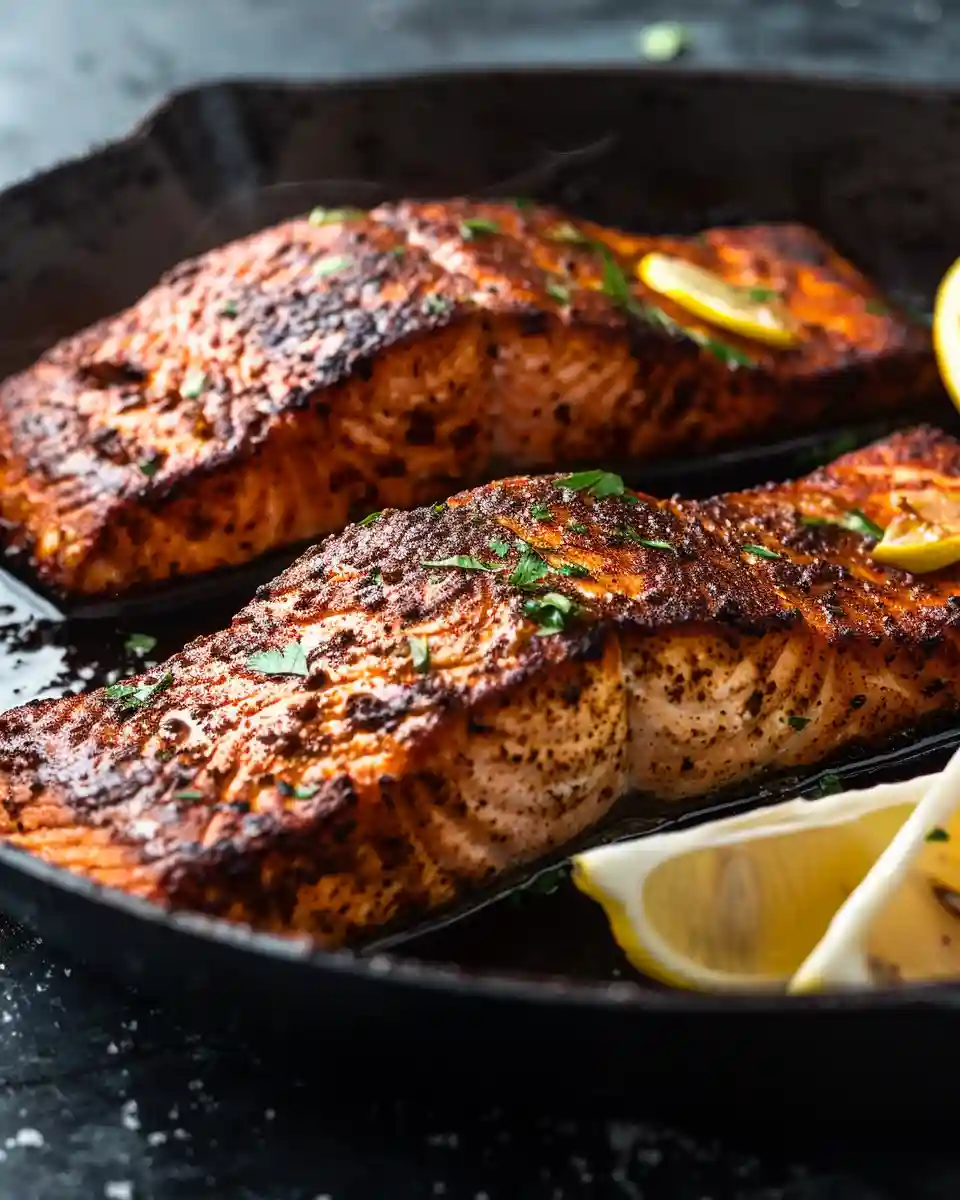
If you are looking for a way to transform a simple piece of fish into a bold, restaurant-quality meal in under 20 minutes, you have found it. This Cajun Spiced Salmon Skillet is one of my absolute favorite go-to dinners when the week gets busy but my family still wants something that tastes special.
The secret to this dish lies in the balance of the smoky, spicy Cajun rub and the high-heat sear of the skillet. You get a crispy, blackened crust on the outside while the inside remains buttery, tender, and perfectly flaky. It is proof that you don’t need hours in the kitchen to create a meal that packs a massive flavor punch.
The Heart of Cajun Flavor
While we often think of “Cajun” as just being spicy, it is actually a deeply aromatic style of cooking originating from Acadian immigrants in Louisiana. Traditionally, it relies on “the trinity” (onions, bell peppers, and celery), but in this modern skillet version, we use those classic spices—paprika, cayenne, garlic, and thyme—to create a crust that locks in all the natural juices of the salmon.
If you enjoy the bold kick of this recipe, you might also love my Cajun chicken sweet peppers healthy for another spice-filled weeknight win.
Why This Skillet Method Works
Cooking salmon in a skillet is, in my opinion, the best way to control the texture. Unlike baking, where the fish can sometimes steam and become mushy, the skillet allows for direct contact heat. This creates that “shatter-crisp” skin and a caramelized surface that holds onto the spices beautifully. Plus, you only have one pan to wash!
🛒 Ingredients You’ll Need
To get that perfect Cajun Spiced Salmon Skillet, quality ingredients are key. Here is what you will need for a dinner that serves four:
- Salmon Fillets: 4 (6-ounce) fillets, preferably center-cut for even cooking.
- Olive Oil: 2 tablespoons (or avocado oil for its high smoke point).
- Butter: 1 tablespoon (unsalted) to add a velvety finish to the pan sauce.
- Smoked Paprika: 1 tablespoon for that deep, red color and earthy base.
- Garlic Powder: 1 teaspoon for a savory bite.
- Onion Powder: 1 teaspoon to round out the aromatics.
- Cayenne Pepper: 1/4 to 1/2 teaspoon (adjust based on your heat preference!).
- Dried Thyme & Oregano: 1/2 teaspoon each for an herbal lift.
- Kosher Salt & Black Pepper: To taste.
- Fresh Lemon: 1 whole lemon, cut into wedges for serving.
- Fresh Parsley: For a bright, green garnish.
👩🍳 How to Make the Perfect Cajun Salmon
Follow these steps for a foolproof dinner. Remember, the goal is a golden-brown crust and a moist interior.
- Prep the Salmon: Pat the salmon fillets completely dry with paper towels. This is the most important step for getting a good sear! If the fish is wet, it will steam instead of crisping.
- Season Heavily: In a small bowl, mix all your dried spices. Rub the mixture generously over the top and sides of the salmon. Don’t be shy—the spices create the “blackened” effect we love.
- Heat the Skillet: Place your skillet over medium-high heat. Add the olive oil. Once the oil is shimmering (but not smoking), it is ready.
- The Sizzle: Place the salmon fillets in the pan, flesh-side down first. Press down lightly with a spatula to ensure full contact with the heat.
- Let It Be: Cook for 3–4 minutes without moving them. You want that crust to form! If you try to flip too early, the seasoning might stick to the pan.
- The Flip: Carefully flip the fillets using a fish spatula. Add the tablespoon of butter to the pan and let it melt around the fish.
- Finish Cooking: Cook for another 3–4 minutes on the skin side. Spoon the melted butter over the top of the fish (this is called basting) to keep it juicy.
- Rest & Serve: Remove the salmon from the pan and let it rest for 2 minutes. Squeeze fresh lemon juice over the top and garnish with parsley.
💡 Top 3 Pro Tips for Success
- Temperature Matters: Take your salmon out of the fridge about 15 minutes before cooking. Bringing it closer to room temperature ensures the middle cooks through at the same rate the outside sears.
- Don’t Overcrowd: If your skillet is small, cook in batches. If the fillets are touching, the temperature of the pan will drop, and you won’t get that crispy texture.
- The “Flake” Test: Salmon is done when it reaches an internal temperature of
145°F (63°C). If you don’t have a thermometer, gently press the top with a fork—if it begins to flake easily along the white lines (the fat), it’s ready!
🚫 Common Mistakes to Avoid
- Using a Cold Pan: If you put the fish in before the oil is hot, the salmon will soak up the oil and become greasy rather than crispy.
- Overcooking: Salmon continues to cook for a minute after you take it off the heat. Pull it out when it looks just slightly underdone in the very center.
- Peeling the Skin: If you leave the skin on, cook it skin-side down last. The skin acts as a heat barrier, protecting the delicate flesh from drying out.
🥗 What to Serve With Cajun Salmon
Because this dish is so bold and spicy, it pairs best with sides that are either cool and creamy or bright and citrusy.
| Side Dish Type | Best Pairing Option | Why It Works |
| Grains | Fluffy Jasmine Rice | Absorbs the spicy butter sauce perfectly. |
| Vegetables | Roasted Asparagus | The snap of the greens balances the richness of the fish. |
| Starch | Garlic Mashed Potatoes | A creamy contrast to the zesty Cajun heat. |
| Salad | Cucumber & Red Onion | The vinegar and crunch refresh the palate between bites. |
For a faster option, I love serving this alongside my Garlic butter shrimp quick healthy dinner for a full “surf and turf” (seafood style!) feast.
❓ Frequently Asked Questions
Can I make this with frozen salmon?
Yes! Just ensure the salmon is completely thawed and patted dry before you apply the spices. Frozen salmon often holds more moisture, so the drying step is even more critical.
Is Cajun seasoning very spicy?
It has a kick, but you can control it! The “heat” comes mostly from the cayenne pepper. If you prefer a milder version, simply reduce the cayenne or swap it for a little extra smoked paprika.
How do I store and reheat leftovers?
Store in an airtight container for up to 2 days. To reheat, avoid the microwave (it makes fish rubbery!). Instead, warm it in a skillet over low heat with a splash of water and a lid for 3–5 minutes.
Do I have to use a cast iron skillet?
While cast iron is the king of searing, a high-quality stainless steel or non-stick pan will work just fine. Just make sure your oil is hot!
Can I use this spice rub on other things?
Absolutely! This rub is incredible on chicken breasts or even roasted chickpeas. If you’re looking for more salmon inspiration, check out my Sheet pan lemon herb salmon for a different flavor profile.
🍱 Meal Prep & Storage
If you are someone who loves to plan ahead, this salmon is a fantastic meal prep option. You can flake the leftover cold salmon over a Salmon breakfast recipes bowl or add it to a fresh garden salad for lunch the next day. According to USDA Food Safety Guidelines, cooked fish should be consumed within 3 to 4 days when refrigerated properly.
Final Thoughts
This Cajun Spiced Salmon Skillet is more than just a recipe; it’s a tool for your kitchen arsenal. It proves that healthy eating doesn’t have to be bland, and “fast food” can be made right in your own kitchen with fresh ingredients. I can’t wait to hear how your crust turns out—don’t forget that squeeze of lemon at the end!