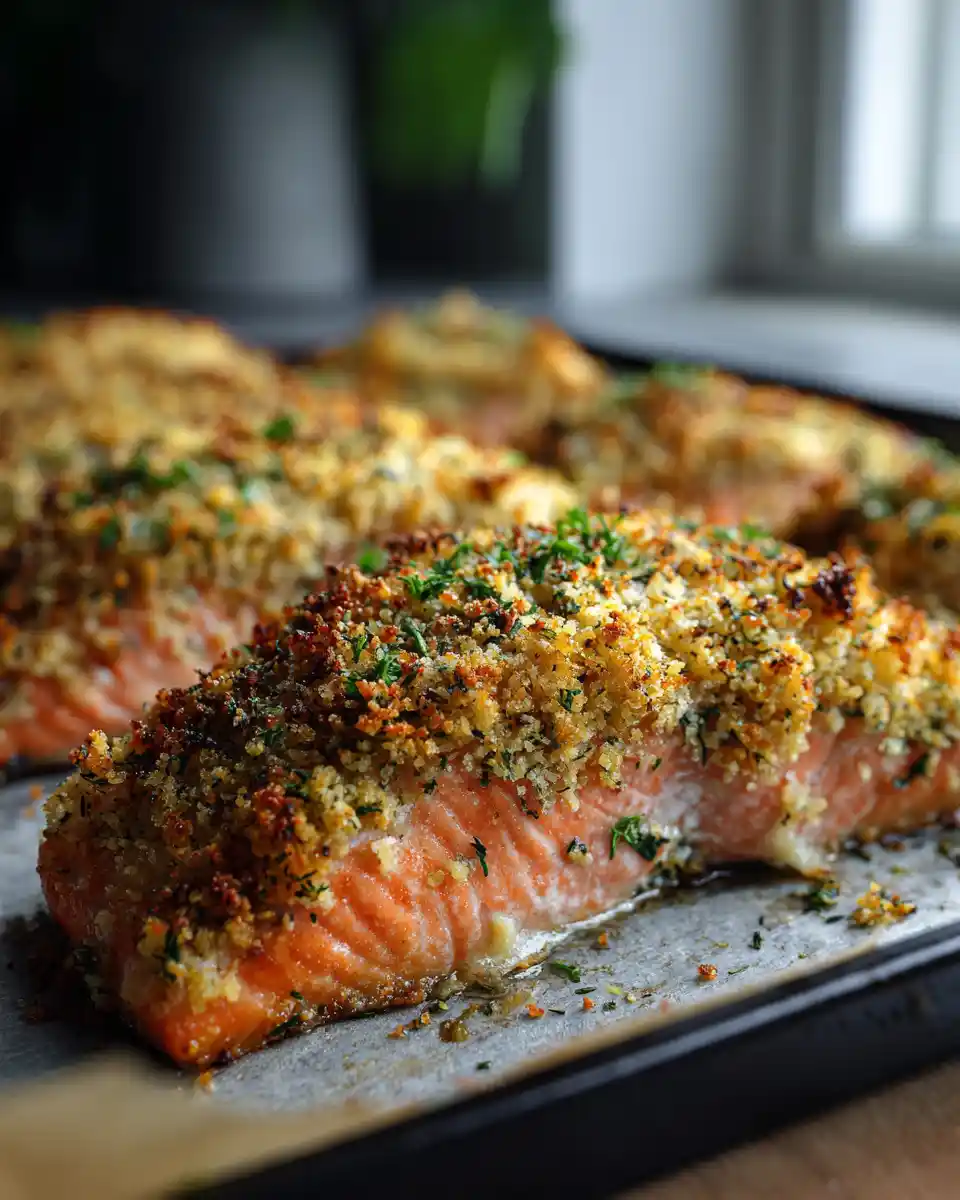
There is nothing quite like the contrast of a velvety, butter-soft salmon fillet hidden beneath a shatteringly crisp, aromatic herb crust. When done right, it is the crown jewel of healthy fish dinners. However, most home versions suffer from two fatal flaws: a soggy, “mushy” topping or a dry, overcooked interior.
As a chef, I’ve seen these mistakes a thousand times. The secret isn’t just in the ingredients; it’s in the moisture management and the binding technique. This recipe isn’t just about mixing herbs—it’s about mastering the science of the sear and the bake. Let’s get into how to elevate your sheet pan lemon herb salmon game to a professional level.
🧪 THE SCIENCE: WHY CRUSTS FAIL
Understanding the physics of your food is the first step toward mastery. Here is why most herb-crusted recipes don’t deliver that satisfying crunch:
- Residual Moisture: If the salmon skin or surface is wet, the steam released during baking “boils” the crust from the bottom up, making it soggy.
- Weak Binders: Using only oil often causes the crust to slide off the fish. We use a “protein bridge” (Dijon mustard) to lock the herbs to the flesh.
- Breadcrumb Choice: Standard breadcrumbs are too fine. For that signature texture, Panko is non-negotiable because its larger surface area creates more “crunch points.”
🛠️ EQUIPMENT DEEP DIVE
To execute this perfectly, you don’t need a professional kitchen, but you do need the right tools:
- Heavy-Duty Rimmed Baking Sheet: Prevents warping and ensures even heat distribution.
- Instant-Read Thermometer: This is the most important tool in your drawer. Salmon moves from “perfect” to “parched” in a matter of 60 seconds.
- Wire Cooling Rack (Optional): Placing the rack on the baking sheet allows hot air to circulate under the fish, preventing the bottom from steaming.
🛒 THE INGREDIENTS
- 4 (6-oz) Salmon Fillets: Center-cut, skin-on (skin provides a thermal buffer).
- 2 tbsp Dijon Mustard: Acts as the “glue” and adds a sharp tang.
- 1 cup Panko Breadcrumbs: For the ultimate crunch.
- 3 tbsp Fresh Parsley: Finely minced.
- 1 tbsp Fresh Dill: Finely minced (salmon’s best friend).
- 1 tsp Lemon Zest: For bright, aromatic lift.
- 2 tbsp Extra Virgin Olive Oil: To help the breadcrumbs toast.
- 1/2 tsp Garlic Powder: For a savory base note.
- Kosher Salt & Fresh Cracked Black Pepper: To taste.
👨🍳 STEP-BY-STEP INSTRUCTIONS
1. Prep and Temper
Remove your salmon from the refrigerator 15–20 minutes before cooking. Cold fish in a hot oven results in uneven cooking. Pat the fillets bone-dry with paper towels. I cannot stress this enough—moisture is the enemy of the crust.
2. Create the “Herb Soil”
In a medium bowl, combine the Panko, minced parsley, dill, lemon zest, garlic powder, and olive oil. Stir until the crumbs look like wet sand. This ensures every crumb is coated in oil, allowing them to brown evenly in the oven.
3. Apply the Binder
Season the salmon fillets generously with salt and pepper. Brush a thin, even layer of Dijon mustard over the top of each fillet.
4. The “Press” Technique
Spoon the herb mixture over the mustard. Use the palm of your hand to firmly press the crumbs into the fish. You want a thick, compact layer that won’t flake off during the move to the plate.
5. The Precision Bake
Slide the baking sheet into an oven preheated to 400°F (205°C). Bake for 10–12 minutes.
Chef’s Secret: Start checking the internal temperature at the 8-minute mark. You are aiming for 125°F (52°C) for a perfect medium-rare or 135°F (57°C) for medium. The temperature will rise about 5 degrees while resting.
🛠️ TROUBLESHOOTING GUIDE
| If this happens… | Do this next time… |
| Crust is pale/soft | Increase the oven temp to 425°F or move the rack to the top third of the oven. |
| Fish is dry/chalky | You’ve exceeded 145°F. Pull the fish earlier; remember carry-over cooking! |
| Crust falls off | You likely skipped the mustard binder or didn’t press the crumbs firmly enough. |
| Fish is stuck to pan | Ensure you use parchment paper or a well-oiled foil lining. |
💡 PRO TIPS FOR SUCCESS
- Zest First, Juice Later: Always zest your lemon before cutting it. Serve the remaining lemon in wedges on the side for a fresh hit of acid right before eating.
- The Flake Test: If you don’t have a thermometer, gently press the top of the salmon with a fork. If the “flakes” (the muscle segments) begin to separate easily, it’s done.
- Salt the Fish, Not Just the Crust: Seasoning the salmon directly before adding the mustard ensures the flavor penetrates the meat.
❓ FAQ
Can I use dried herbs instead of fresh?
You can, but the flavor won’t be as vibrant. If using dried, reduce the quantity to 1 teaspoon each, as dried herbs are much more concentrated.
Should I remove the skin before baking?
No. Keeping the skin on acts as an insulator, protecting the delicate flesh from the direct heat of the pan. Even if you don’t eat the skin, it serves a culinary purpose.
How do I store and reheat leftovers?
Store in an airtight container for up to 2 days. To reheat without losing the crunch, use an air fryer at 350°F for 3–4 minutes or a toaster oven. Avoid the microwave!
What are the best side dishes for this?
Keep it light. This pairs beautifully with a warm chicken quinoa power salad (minus the chicken) or garlic butter shrimp for a surf-and-turf feel.
Is this recipe “healthy”?
Yes! Salmon is packed with Omega-3 fatty acids. By baking instead of frying, we keep the fat content controlled while still getting that fried-texture satisfaction. For more heart-healthy options, check out our shrimp quinoa power bowl.