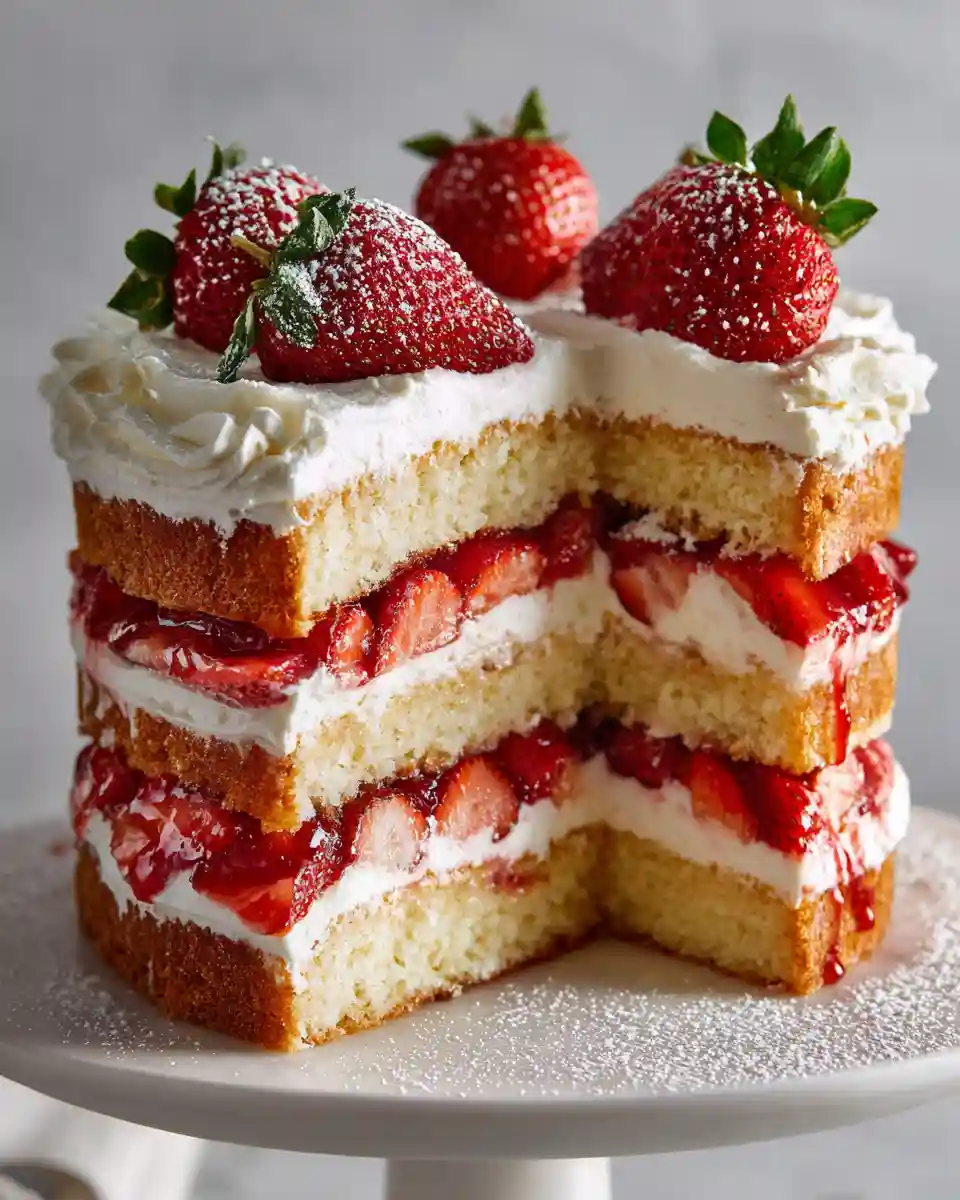
When you think of strawberry shortcake, your mind likely goes to the crumbly, biscuit-style classic. But for those who crave a more elegant, cloud-like experience, the strawberry shortcake sponge cake is the undisputed gold standard. This isn’t just a dessert; it is a masterclass in texture. We are talking about a velvety sponge that acts as a porous vessel for macerated strawberries and pillowy whipped cream.
The secret to a world-class sponge cake lies in the physics of the batter. Unlike butter cakes that rely on chemical leaveners, a true sponge gets its lift from air trapped in egg proteins. When executed correctly, the result is a light-as-air crumb that doesn’t feel heavy, making it the perfect finish to a multi-course meal or a sophisticated afternoon tea.
The Science: Why Sponge Cakes Fail
In my kitchens, I’ve seen many talented cooks struggle with sponges. The most common issue is deflation. If you over-mix the batter after adding the flour, you pop the microscopic air bubbles you spent ten minutes whipping into the eggs. Another culprit is fat contamination; even a tiny drop of yolk or grease in your egg whites will prevent them from reaching their maximum volume. This recipe focuses on the Genoise-style technique, where we use whole eggs whipped with sugar over a bain-marie to create a stable, resilient foam.
Essential Equipment Deep Dive
To achieve professional results, you need the right tools. A stand mixer is highly recommended because whipping eggs to “ribbon stage” takes significant time and consistent speed. You will also need a fine-mesh sieve for aerating your flour and a large silicone spatula for folding—the wider the surface area of the spatula, the fewer strokes you need to incorporate the flour, which preserves that precious air.
| Equipment Item | Why It Matters |
| Stand Mixer | Ensures consistent aeration and reaches the “ribbon stage” efficiently. |
| Fine-Mesh Sieve | Removes lumps and aerates flour for a lighter crumb. |
| Offset Spatula | Essential for spreading cream smoothly without tearing the delicate cake. |
| Springform Pan | Allows for easy removal of the delicate sponge without damage. |
Ingredients for the Perfect Sponge
The beauty of this sponge cake dessert is the simplicity of its components. Because there are so few ingredients, the quality of each must be exceptional.
- Large Eggs (6): Room temperature is non-negotiable for maximum volume.
- Granulated Sugar (1 cup): Provides sweetness and stabilizes the egg foam.
- All-Purpose Flour (1 cup): Sifted twice to ensure no clumps.
- Unsalted Butter (3 tbsp): Melted and cooled; adds a hint of richness and “mouthfeel.”
- Vanilla Bean Paste (1 tsp): For those signature black specks and deep aromatic flavor.
- Fresh Strawberries (2 lbs): Stemmed and sliced thin.
- Heavy Whipping Cream (2 cups): Cold, for the topping.
- Powdered Sugar (1/4 cup): For sweetening the cream and berries.
Step-by-Step Instructions for Success
- Prep the Berries: Toss your sliced strawberries with 2 tablespoons of sugar. Let them sit at room temperature for at least 30 minutes. This process, called maceration, draws out the juices to create a natural syrup that will soak into the sponge.
- Prepare the Pans: Preheat your oven to 350°F (175°C). Grease two 8-inch round cake pans and line the bottoms with parchment paper. Do not grease the sides of the pan; the sponge needs to “climb” the walls to rise properly.
- Whip the Eggs: In your mixer bowl, combine eggs and sugar. Set the bowl over a pot of simmering water (bain-marie) and whisk constantly until the mixture is warm to the touch. Move to the stand mixer and whip on high for 8–10 minutes until the mixture is pale, tripled in volume, and reaches the ribbon stage (the batter should hold its shape for a few seconds when drizzled).
- The Delicate Fold: Sift 1/3 of the flour over the egg mixture. Using a large spatula, gently fold it in using a “cut and turn” motion. Repeat with the remaining flour. Do not stir.
- Incorporate the Fat: Take a small scoop of the batter and stir it into your melted butter. Then, fold that butter mixture back into the main batter. This prevents the heavy fat from sinking to the bottom and deflating the whole batch.
- Bake: Divide the batter between pans. Bake for 25–30 minutes or until the tops spring back when lightly touched.
- Cooling Strategy: Let the cakes cool in the pans for 10 minutes, then run a thin knife around the edge and invert onto a wire rack. Cooling completely is vital before adding cream.
- Assembly: Place one cake layer on a stand. Spread a generous layer of whipped cream, followed by a thick layer of macerated strawberries. Top with the second cake layer, more cream, and the remaining berries.
Troubleshooting Your Sponge Cake
Even pros run into issues. Use this guide to diagnose your bake.
- Problem: The cake is flat or dense.
- Solution: You likely over-folded the flour or your eggs weren’t whipped long enough. Ensure the eggs reach a thick, pale yellow “ribbon” state.
- Problem: There are large holes in the crumb.
- Solution: You didn’t tap the pans on the counter before baking. A few firm taps release large air bubbles.
- Problem: The cake shrunk significantly after cooling.
- Solution: This often happens if the cake is underbaked. Use a toothpick or the “spring-back” touch test to be sure.
- Problem: The whipped cream is runny.
- Solution: Always chill your bowl and beaters before whipping. For extra stability, add a tablespoon of Greek yogurt or mascarpone.
If you enjoy mastering delicate textures like this, you might also want to try your hand at a Vanilla French beignets recipe ultimate guide or explore the soft, fluffy layers in my Ultimate cinnamon roll pancakes recipe. For those who prefer fruit-forward bakes, my Blueberry french toast casserole ultimate guide offers a similar balance of sweetness and texture.
Top 3 Pro Tips for Flavor Balance
- Salt Your Sweets: Add a pinch of fine sea salt to your flour. It cuts through the sugar and makes the strawberry flavor “pop.”
- Temperature Control: Ensure your cream is ice-cold. If the cream is even slightly warm, it won’t trap air, resulting in a greasy texture rather than a fluffy one.
- Don’t Over-Macerate: If you leave the strawberries for more than 4 hours, they can become mushy. Aim for the 30–60 minute sweet spot for the best airy shortcake experience.
FAQ: Mastering the Sponge Cake
Can I make the sponge cake in advance?
Yes. You can bake the sponge layers up to 2 days in advance. Wrap them tightly in plastic wrap and store at room temperature. Do not refrigerate the plain cake, as it can dry out the crumb.
Why didn’t my egg whites whip up?
If you are using the separated method rather than the whole-egg warm method, any trace of yolk or oil in the bowl will ruin the foam. Clean your bowl with a slice of lemon before starting.
Can I use frozen strawberries?
I don’t recommend frozen berries for the topping as they release too much water and can make the sponge cake dessert soggy. However, they work well if you are making a cooked strawberry sauce.
Is cake flour better than all-purpose?
Cake flour has a lower protein content, which results in a softer crumb. If you have it, use it! If not, all-purpose works perfectly well if you sift it thoroughly.
How do I stop the cake from sticking to the pan?
The parchment paper circle at the bottom is your best friend. Even if the sides stick slightly, the bottom will release cleanly every time.
For more inspiration on unique textures, check out our Pumpkin french toast ultimate recipe which focuses on achieving that perfect custardy center.