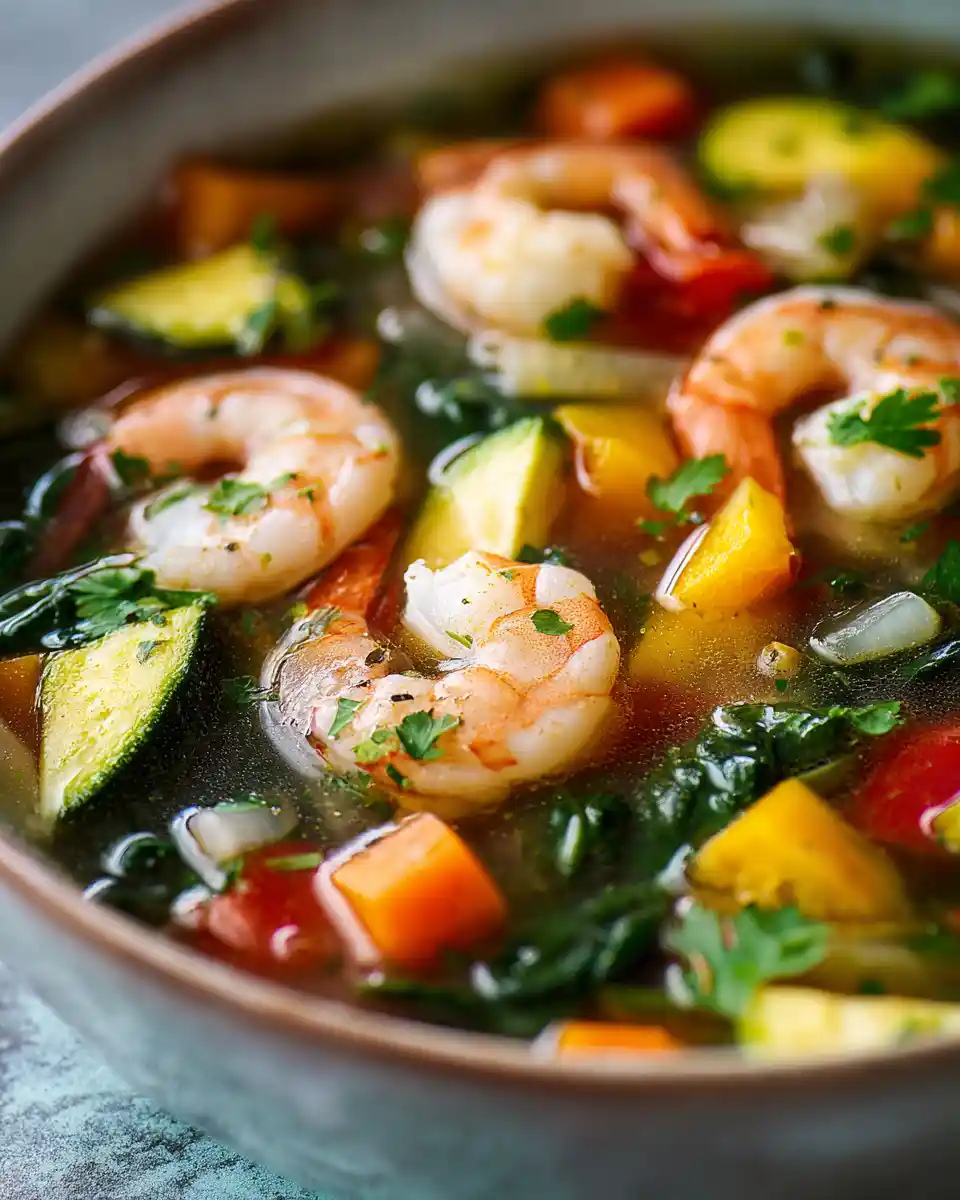
There is a common misconception in professional kitchens that “light” means “lacking.” This Light Shrimp Vegetable Soup proves the opposite. By focusing on a clean, aromatic broth and perfectly timed seafood, we create a dish that is deeply restorative without the heaviness of creams or fats.
When you lift the lid off the pot, you should be greeted by the vibrant aroma of fresh ginger and garlic, followed by the sight of snappy, pink shrimp nestled among a garden of colorful vegetables. This isn’t just a meal; it’s a masterclass in balance. Whether you are looking for a quick weeknight win or a nutritious lunch prep, this recipe delivers professional results with minimal equipment.
The Professional Foundation: Why This Works
The secret to a world-class shrimp soup lies in the layering of flavors. We start by sweating the aromatics to release their essential oils, then simmer the hardier vegetables until they are just tender. The shrimp are added at the very last second, using the residual heat of the broth to cook them to a perfect, buttery texture.
If you enjoy this clean approach to seafood, you might also want to try my garlic butter shrimp quick healthy dinner for a faster pan-seared alternative.
Ingredients You’ll Need
For the best results, use the highest quality seafood available. While frozen shrimp are perfectly acceptable (and often fresher than “fresh” counter shrimp in landlocked areas), ensure they are fully thawed and patted dry before they hit the pot.
- 1 lb Large Shrimp: Peeled and deveined (tail-on for aesthetics, or tail-off for easier eating).
- 6 cups Vegetable Broth: Use a low-sodium version to control the seasoning.
- 2 cups Fresh Spinach: Packed tightly.
- 2 medium Carrots: Peeled and sliced into thin rounds.
- 1 medium Zucchini: Halved and sliced into half-moons.
- 1 yellow Bell Pepper: Diced into 1/2-inch pieces.
- 3 cloves Garlic: Minced fine.
- 1 tbsp Fresh Ginger: Grated (this provides the “brightness”).
- 1 small Yellow Onion: Finely diced.
- 1 tbsp Olive Oil: For sautéing.
- 1 tsp Sea Salt: Adjust to taste.
- 1/2 tsp Black Pepper: Freshly cracked.
- 1/2 tsp Red Pepper Flakes: Optional, for a subtle heat.
- 1 Fresh Lime: Cut into wedges for serving.
- 1/4 cup Fresh Cilantro: Chopped for garnish.
Step-by-Step Execution
- Sauté the Aromatics: Heat the olive oil in a large Dutch oven or heavy-bottomed pot over medium heat. Add the onion, carrots, and bell pepper. Sauté for 5–6 minutes until the onions are translucent and the carrots begin to soften.
- Release the Fragrance: Add the minced garlic and grated ginger. Stir constantly for about 60 seconds. You want to smell the ginger immediately—do not let the garlic brown, as it will turn bitter.
- Build the Base: Pour in the vegetable broth. Increase the heat to medium-high and bring the liquid to a gentle boil. Once boiling, reduce the heat to low and simmer for 8–10 minutes.
- Add the Tender Veggies: Stir in the sliced zucchini. Simmer for an additional 3 minutes. The zucchini should be tender-crisp, not mushy.
- The Shrimp Finish: Add the shrimp to the pot. Stir gently. Cook for only 2–3 minutes. As soon as the shrimp turn opaque and form a “C” shape, they are done.
- The Final Fold: Turn off the heat. Fold in the fresh spinach and red pepper flakes. The residual heat will wilt the spinach in seconds, preserving its bright green color.
- Season and Serve: Stir in the juice of half a lime. Taste and add salt or pepper as needed. Garnish with fresh cilantro and serve immediately.
Top 3 Pro Tips for Success
- Size Matters: Use 21/25 or 26/30 count shrimp. Anything smaller will overcook before the soup hits the table. If you use smaller shrimp, reduce the final cooking time to 90 seconds.
- The “C” Rule: In the culinary world, we say a “C” shaped shrimp is cooked, while an “O” shaped shrimp is overcooked. As soon as that tail curls toward the head but hasn’t touched it, pull it off the heat.
- Dry Your Shrimp: Even though they are going into liquid, patting the shrimp dry before adding them prevents excess water from diluting your carefully seasoned broth.
Common Mistakes to Avoid
- Boiling the Shrimp: Never keep the soup at a rolling boil once the seafood is added. High heat toughens the protein fibers, resulting in a rubbery, “bouncy” texture.
- Over-Simmering Green Veggies: Adding the spinach too early results in a dull, olive-drab color. Add it at the very end to keep the dish looking vibrant and “editorial.”
- Skipping the Acid: A soup like this relies on “brightness.” Without the lime juice at the end, the flavors can feel flat. The acid cuts through the savory broth and wakes up the palate.
Ingredient Substitution Matrix
For those looking to customize their bowl based on what’s in the pantry, use this guide:
| Current Ingredient | Professional Substitute | Impact on Flavor |
| Vegetable Broth | Seafood Stock | Deeper, more oceanic umami. |
| Zucchini | Bok Choy | Adds a peppery, crunchy rib texture. |
| Spinach | Kale | Heartier; add 5 mins earlier to soften. |
| Ginger | Lemongrass | Shifts the profile toward Thai-inspired. |
| Yellow Onion | Shallots | Sweeter, more delicate onion flavor. |
The Science of a Perfect Seafood Broth
As a chef, I look at broth as a delivery system for nutrients and flavor. When we simmer the carrots and peppers, we are undergoing a process called extraction. The water-soluble vitamins and flavor compounds move from the cell walls of the vegetables into the broth.
By adding the shrimp last, we avoid the “protein bleed” that can happen when seafood is boiled for too long, which clouds the broth. If you want a clear, restaurant-quality appearance, keep your simmer low and slow. This technique is similar to what you’d find in a hearty chicken veggie soup, though seafood requires much more finesse than poultry.
What to Serve With This Soup
Since this is a light meal, I recommend pairing it with a high-fiber side to increase satiety. A shrimp quinoa power bowl is a great inspiration for side grains. Alternatively, a crusty piece of sourdough or a simple side of brown rice works beautifully to soak up the ginger-infused broth.
Frequently Asked Questions
Can I use frozen shrimp directly in the soup?
You can, but I don’t recommend it. Frozen shrimp release a lot of liquid as they thaw, which can water down your broth and make it taste “fishy.” It is better to thaw them in a bowl of cold water for 15 minutes first.
How do I store leftovers without the shrimp getting tough?
This is the challenge with seafood soups. If you plan on having leftovers, I recommend only adding the shrimp to the portion you intend to eat immediately. Store the vegetable broth separately. When reheating, bring the broth to a simmer and add the shrimp fresh.
Is this soup spicy?
As written, it has a very mild warmth from the ginger and a tiny pinch of red pepper flakes. If you prefer a “kick,” feel free to add sliced jalapeños or a teaspoon of sriracha.
Can I add noodles or rice?
Absolutely. If adding noodles (like rice noodles or ditalini), cook them separately and add them to the bowl before pouring the soup over. This prevents the noodles from soaking up all the broth and becoming mushy.
What other vegetables work well?
This is a very forgiving “clean out the fridge” recipe. Snap peas, broccoli florets, and thinly sliced mushrooms are all excellent additions. Just remember to add them based on their required cooking time.