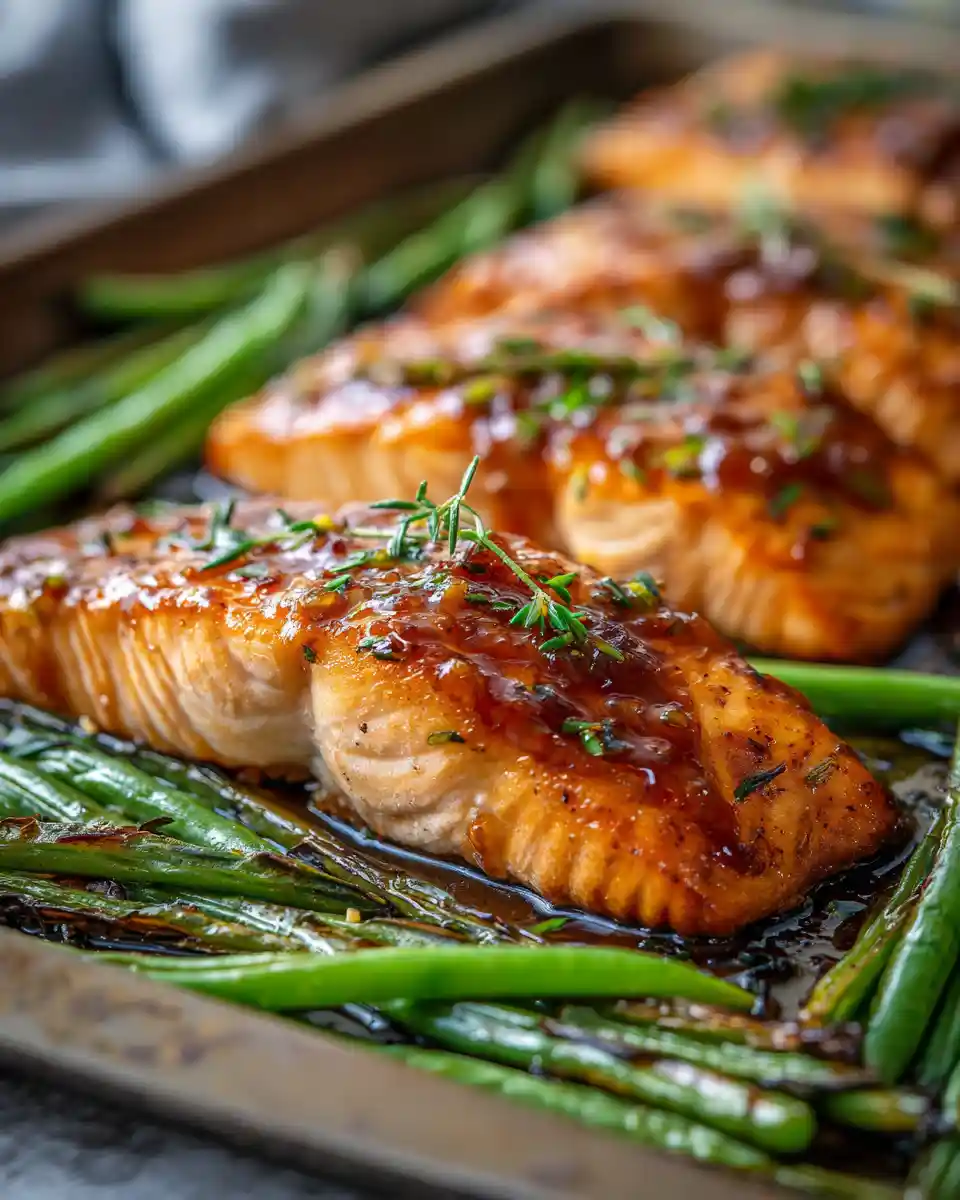
There is a distinct difference between a dinner that is simply “cooked” and one that is truly composed. This Maple Mustard Salmon is the latter. It relies on one of the culinary world’s most reliable flavor profiles: the balance of aggressive acid (Dijon mustard) and rich, earthy sweetness (pure maple syrup). When heat hits this glaze, it doesn’t just warm up; it caramelizes into a sticky, aromatic lacquer that clings to the flaky salmon without overpowering its natural richness.
The beauty of this dish lies in its efficiency. It is a complete sheet pan meal, but unlike many “dump-and-bake” recipes that result in soggy vegetables and overcooked protein, this method respects the individual cooking times and textures of the ingredients. The green beans roast until blistered and tender-crisp, while the salmon remains buttery and opaque. It is refined enough for a dinner party but streamlined for a Tuesday night.
The Chef’s Take: Why This Glaze Works
Most home cooks struggle with glazes running off the protein before it sets. The secret here is the ratio. We use a combination of stone-ground mustard for texture and smooth Dijon for emulsification. The maple syrup provides the sugars needed for caramelization, locking the moisture inside the fish.
Ingredients
For the Salmon & Green Beans:
- Salmon Fillets: 4 fillets (6 oz each), preferably skin-on for moisture retention.
- Fresh Green Beans: 1 lb, trimmed and washed.
- Olive Oil: 2 tbsp, divided (for coating beans and greasing the pan).
- Kosher Salt: 1 tsp, divided.
- Black Pepper: ½ tsp, freshly cracked.
- Garlic: 3 cloves, minced (fresh is essential here, not powder).
For the Maple Mustard Glaze:
- Pure Maple Syrup: 3 tbsp (use Grade A for a lighter amber flavor).
- Dijon Mustard: 2 tbsp (adds the sharp, vinegary kick).
- Whole Grain Mustard: 1 tbsp (adds texture and popping heat).
- Apple Cider Vinegar: 1 tsp (to cut the sweetness).
- Smoked Paprika: ½ tsp (adds a subtle depth).
Pro-Tips for Success
- Dry Your Beans: Moisture is the enemy of roasting. After washing your green beans, pat them completely dry with a kitchen towel. If they are wet, they will steam in the oven rather than roast, resulting in a rubbery texture.
- The “Room Temp” Rule: Pull your salmon out of the refrigerator 15 minutes before cooking. Cold fish hitting a hot oven seizes up, squeezing out albumin (the white protein) and drying out the meat. Tempering ensures an even cook.
- Don’t Waste the Glaze: Brush half the glaze on before baking, and save the rest to brush on fresh right after the salmon comes out of the oven. This layers the flavor, giving you both a baked-in crust and a fresh, glossy finish.
Step-by-Step Instructions
- Prep the Oven and Pan: Preheat your oven to 400°F (200°C). Line a large rimmed baking sheet with parchment paper for easy cleanup.
- Season the Vegetables: In a mixing bowl, toss the trimmed green beans with 1 tablespoon of olive oil, the minced garlic, ½ teaspoon of salt, and ¼ teaspoon of black pepper. Spread them out in a single layer on the baking sheet. Chef’s Note: Do not crowd them; give them space to breathe.
- Roast the Beans First: Place the green beans in the oven for 8–10 minutes. This head start is crucial because green beans take longer to develop a char than salmon takes to cook.
- Make the Glaze: While beans are roasting, whisk together the maple syrup, Dijon mustard, whole grain mustard, apple cider vinegar, and smoked paprika in a small bowl until emulsified.
- Add the Salmon: Remove the sheet pan from the oven. Push the green beans to the sides to create space in the center. Place the salmon fillets (skin-side down) in the clearing.
- Glaze and Bake: Brush the salmon generously with half of the maple mustard mixture. Season the fish lightly with the remaining salt and pepper. Return the pan to the oven and bake for 10–12 minutes, or until the salmon is opaque and flakes easily with a fork.
- Finish and Serve: Remove from the oven. Immediately brush the remaining glaze over the hot salmon. Serve directly from the pan or plate individually, spooning any pan juices over the beans.
Mobile Guide: Salmon & Bean Troubleshooting
| Problem | Why It Happened | The Fix |
| Soggy Beans | Overcrowding or excess water. | Dry beans thoroughly and use a larger sheet pan. |
| Dry Salmon | Overcooked or cold start. | Check early; pull at 125°F internal temp. |
| Burnt Glaze | Sugar content too high/hot. | If your oven runs hot, tent loosely with foil for the last 5 mins. |
| Bland Flavor | Under-seasoning. | Always salt the fish before glazing. |
Common Mistakes to Avoid
Using “Pancake Syrup”
Artificial table syrups are made of corn syrup and artificial flavoring. They do not caramelize the same way pure maple syrup does; they tend to burn and taste cloyingly sweet. For this recipe, real maple syrup is non-negotiable.
Skin-Side Up?
Never roast salmon skin-side up unless you are broiling it for a specific crisp. Baking it skin-side down protects the delicate flesh from the direct heat of the metal pan, keeping the bottom moist while the top glazes perfectly.
Frequently Asked Questions
Can I use frozen salmon for this?
Yes, but it must be fully thawed first. Thaw it overnight in the refrigerator. Before cooking, press the fillets firmly with paper towels to remove the excess water that frozen fish releases, otherwise, the glaze won’t stick.
Is this recipe suitable for meal prep?
Absolutely. Salmon retains its moisture well when reheated gently. Store the salmon and beans in airtight containers for up to 3 days. To reheat, sprinkle with a few drops of water and microwave on 50% power to avoid rubbery fish.
What other vegetables can I use?
If you aren’t a fan of green beans, asparagus is the best substitute as it has a nearly identical cooking time. Broccoli florets work well too, though you may want to cut them small to ensure they tenderize in time.
How do I know when the salmon is done?
The most accurate way is a meat thermometer; look for an internal temperature of 125°F to 130°F for medium. Visually, the fish should change from translucent raw pink to opaque pink and separate easily along the white fat lines.
Can I make this spicy?
Yes. The recipe includes smoked paprika for warmth, but adding a pinch of cayenne pepper or red pepper flakes to the glaze will give it a “swicy” (sweet and spicy) profile that cuts through the richness beautifully.