When you walk into a holiday party or a gathered dinner with friends, there is always that one appetizer platter that vanishes before the host can even set it down. It’s usually not the veggie dip. It’s the one that promises richness, texture, and a hit of savory indulgence in a single bite.
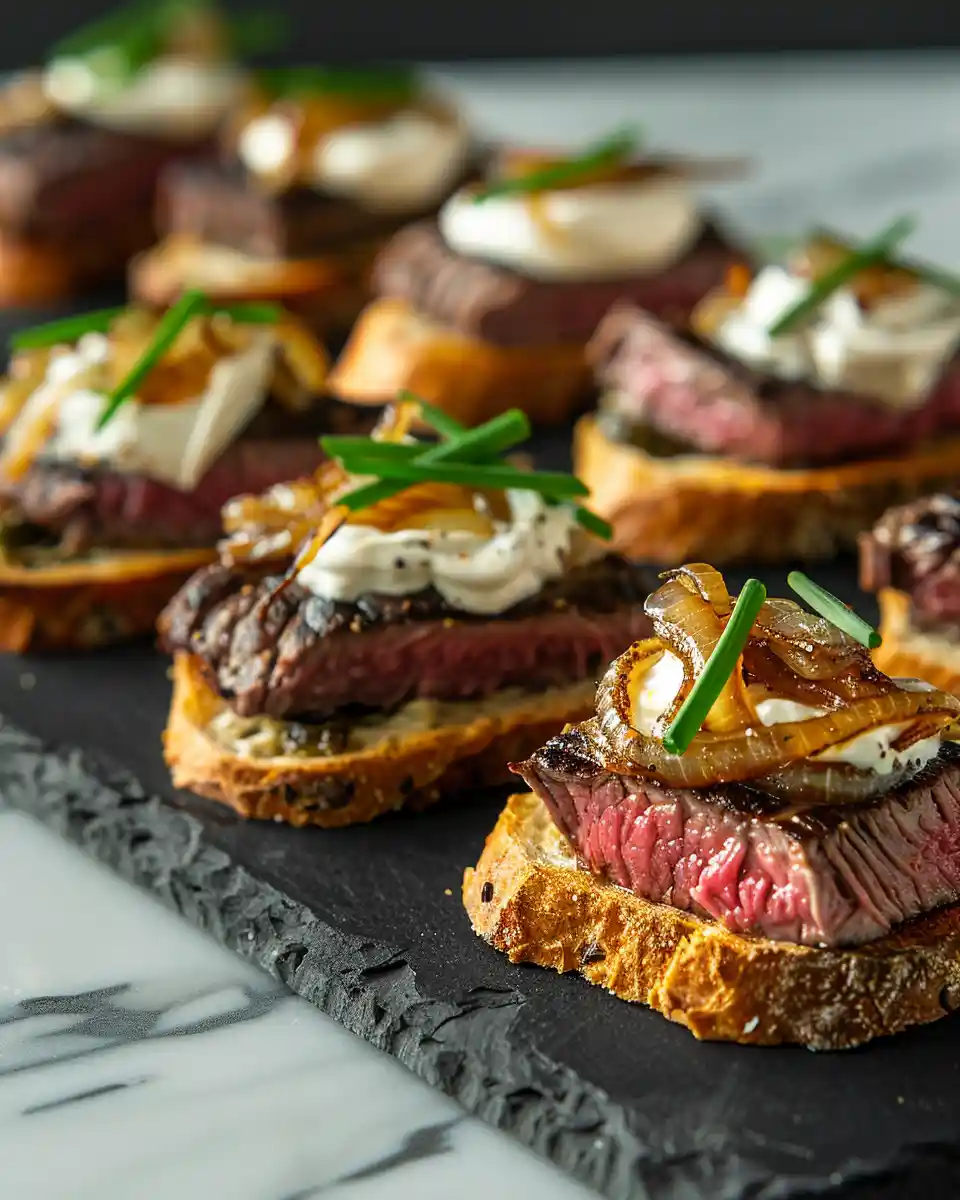
This Steak Crostini with Horseradish Sauce and Caramelized Onions is exactly that dish. It is the intersection of elegance and comfort—a miniature steak dinner served on a crisp, toasted baguette. As a chef, I love this recipe because it plays on the fundamental culinary concept of flavor balancing: you have the rich, fatty umami of the steak, the sweet, jammy depth of slow-cooked onions, and the sharp, nasal-clearing cut of the horseradish cream to tie it all together.
Whether you are prepping for a “Friendsgiving,” a New Year’s Eve bash, or simply want to elevate your weekend snacking, this guide will walk you through every technical step to ensure your steak is tender, your bread remains crisp, and your onions are perfectly golden.
Why This Recipe Works: The Science of Flavor and Texture
Understanding why a dish tastes good helps you execute it better. This recipe isn’t just ingredients thrown on toast; it’s a carefully constructed architecture of flavor.
- Texture Contrast: The foundation of any great canapé is the crunch. By brushing the baguette with olive oil and baking it to a golden crisp (crostini), we create a sturdy vehicle that won’t get soggy under the weight of the toppings. This crunch contrasts beautifully with the tenderness of medium-rare beef and the creamy sauce.
- The Maillard Reaction: We focus heavily on getting a hard sear on the steak. That brown crust provides the savory depth (umami) that anchors the bite.
- Acid and Heat: Beef is rich and heavy. If you serve it alone, it coats the palate. The horseradish sauce provides both heat (from isothiocyanates in the horseradish root) and acidity (from lemon and sour cream), which cuts through the fat of the beef and the sweetness of the onions, resetting your palate for the next bite.
- Natural Sweetness: We don’t use sugar to caramelize the onions here. We rely on the natural breakdown of sugars in the onion over low heat, creating a complex, savory sweetness that artificial sugar just can’t mimic.
Ingredient Deep Dive & Substitution Matrix
The quality of your ingredients will dictate the success of this dish. Since there are so few components, there is nowhere for low-quality ingredients to hide.
1. The Steak (The Star)
For crostini, you need a cut that remains tender even when sliced and served at room temperature.
- Best Choice: Ribeye or New York Strip. These cuts have enough intramuscular fat (marbling) to stay juicy.
- Budget Choice: Sirloin or Flank Steak. If using flank, it is critical to slice it very thin against the grain to avoid chewiness.
- Substitutions: If you have leftover roast beef, that works in a pinch, but a freshly seared steak is superior. For a non-beef option, seared portobello mushroom slices work for a vegetarian twist.
2. The Bread (The Vessel)
- Best Choice: French Baguette. It has the perfect diameter for a two-bite appetizer.
- Alternative: Ciabatta. If using ciabatta, cut it into small squares. It offers a more open crumb and holds sauce well.
- Gluten-Free: Use a high-quality gluten-free baguette. Toast it slightly longer, as GF bread tends to hold more moisture.
3. The Horseradish
- Best Choice: Prepared Horseradish (Refrigerated). Look for the jar found in the refrigerated seafood or cheese section, not the shelf-stable aisle. It has more punch and fresher flavor.
- Avoid: “Horseradish Sauce” from a squeeze bottle. We are making our own sauce; the pre-made stuff is often too sweet and lacks the texture we want.
4. The Onions
- Best Choice: Yellow or Spanish Onions. They have a great balance of sulfur and sugar.
- Alternative: Red Onions. These will result in a darker, purple-hued jam that looks dramatic and tastes slightly sweeter.
Substitution Matrix
| Ingredient | Primary Substitute | Flavor Impact |
| Sour Cream (for sauce) | Greek Yogurt (Full Fat) | Tangier, higher protein, slightly thicker texture. |
| Baguette | Sourdough Crackers | Less prep work, but you lose the warm, toasted element. |
| Chives | Scallions (Green parts) | Slightly stronger onion flavor; cut very thinly. |
| Butter (for onions) | Ghee or Olive Oil | Dairy-free option; olive oil changes flavor profile slightly. |
Detailed Preparation Guide: Timing is Everything
In professional kitchens, we live by mise en place—everything in its place. For this recipe, the timeline is crucial because the onions take the longest, but the steak needs to rest.
Phase 1: The Caramelized Onions (Do This First)
- Time: 30–45 minutes
- Technique: Low and slow.
- Ingredients:
- 2 large yellow onions, thinly sliced
- 2 tbsp unsalted butter
- 1 tbsp olive oil
- 1/2 tsp salt
- 1 tsp balsamic vinegar (optional, for deglazing)
Instructions:
- Heat the butter and oil in a heavy-bottomed skillet (cast iron or stainless steel) over medium-low heat.
- Add the onions and toss to coat.
- Let them cook gently. Stir every 5–8 minutes. Do not rush this. If the heat is too high, they will burn rather than caramelize.
- After about 30 minutes, they should be a deep golden brown. If the pan looks dry, add a splash of water or beef broth to lift the fond (brown bits) from the bottom.
- Finish with a splash of balsamic vinegar if desired for acidity, and set aside.
Phase 2: The Horseradish Cream Sauce
- Time: 5 minutes
- Ingredients:
- 1/2 cup sour cream (or Crème Fraiche for luxury)
- 2–3 tbsp prepared horseradish (adjust to spice preference)
- 1 tsp Dijon mustard
- 1 tsp lemon juice
- Salt and black pepper to taste
- 1 tbsp finely chopped chives
Instructions:
- In a small mixing bowl, whisk the sour cream, horseradish, Dijon, and lemon juice until smooth.
- Season with salt and pepper. Taste it. It should have a kick.
- Fold in the chives. Cover and refrigerate until assembly. Cold sauce creates a nice temperature contrast with the warm steak.
Phase 3: The Steak
- Time: 15 minutes active + 10 minutes resting
- Ingredients:
- 1 lb Ribeye or New York Strip steak (about 1 inch thick)
- Kosher salt
- Coarse black pepper
- 1 tbsp high-smoke point oil (avocado or canola)
- 1 tbsp butter (for finishing)
- 2 cloves garlic, smashed
Instructions:
- Temper the Meat: Take the steak out of the fridge 30 minutes before cooking. Cold steak cooks unevenly.
- Season: Pat the steak completely dry with paper towels (moisture is the enemy of the sear). Season aggressively with salt and pepper on all sides.
- Sear: Heat your skillet (cast iron is best) over high heat until it is smoking slightly. Add the oil. Carefully lay the steak in the pan.
- Cook: Sear undisturbed for 3–4 minutes until a deep brown crust forms. Flip and sear the other side for 3 minutes.
- Baste: Turn the heat down to medium. Add the butter and smashed garlic. As the butter foams, spoon it over the steak for the last minute of cooking.
- Check Temp: For medium-rare, pull the steak at an internal temperature of 125°F (52°C) to 130°F (54°C).
- Rest: Transfer to a cutting board and let it rest for at least 10 minutes. Do not skip this. Cutting it now will cause all the juices to run out, leaving you with dry meat.
Phase 4: The Crostini & Assembly
- Ingredients:
- 1 French baguette, sliced into 1/2 inch rounds
- 1/4 cup olive oil
Instructions:
- Preheat oven to 400°F (200°C).
- Brush both sides of the baguette slices with olive oil. Arrange on a baking sheet.
- Bake for 6–8 minutes until golden and crisp.
- Slice the Steak: Once rested, slice the steak thinly against the grain.
- Build: Top each crostini with a teaspoon of horseradish sauce, followed by a pinch of caramelized onions, and finally a slice of steak. Garnish with extra chives or flakey sea salt.
5 Creative Variations to Impress Your Guests
One recipe can easily become five different appetizers with simple tweaks.
- The “Blue & Beef” Twist:Swap the horseradish sauce for a Blue Cheese Crema. Mash 2 oz of gorgonzola with 2 oz of cream cheese and a splash of milk. Top the steak with a balsamic glaze drizzle instead of onions.
- Chimichurri Freshness:Omit the creamy sauce entirely. Top the steak with a vibrant Chimichurri sauce (herb-based) and swap the caramelized onions for roasted red peppers. This is lighter and great for summer gatherings.
- The Mushroom Swiss:Sauté finely chopped mushrooms with the onions to create a “duxelles.” Top the bread with this mixture, then the steak, and finish with melted Swiss or Gruyère cheese under the broiler.
- Garlic Butter & Herb:Rub the toasted crostini with a raw garlic clove (bruschetta style). Top with thin roast beef and a compound butter made with parsley and rosemary. This vibe pairs well with other beef dishes like our Brisket Sandwich Recipe.
- The “Breakfast” Crostini:Leftovers the next morning? Use the steak and onions, but top with a small slice of hard-boiled egg or a quail egg. It’s a nod to a classic steak and eggs, similar to our Homemade Corned Beef Hash Recipe concepts.
Storage, Meal Prep & Reheating Guide
Hosting is stressful. The best way to manage this dish is to prep the components in advance so assembly takes minutes.
- Prep Ahead Strategy:
- Onions: Can be made up to 3 days in advance. Store in an airtight container in the fridge. They actually taste better after sitting as flavors meld.
- Sauce: Can be made 2 days in advance. Give it a good stir before using.
- Crostini: Can be baked 1 day in advance. Store in a ziplock bag at room temperature. If they soften, crisp them up in a 350°F (175°C) oven for 2 minutes before serving.
- Steak: Best cooked fresh, but you can sear it up to 4 hours before the party. Leave it whole (unsliced) at room temperature for up to an hour, or refrigerate if longer.
- Leftovers:Once assembled, these do not store well (the bread gets soggy). Store leftover steak, sauce, and onions separately. Leftover steak is fantastic in a salad or wrap the next day.
- Reheating the Steak:If you cooked the steak in advance and refrigerated it, do not microwave it. It will turn gray and rubbery. Instead, slice it cold and serve it cold/room temp (it’s delicious this way), or flash-warm the whole steak in a 300°F (150°C) oven for 5–8 minutes before slicing.
Troubleshooting Common Mistakes
Even experienced cooks run into issues. Here is how to fix them:
Problem 1: The bread is too hard/shatters when bitten.
- The Fix: You likely toasted it too long or sliced it too thick. The slices should be 1/2 inch thick. If they are rock hard, try rubbing them with a little extra sauce to soften the top layer slightly before serving.
Problem 2: The steak is chewy.
- The Fix: This is usually a slicing error. Always identify the “grain” (the direction the muscle fibers run) and cut perpendicular to it. This shortens the fibers and makes the meat tender. If your steak is already cooked and tough, dice it into small cubes rather than strips; smaller pieces are easier to chew.
Problem 3: The onions burned before they caramelized.
- The Fix: Heat was too high. If they are just slightly charred, add a splash of water and scrape the pan—this distributes the flavor and stops the burning. If they are black and acrid, unfortunately, you must start over. Patience is the only ingredient you can’t substitute.
Frequently Asked Questions
Q: Can I serve the steak cold?
A: Absolutely. In fact, for large parties, room temperature or cold steak is often preferred because it allows the host to prep completely in advance. Just ensure the steak is seared beautifully so the crust still has flavor.
Q: What is the best way to cut the baguette?
A: Slice it on a bias (diagonal). This creates more surface area for toppings and looks more elegant than a simple round coin.
Q: Can I use roast beef from the deli?
A: You can, but ask for it sliced “thick enough to bite” rather than shaved. Shaved beef tends to look messy on a crostini. Buy a high-quality roast beef (rare if possible).
Q: Is this recipe spicy?
A: The horseradish gives it a nasal “zing,” but it dissipates quickly. It is not “hot” like chili peppers. You can control the heat by adding more or less horseradish to the cream sauce.
Q: How many appetizers should I plan per person?
A: For a cocktail hour where dinner follows, plan for 3–4 pieces per person. If the appetizers are the meal (heavy hors d’oeuvres party), plan for 6–8 pieces per person.
Q: Are there any safety concerns with medium-rare steak?
A: For most healthy adults, medium-rare steak (130°F – 135°F) is perfectly safe and the culinary standard for tenderness. However, for pregnant women or immunocompromised guests, you may want to cook the steak to medium-well (150°F).
For more expert beef preparation techniques, check out our guide on Steak & Creamy Garlic Shrimp or explore our savory Brisket Sandwich Recipe.