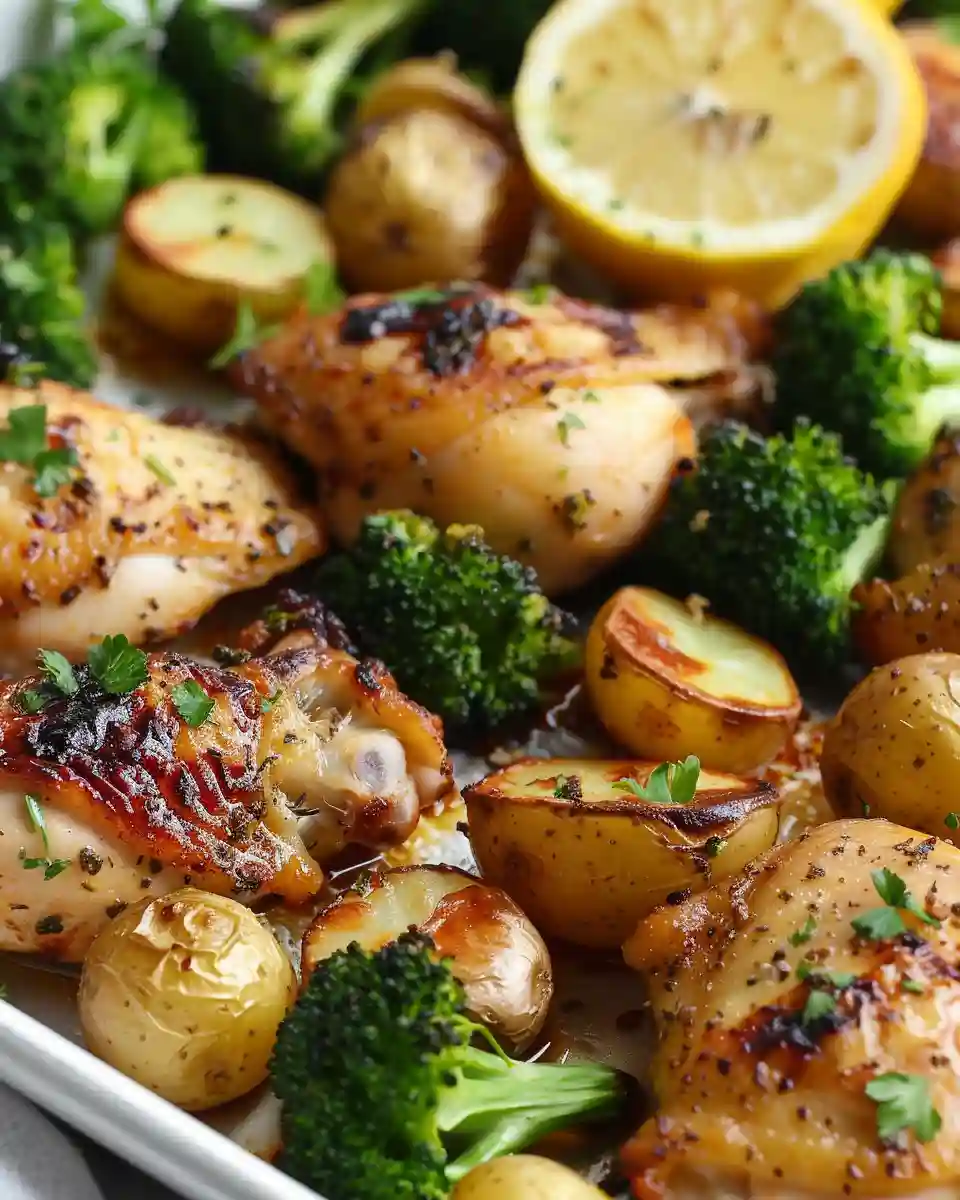
If there is one thing I’ve learned in my two decades of cooking for a busy family, it’s this: The dinner that gets eaten is the dinner that gets made. And the dinner that gets made is the one that requires the least fuss, the least cleanup, and the least amount of thinking. That’s why this recipe for Lemon Garlic Chicken with Broccoli & Potatoes has been in my weekly rotation for years. It’s more than just a recipe; it’s a system—a delicious, protein-packed, vegetable-forward system that delivers a complete, nourishing meal on a single sheet pan.
Forget the days of juggling three pots and a skillet. This dish brings lean chicken, tender potatoes, and vibrant green broccoli together, coated in a bright, savory, and irresistible lemon-garlic sauce. It’s the kind of meal that appeals to picky eaters, satisfies post-workout hunger, and leaves you with almost no dishes to wash. It’s truly the ultimate weeknight solution for anyone trying to put a high-quality, home-cooked meal on the table without sacrificing their entire evening.
🎯 Why This Recipe Works: The Triple-Threat Utility
This isn’t just a recipe; it’s a strategic meal solution, and its success hinges on three key utility factors:
- The Time-Saving Factor (One-Pan Perfection): By cooking the protein, starch, and vegetable all on one sheet pan, you eliminate the need for multiple cooking vessels, drastically reducing cleanup time—the single biggest hurdle in weeknight cooking. This technique is a lifesaver for busy households and is quickly becoming the gold standard for easy, healthy cooking.
- The Flavor-Infusion Factor: The secret to getting maximum flavor into every bite is the timing and method. The chicken and potatoes start soaking up that zesty lemon-garlic marinade immediately, and as they roast, the natural juices from the chicken mingle with the sauce and slightly crisp the potatoes, creating layers of robust, savory, and bright flavor that a basic pan-fry simply cannot achieve. This high-heat roasting method caramelizes the potatoes and edges of the chicken, sealing in the moisture and concentrating the seasoning.
- The Nutritional Balance Factor: As a family nutrition advocate, I love that this meal is inherently balanced and requires zero extra thought about sides. We have lean protein (chicken), complex carbohydrates (potatoes), and fiber/micronutrients (broccoli). It’s a clean-eating, wholesome meal that doesn’t feel like “diet food,” making it a perfect fit for family health goals, athletic recovery, and maintaining energy throughout the week. It’s an all-in-one powerhouse.
🍽️ Ingredient Deep Dive: Understanding Your Components
The simplicity of this Lemon Garlic Chicken recipe means the quality and preparation of each core ingredient is paramount. Here is a breakdown of what you need and how to select it for the best result.
| Ingredient | Quantity (U.S.) | Role in the Dish | Maya’s Selection Tip |
| Chicken | 2 lbs (Chicken Breasts or Thighs) | Main Protein, Flavor Base | Use boneless, skinless thighs for guaranteed juiciness, or flatten breasts to 1-inch thickness for even cooking. |
| Potatoes | 1.5 lbs (Baby Red or Yellow) | Starch/Carbohydrate, Texture Contrast | Cut them into uniform, 1-inch pieces. Small, waxy varieties like Yukon Gold or baby reds hold their shape best and crisp up nicely. |
| Broccoli | 3 cups florets | Vegetable, Color/Nutrients | Use fresh, not frozen, for the best roasting texture. Cut florets to similar size as potato pieces for consistent roasting. |
| Lemon Juice | 1/4 cup, freshly squeezed | Acidity, Brightness, Tenderizer | Always use fresh! Bottled juice lacks the vibrant, aromatic citrus oil needed to lift the whole dish. |
| Garlic | 6 cloves, minced | Aromatic Base, Savory Depth | Use fresh whole cloves. Mince it finely right before using to maximize its pungent flavor. |
| Olive Oil | 1/4 cup | Flavor Carrier, Browning Agent | Extra virgin olive oil adds richness, helps the potatoes crisp, and ensures the seasoning sticks to the chicken. |
| Seasoning | Dried herbs (Oregano, Thyme) | Earthy Depth, Aroma | These classic Mediterranean herbs complement the lemon and garlic beautifully. Do not skimp on salt and pepper; they build the flavor foundation. |
Substitution Matrix: Swaps That Work
Making substitutions shouldn’t compromise the meal. Here are three viable swaps for the main components, along with the expected impact:
| Ingredient to Swap | Viable Substitution | Impact on Taste/Texture |
| Potatoes | Sweet Potatoes or Butternut Squash | Adds a touch of sweetness and slightly reduces cook time; maintains starchy texture. Ensure pieces are uniform. |
| Broccoli | Asparagus or Brussels Sprouts | Asparagus: Faster cooking, milder flavor (add for the final 10 minutes). Brussels Sprouts: Requires halving, offers a richer, nutty char when roasted (add with the potatoes). |
| Chicken | Firm Tofu or White Fish Fillets | Tofu: Requires pressing and marinating longer; remains vegetarian. White Fish: Cooks much faster (add only for the last 12-15 minutes) but retains the bright lemon-garlic profile. |
🔪 Full Meal Planning & Prep Guide
The key to making this recipe a weekly habit is doing a small amount of prep upfront. This guide walks you through maximizing your time and ensuring zero last-minute stress.
The 5-Minute Prep Workflow
- Chop the Vegetables (3 minutes): Cut the potatoes into uniform 1-inch pieces and the broccoli into uniform florets. Uniformity is crucial for even cooking. Keep them separate for now.
- Make the Marinade (1 minute): In a large bowl, whisk together the olive oil, fresh lemon juice, finely minced garlic, dried oregano, thyme, salt, and pepper until well emulsified.
- Toss the Chicken (1 minute): Add the chicken pieces (cubed or whole breasts/thighs) to a separate bowl and pour 2 tablespoons of the marinade over the chicken. Toss to coat and set aside.
- Marinate Strategically: If time allows, marinate the chicken for 20 minutes up to 4 hours in the fridge. This significantly boosts the flavor and tenderizes the meat. Pro Tip: You can pre-chop the vegetables and make the marinade the night before, storing them separately, then combine everything just before roasting.
The Best Way to Manage the Sheet Pan
For true one-pan success—meaning perfectly cooked chicken, tender potatoes, and crisp-tender broccoli—you must account for the different cooking times of the ingredients.
- Potatoes First (The Head Start): Potatoes are the densest ingredient and take the longest to cook and brown. Preheat your oven to a robust 400°F (200°C). Toss the potatoes with the remaining lemon-garlic marinade and spread them onto a large, rimmed baking sheet. Roast them alone for 10 minutes. This head start ensures they are tender when the rest of the meal is finished.
- Chicken Next (The Main Cook): Remove the pan and push the potatoes to one side. Place the marinated chicken (ensuring it is in a single layer) onto the empty space. Return to the oven and cook for 15 minutes.
- Broccoli Last (The Quick Finish): Toss the broccoli florets with any remaining marinade or a light drizzle of oil/salt. Remove the pan again and add the broccoli to the remaining empty space. Return the pan to the oven and roast for a final 5–8 minutes, until the chicken is cooked through (internal temperature of 165°F/74°C) and the broccoli is bright green and slightly tender-crisp.
By staging the ingredients, you get perfectly cooked chicken, tender-crisp broccoli, and golden potatoes—all from one pan, guaranteeing the maximum engagement and flavor payoff.
📝 The Lemon Garlic Chicken with Broccoli & Potatoes Recipe
This method is optimized for the sheet-pan approach, ensuring every component reaches its perfect level of doneness.
Ingredients
- 2 lbs boneless, skinless chicken breasts or thighs
- 1.5 lbs small red or yellow potatoes, cut into uniform 1-inch pieces
- 3 cups fresh broccoli florets
- 1/4 cup olive oil
- 1/4 cup fresh lemon juice (about 2 lemons)
- 6 large cloves garlic, minced
- 2 teaspoons dried oregano
- 1 teaspoon dried thyme
- 1 teaspoon Kosher salt (or 1/2 teaspoon table salt), plus more for seasoning
- 1/2 teaspoon black pepper, freshly ground
- 1 tablespoon fresh parsley, chopped (for garnish)
Equipment
- 1 large, rimmed sheet pan (18×13 inches is ideal)
- 2 large mixing bowls
- Meat thermometer (essential for safe, non-dry chicken)
Instructions
- Preheat and Prep: Preheat your oven to 400°F (200°C). Line a large, rimmed baking sheet with parchment paper for the easiest cleanup (optional, but highly recommended for sticking prevention).
- Make the Lemon-Garlic Marinade: In a large bowl, whisk together the olive oil, lemon juice, minced garlic, oregano, thyme, salt, and pepper until well combined.
- Marinate the Chicken: Place the chicken pieces into a separate bowl and pour 2 tablespoons of the marinade mixture over the chicken. Toss to coat and set aside while you prepare the potatoes.
- Toss the Potatoes: Add the cut potatoes to the remaining marinade in the first bowl and toss until evenly coated.
- Roast the Potatoes (Phase 1): Spread the marinated potatoes in a single layer on the prepared baking sheet. Place the pan in the preheated oven and roast for exactly 10 minutes.
- Add the Chicken (Phase 2): Carefully remove the pan from the oven. Push the potatoes to one side and arrange the marinated chicken in a single layer on the empty side of the pan. Return the pan to the oven and roast for an additional 15 minutes.
- Add the Broccoli (Phase 3): While the chicken is cooking, place the broccoli florets in the potato bowl (using any leftover marinade). Toss to coat lightly. Remove the pan from the oven, push the chicken and potatoes closer together, and scatter the broccoli florets into the empty spaces.
- Finish Roasting: Return the pan to the oven and roast for a final 5–8 minutes, or until the broccoli is tender-crisp and the chicken reaches an internal temperature of 165°F (74°C). If you are using chicken thighs, the cook time may be closer to 30 minutes total, but always verify with a meat thermometer.
- Serve: Remove from the oven, squeeze a little extra fresh lemon juice over the entire pan to brighten the flavors, garnish generously with chopped fresh parsley, and serve immediately.
💡 Troubleshooting & Fixing Common Mistakes
Even the simplest, most delicious recipes can encounter minor hiccups. Here are the top 3 common issues with one-pan meals and how to fix them easily, ensuring your final result is flawless.
1. The Potatoes Aren’t Tender, But the Chicken is Done
- The Problem: The potatoes were cut too large, or you didn’t give them a long enough head start. Different potato types (like Russets) are denser and may require more time.
- The Fix: If the chicken is cooked (165°F/74°C), remove it immediately from the pan to prevent it from drying out. Cover the chicken loosely with foil and set aside to rest. Return the pan with just the potatoes and broccoli to the oven for an extra 5–10 minutes. Next time, ensure your potatoes are cut to a uniform 1-inch size and you strictly follow the 10-minute head start phase.
2. The Broccoli is Burnt/Mushy
- The Problem: The broccoli was added too early, or it was roasted at too high a temperature for too long. Overcooking broccoli destroys its texture and vivid color.
- The Fix: Broccoli is delicate and requires minimal cooking time. It should only be added for the final 5–8 minutes, or until just fork-tender. If it’s starting to brown too quickly, slightly reduce the oven temperature to 375°F (190°C) for the last few minutes. Use large, firm florets rather than small, thin pieces for more resilience.
3. The Chicken is Dry
- The Problem: Overcooked chicken, or using chicken breasts that weren’t uniform in thickness, causing thinner sections to dry out while thicker parts finish.
- The Fix: The only way to guarantee moist, perfectly cooked chicken is by using a meat thermometer and pulling the chicken at exactly 165°F (74°C). If you are using breasts, butterfly the thick end or pound them lightly to ensure a uniform 1-inch thickness across the board. This ensures everything finishes cooking at the same moment. You can read more about cooking delicious chicken using this guide: One-Pan Boneless Skinless Chicken Thighs.
🧊 Detailed Storage & Meal Prep Guide
This one-pan meal is excellent for meal prep, offering both convenience and nutrition. However, you need to store and reheat it properly to maintain quality and flavor.
Storing Leftovers
- Cooling Protocol: Allow the leftovers to cool completely at room temperature for no more than 2 hours. Placing hot food directly into the fridge traps heat and creates condensation, which is the enemy of crispy potatoes and firm broccoli.
- Container Choice: Transfer the chicken, broccoli, and potatoes into an airtight container. I prefer glass containers as they don’t stain, are microwave-safe, and are oven-safe for the best reheating.
- Shelf Life: Properly stored in the refrigerator, this meal is safe and delicious for 3–4 days.
- Freezing: While the chicken and sauce freeze reasonably well, the potatoes and broccoli do not maintain their texture after thawing. Potatoes become grainy, and broccoli turns very soft. I recommend only freezing the cooked chicken in the lemon-garlic sauce for up to 3 months, and adding fresh or frozen vegetables when reheating.
The Best Way to Reheat to Preserve Quality
The microwave is convenient but will turn the broccoli into mush and make the chicken rubbery. For the absolute best results that mimic the fresh roast, use the oven or a quick skillet method.
- Oven Reheating (Best Method): Preheat your oven or toaster oven to 300°F (150°C). Spread the leftovers in a single layer on a foil-lined sheet pan. To reintroduce moisture, sprinkle a teaspoon of water or low-sodium chicken broth over the food. Cover loosely with foil and bake for 10–15 minutes, or until piping hot. The potatoes will re-crisp nicely, and the chicken will remain tender.
- Skillet Reheating: Chop the chicken and potatoes into small pieces. Add a teaspoon of olive oil or butter substitute to a non-stick skillet over medium heat. Add the potatoes first to crisp them up, then add the chicken and broccoli for the last 2 minutes until heated through. This is ideal for quickly reheating individual servings.
🌟 5 Creative Variations: Elevating Your Lemon Garlic Chicken
To keep this staple recipe exciting and fully utilize its bright flavor base, try these five distinct variations. They offer versatility for every season and cooking scenario.
1. Slow Cooker Lemon Garlic Chicken & Veggies (The Ultimate Set-It-and-Forget-It)
This variation perfectly aligns with the high user intent for easy “Chicken Crockpot Recipes.” Skip the potatoes and use heartier root vegetables like carrots, celery, and onion for a base.
- Method: Place the cut chicken (thighs work best here for maintaining moisture) on the bottom of the slow cooker. Toss the root vegetables in the full lemon-garlic marinade. Layer the vegetables over the chicken. Cook on Low for 4–5 hours or High for 2–3 hours. Add the delicate broccoli florets for the last 30 minutes of cooking so they don’t turn to mush. This results in a fork-tender, shreddable chicken that is perfect for meal prepping into bowls or sandwiches.
2. Lemon Garlic Chicken Salad Bowls (High-Protein Lunch Prep)
Transform the leftovers or cook the recipe as is, then portion it into cold lunch bowls for a light, high-protein meal.
- Method: Chop the cold leftover chicken and potatoes. Toss them with a dollop of Greek yogurt or cottage cheese, a squeeze of fresh lemon, and extra chopped dill or parsley. Serve the mix over a bed of mixed greens or baby spinach for a satisfying and chilled high-protein salad. This adds another dimension to your meal prep options, much like this healthy inspiration: Healthy Baked Tuscan Chicken: The Ultimate One-Pan Weeknight Meal.
3. Mediterranean-Inspired Sheet Pan
Introduce new flavor elements to shift the profile south-east, leveraging strong, briny tastes.
- Method: Add 1/2 cup of sliced Kalamata olives (drained) and 1/4 cup of sun-dried tomatoes (packed in oil, drained) to the pan alongside the chicken and potatoes during the initial stages. After the final roasting phase, crumble 1/2 cup of Feta cheese over the hot dish before serving. Garnish with a vibrant drizzle of good quality balsamic glaze or a sprinkle of za’atar spice.
4. Spicy Lemon-Pepper Chicken
For those who crave a little heat, a simple adjustment to the marinade can inject fire and complexity into the dish.
- Method: Add 1 teaspoon of smoked paprika and 1/2 teaspoon of red pepper flakes (or finely minced jalapeño) to the initial lemon-garlic marinade. You can also mix a small amount of cayenne pepper directly into the salt and pepper seasoning. Serve the finished dish with a side of plain Greek yogurt or sour cream to provide a cool contrast to the heat.
5. Lemon Garlic Chicken and Artichoke with Orzo Bake
Replace the potatoes with pasta for a complete one-pot bake, using a large casserole dish instead of a sheet pan.
- Method: Mix the chicken and broccoli with the lemon-garlic marinade. In a separate bowl, toss 1 cup of dry Orzo pasta with 2 cups of low-sodium chicken broth and the remaining marinade. Layer the Orzo-broth mix evenly on the bottom of a 9×13 casserole dish. Top with the chicken and broccoli mixture, and scatter 1/2 cup of quartered artichoke hearts (canned, drained) over the top. Cover tightly with foil and bake at 375°F (190°C) for 35–40 minutes, until the pasta is tender and has absorbed the liquid, and the chicken is fully cooked. This lighter starch preparation is a great switch-up, similar to how simple sauces elevate dishes like this: Garlic Butter Shrimp Quick Healthy Dinner.
💡 Expert Tips for a Perfect Roast
- Don’t Crowd the Pan: This is the golden rule of sheet pan cooking. Use a large, rimmed baking sheet (18×13 inches) or even two smaller ones if you are doubling the recipe. Crowding the pan causes the ingredients to steam instead of roast, leading to pale, soggy potatoes and chicken. Give everything space to breathe and brown, which is how you achieve that coveted exterior texture.
- Use Fresh Lemon, Zest is Key: I cannot stress this enough. The bright, fragrant zest and juice of a fresh lemon are what make this recipe special. Before you juice the lemons, quickly zest one of them into the marinade. This adds concentrated citrus oil flavor that is often lost when only using the juice. You can even add a few lemon slices directly to the pan during the final roasting phase for presentation and aroma.
- Toss the Potatoes with Fat: The potatoes absolutely need to be coated thoroughly in olive oil—this is the browning and crisping agent. If the potatoes look dry after mixing, add another splash. A little oil guarantees a golden, crispy exterior and prevents sticking to the pan. For enhanced flavor, you can also toss the potatoes with a tablespoon of nutritional yeast before roasting for a savory, umami kick.
❓ Comprehensive FAQ for Lemon Garlic Chicken with Broccoli & Potatoes
Q: Can I use frozen broccoli in this recipe?
A: While you can use frozen broccoli, it is not recommended for a one-pan roast. Frozen broccoli releases excess water as it thaws, which will cause the other ingredients to steam and become soggy, preventing the potatoes and chicken from browning nicely. If you absolutely must use it, add it to the pan while frozen during the last 5 minutes of cooking and be prepared for a softer, less vibrant result.
Q: How can I make the potatoes extra crispy?
A: The key is multi-layered: First, ensure they are completely dry before tossing them in oil. Second, give them the required 10-minute head start roast to soften the interior before the chicken is added. Third, most importantly, do not crowd the pan—allow space for the hot air to circulate. You can also substitute a high-smoke-point oil like avocado oil for a slight edge in crispiness.
Q: What is the best way to get the most juice from my lemons?
A: Before slicing the lemon, roll it firmly on the counter under the palm of your hand for about 10–15 seconds. This breaks down the internal membranes, releasing the juice more easily. Using a high-quality handheld metal juicer or a wooden reamer will help extract the maximum liquid needed for that signature bright sauce.
Q: Is it safe to put raw chicken and vegetables on the same pan?
A: Yes, it is safe because all components are cooked at the same time to a temperature that eliminates harmful bacteria (165°F/74°C for chicken). The food safety risk primarily comes from cross-contamination before cooking. Once everything is cooked on the sheet pan, it is perfectly safe to eat.
Q: Can I make this with bone-in chicken?
A: Yes, you can use bone-in, skin-on chicken thighs, which are incredibly forgiving and juicy. However, they will require a longer cooking time—typically 35–45 minutes total—so you will need to give the potatoes a longer head start (about 15 minutes) and add the broccoli later (about the last 8-10 minutes). Always verify the chicken temperature near the bone before serving.
Q: What side dish or garnish pairs well with this recipe?
A: Since this is a complete meal with protein, carbs, and vegetables, you don’t need a side. However, a light, fresh garnish of chopped fresh parsley, a sprinkle of Parmesan cheese, or a drizzle of plain Greek yogurt or sour cream (for richness) adds a nice touch. For a more substantial complement, a light side salad with a simple red wine vinegar and olive oil dressing provides a refreshing contrast to the richness of the roast.