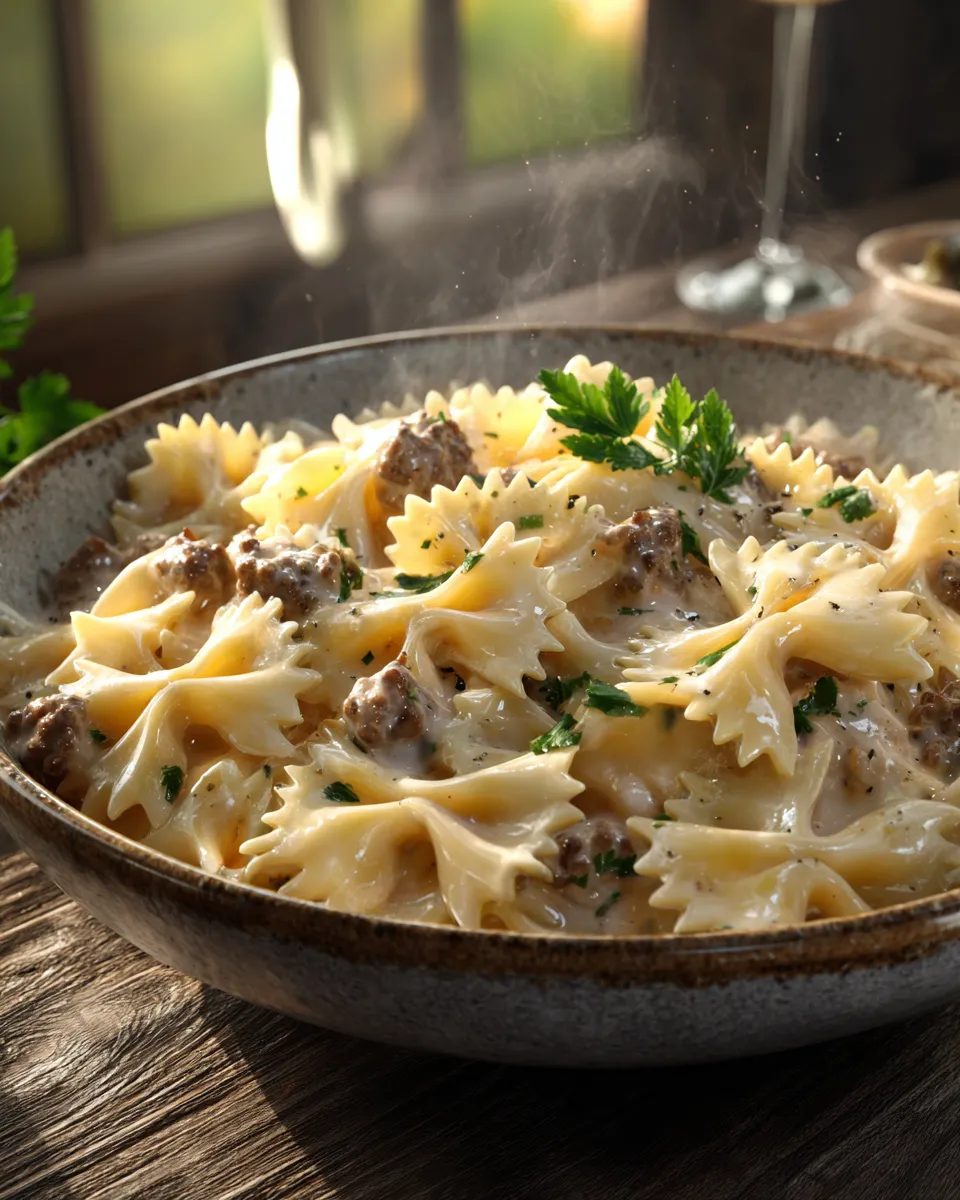
There’s something about a steaming bowl of pasta that just fixes everything. This Creamy Parmesan Garlic Beef Bowtie Pasta has rescued more chaotic Tuesday nights than I can count. The beauty lies in its simplicity, one skillet, ground beef you probably already have thawing, and a sauce so silky it clings to every ridge of those bowtie noodles.
What makes this different from your standard beef pasta? It’s all cooked together. The pasta simmers right in the beef broth, soaking up those savory drippings and garlic-infused flavors instead of just getting tossed with sauce at the end. The result tastes like you spent an hour building layers of flavor when really, you were in and out in 30 minutes.
What You’ll Need
The ingredient list reads like a pantry raid, which is exactly why this works as a go-to meal. You’ll need:
- 1 pound (450g) ground beef (80-85% lean gives the best flavor)
- 12 ounces (340g) bowtie pasta (farfalle)
- 6 cloves garlic, minced fine
- 1 small yellow onion, diced
- 3 cups (720ml) beef broth (low-sodium preferred)
- ¾ cup (180ml) half-and-half
- 1 cup (100g) freshly grated Parmesan cheese
- 3 tablespoons butter
- 2 tablespoons olive oil
- 1½ teaspoons Italian seasoning
- ¾ teaspoon smoked paprika
- ½ teaspoon crushed red pepper flakes
- Salt and black pepper to taste
- Fresh parsley for garnish
Ingredient notes: Use block Parmesan and grate it yourself, the pre-shredded kind contains cellulose that prevents smooth melting and can make your sauce grainy. For the beef, an 80/20 blend provides enough fat to keep things moist without leaving a greasy pool. If you’re using 93% lean, add an extra tablespoon of butter at the end.
How to Make It
Heat your largest skillet over medium-high heat and add the olive oil. Once it shimmers, crumble in the ground beef. Break it into chunks with a wooden spoon, but resist the urge to constantly stir, letting it sit for a minute or two creates those caramelized brown bits that add serious depth. Cook until the beef reaches 160°F (71°C) internally and shows no pink, about 6-7 minutes.
Drain off all but about 1 tablespoon of fat. Add the diced onion directly to the beef and cook until softened and turning translucent at the edges, roughly 3 minutes. Toss in the minced garlic and stir constantly for just 45 seconds, your kitchen should smell incredible, but pull it off the heat if the garlic starts browning.
Sprinkle in the Italian seasoning, smoked paprika, red pepper flakes, ½ teaspoon salt, and ¼ teaspoon black pepper. Stir everything together for about a minute, letting the spices toast slightly and coat the beef mixture.
Pour in the beef broth and crank the heat to high. Once it reaches a rolling boil, add the dry bowtie pasta. Stir well, then reduce heat to medium and let it simmer uncovered. Stir every 2-3 minutes to prevent sticking. The pasta will take 11-13 minutes to reach al dente, you’ll know it’s ready when the noodles have a slight firmness when you bite down and the liquid has reduced by about two-thirds.
Reduce the heat to low. Add the butter and let it melt completely, then pour in the half-and-half and the grated Parmesan. Stir gently but constantly for 2-3 minutes as the cheese melts into the sauce. The sauce should coat the back of a spoon and look glossy. If it seems too thick, add beef broth a few tablespoons at a time. If it’s too thin, let it simmer another minute, the starch from the pasta will help it thicken.
Taste and adjust the salt (you may need another ¼ teaspoon depending on your broth). Finish with a generous handful of chopped fresh parsley and serve immediately while it’s hot and creamy.
Smart Swaps and Variations
Protein changes: Ground turkey works well but can dry out easily, so bump the butter to 4 tablespoons. Italian sausage (removed from casings) adds fennel notes that pair beautifully with the garlic. For a pescatarian version, replace the beef with jumbo shrimp added in the last 4 minutes of cooking.
Pasta shapes: Bowtie pasta isn’t just pretty, those ruffled edges and center pocket trap the sauce perfectly. If you’re substituting, choose shapes with texture: penne rigate, cavatappi, or orecchiette. Avoid smooth noodles like regular penne; the sauce will slide right off.
Dairy adjustments: Swap half-and-half for whole milk if that’s what you have, but add 1 tablespoon of cream cheese to restore richness. Heavy cream makes it ultra-decadent but can feel too heavy. For dairy-free, use full-fat coconut milk and nutritional yeast instead of Parmesan, it won’t be identical, but it’ll still be creamy and satisfying.
Veggie additions: Frozen spinach (thawed and squeezed dry) can be stirred in right before serving. Fresh baby spinach wilts beautifully if you add it with the cream. Diced bell peppers sautéed with the onion add sweetness. Sun-dried tomatoes bring tangy brightness that cuts through the richness.
Make-Ahead and Storage Tips
This pasta is best enjoyed fresh, but life happens. Store leftovers in an airtight container in the fridge for up to 3 days. The sauce will thicken considerably as it cools because the pasta continues absorbing liquid.
Reheating without disaster: Add ¼ cup of beef broth or milk to the skillet before reheating over medium-low heat. Stir frequently until warmed through, about 5-6 minutes. Microwaving works in a pinch, use 50% power in 90-second intervals, stirring between each, and add a splash of liquid.
Freezing: This dish can be frozen, though the texture of the pasta changes slightly. Cool completely, then freeze in portion-sized containers for up to 2 months. Thaw overnight in the fridge and reheat with extra broth to revive the sauce.
Meal prep strategy: If you’re planning to make this ahead, undercook the pasta by 2 minutes. The noodles will continue softening as they sit in the sauce, and they’ll hit the perfect texture when you reheat.
Serving Suggestions
Serve this in wide, shallow bowls so everyone can appreciate how that creamy sauce clings to the pasta. A simple arugula salad with lemon vinaigrette cuts through the richness beautifully. Crusty bread for soaking up extra sauce is non-negotiable in my house.
For a complete weeknight dinner spread, pair it with roasted broccoli or green beans tossed with olive oil and garlic. If you’re feeding kids, steamed carrots or peas stirred directly into their portion add veggies without complaints.
This recipe serves 4-5 as a main dish. If you’re serving a crowd, it’s easy to double, just use your largest skillet or a wide pot.
Why This Recipe Works
The magic happens because the pasta cooks directly in the seasoned liquid. Traditional recipes boil pasta separately in plain water, which means the noodles never get infused with flavor. Here, every single bowtie absorbs the beefy, garlicky broth as it cooks.
The Parmesan melts into the reduced cooking liquid along with the pasta’s released starches, creating a naturally thickened sauce without any flour or cornstarch. That’s why freshly grated cheese matters, it melts smoothly and binds the sauce together in a way pre-shredded cheese just can’t match.
Using half-and-half instead of heavy cream keeps the dish from feeling too heavy while still delivering that luxurious, velvety texture. The butter adds a final touch of richness and gives the sauce a beautiful glossy finish.
Common Mistakes to Avoid
Don’t skip draining most of the fat from the ground beef. Too much grease makes the sauce feel slick instead of creamy. Don’t add the garlic at the same time as the onions, garlic burns quickly and turns bitter. Give the onions a head start.
Resist the temptation to use pre-grated Parmesan. The anti-caking additives prevent it from melting smoothly, leaving you with a grainy sauce instead of a silky one. If you must use it, whisk in an extra tablespoon of butter at the end to help smooth things out.
Don’t walk away while the pasta simmers. Stir it every few minutes to prevent sticking and ensure even cooking. And don’t add all the half-and-half and cheese while the heat is still on high, it can cause the dairy to separate and look curdled.
This creamy Parmesan garlic beef bowtie pasta delivers restaurant-quality comfort food with minimal effort. It’s the kind of easy weeknight dinner that actually tastes like you tried, making it perfect for those nights when you want something satisfying without the stress. The leftovers (if you have any) might even taste better the next day once all those flavors have melded together overnight.
FAQ
Can I use ground turkey instead of ground beef for this creamy bowtie pasta recipe?
Yes, ground turkey works perfectly as a leaner alternative in this creamy Parmesan garlic beef bowtie pasta. Use 93% lean ground turkey and add an extra tablespoon of butter to compensate for the lower fat content. Cook until it reaches 165°F (74°C) internally to ensure it’s fully cooked and safe.
How do I prevent the Parmesan sauce from getting clumpy?
Always use freshly grated Parmesan cheese from a block rather than pre-shredded cheese, which contains anti-caking agents that prevent smooth melting. Add the cheese after reducing the heat to low, and stir constantly as it melts. If clumps still form, whisk in an extra tablespoon of warm broth to help smooth the sauce.
Can I make this pasta dish ahead of time for meal prep?
This dish works well for meal prep with a few adjustments. Undercook the pasta by 2 minutes if making it ahead, as the noodles will continue softening in the sauce. Store in airtight containers for up to 3 days in the fridge, and add ¼ cup of beef broth when reheating to restore the creamy texture.
What pasta shapes work best if I don’t have bowtie pasta?
Choose pasta shapes with ridges or crevices that catch the creamy sauce. Penne rigate, cavatappi, rigatoni, or orecchiette all work beautifully as substitutes for bowtie pasta in this recipe. Avoid smooth shapes like regular penne or spaghetti, as the sauce won’t cling as well.
How do I store and freeze leftover creamy beef pasta?
Refrigerate leftovers in an airtight container for up to 3 days. For freezing, cool completely and store in freezer-safe containers for up to 2 months. Thaw overnight in the fridge before reheating. Add extra beef broth or milk when reheating to compensate for the liquid the pasta absorbed while sitting.